
Amazon MGM Greenlights 3 AI Kids Animated Shows – Skeptics Remain
How does it appear when Hollywood ultimately adopts artificial intelligence? In the three years since the labor strikes that established the guidelines for using generative AI in movies and television, along with two new union contracts set to be implemented, we have not yet witnessed it.
Certainly, there are some extreme examples fromsmaller filmmakers bringing back forgotten celebrities or film festivals like Tribeca providing a venue for certain short films being created in Sora, but not a major studio investing significant funds into it. You might picture that, when it occurs, it will be "Tilly Norwood" appearing in a superhero film or an entire studio movie written by a computer model, but the truth is it's improbable - now or in the near future - to be such a strong acceptance.
Rather, it will likely resemble what Amazon MGM Studios revealed on Wednesday, May 27. The studio has approved three animated children's series, all created using generative AI, which will soon be accessible on Prime Video, although specific launch dates have not been provided. The programs were introduced and previewed during two separate panel sessions to kick off Wednesday's AI on the Lot conference, held at the Amazon MGM Studios facility in Culver City and featuring a keynote speech by Albert Cheng, the chief operating officer of Amazon MGM Studios.
The AI series were all created as part of a pilot initiative known as the GenAI Creators' Fund, and this was done in collaboration with the studio's more technologically focused sister division, Amazon Web Studios. However, it's important to note: this is a genuine, significant television studio approving three AI-generated animated series from actual creators and well-known animators who enthusiastically took the stage to discuss the excitement of working with AI.
So, how were they? From what we observed, we are not as convinced that these will be the first to bring about what creator Albie Hecht described as us "entering a new Golden Age" of animation.
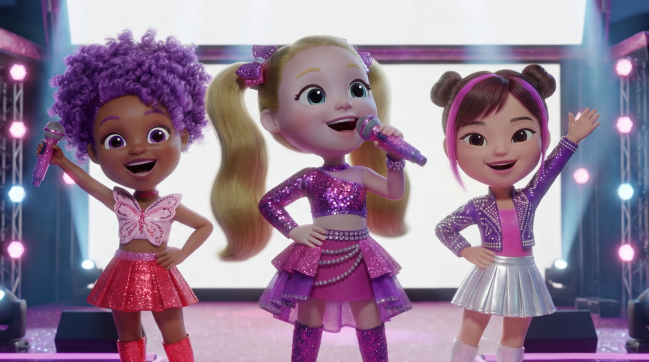
Amazon's AI on the Lot previewed approximately five minutes from each series. The first one was "Love, Diana: Music Hunters," an animated series based on "Kids Diana Show," one of the most popular YouTube channels. The series was developed by Hecht, who is now with a company called pocket.watch but previously served as President of Entertainment at Nickelodeon and was responsible for "SpongeBob SquarePants." The characters' large round heads and eyes resemble "Cocomelon" designs, but the show's focus on a group of girl musicians traveling through space on a tour bus, performing music that somewhat resembles K-pop, along with the word "Hunters" in the title, clearly indicates its target audience.
The second one, "Cupcake & Friends," was developed by BuzzFeed Studios and is inspired by one of their online series. While it's suitable for children, the 2D-animated, web comic style, which includes a 3D animated segment, is designed to deliver a more eccentric form of online comedy.
Finally, there's "Punky Duck," developed by Jorge R. Gutierrez, an Emmy award-winning director behind "The Book of Life" and the creator of "El Tigre: The Adventures of Manny Rivera" and "Maya and the Three." His AI series, showcased in a brief preview, echoed some of his previous creations featuring blocky, stop-motion characters. This time, it follows a duck with a punk rock hairstyle and appearance as he navigates a spaceship, fights robots that despise punk rock, and gets involved in various chaos.
When questioned about the experience of creating this series, Gutierrez shared with the audience at AI On the Lot that it felt similar to having sex and then instantly being given the baby.
"I'm accustomed to taking two years for a pilot, and something like this... it feels like the most rebellious, punk rock action you can take right now," he stated. "For someone like me who's used to waiting so long, this has been a life-changing experience." Gutierrez mentioned that he created the characters for "Punky Duck" on his own, and the process of developing the pilot concept for the show was completed in five weeks.
All three initiatives were also developed using Amazon's in-house AI creation platform, which they are currently referring to as Project Nara. This platform integrates AI production with other tools such as Maya, Blender, Nuke, Unreal Engine, and the Adobe Suite, and it is trained on Amazon MGM Studios' intellectual property. This approach ensures that you aren't simply entering prompts into a single, closed AI model like Midjourney repeatedly and hoping for a coherent, consistent output. The tool is comparable to platforms such as ComfyUI orGoogle's Flowsoftware that function similarly to widely used film editing tools and include artificial intelligence, with the goal of allowing filmmakers to have real control over their vision instead of tweaking a prompt and hoping the random generator produces a successful result.
Cheng stated that the entire suite is also intended to actually demonstrate that there is ahumanThe individual responsible for the content produced. Amazon MGM, in any case, aims to make sure that these AI-generated shows can be protected by copyright and generate revenue. He also mentioned that the shows must still maintain a certain level of cinematic quality, and although AI systems "can take you 80 percent of the way," there is still a significant amount of human effort required to complete them.
The counterargument is that these three AI-driven series might be diverting resources or chances from other filmmakers and individuals who are putting in their own effort and animation work, while using a smaller workforce. Previously, Amazon had overlooked children's programming, and these shows can be seen as a revival of that market which may not have existed otherwise. However, all three series are the kind of projects that Hollywood would probably approve regardless of AI involvement, including two shows based on well-known, popular intellectual properties, and a third one created by a respected, experienced filmmaker.
In that regard, Cheng thinks AI manufacturing might help restore production jobs to Los Angeles (he wouldn't mind receiving some tax incentives as well).
You should consider a more flexible model. How can we begin to secure tax benefits for AI-enhanced films with smaller teams? Because I'd prefer to produce 10 shows in one sound stage rather than just one. Additionally, it doesn't take that long to complete because then we can move on to the next show," Cheng mentioned during the AI on the Lot keynote. "This way, more people can have access to various roles and projects throughout the year. If you think about these sound stages, to generate more work, you need to boost your output. More projects, even with smaller crews, but with a much higher turnover rate, allowing more people to get jobs.
Post a Comment for "Amazon MGM Greenlights 3 AI Kids Animated Shows – Skeptics Remain"