
A New Biography of Garry Trudeau and the Legacy of Doonesbury
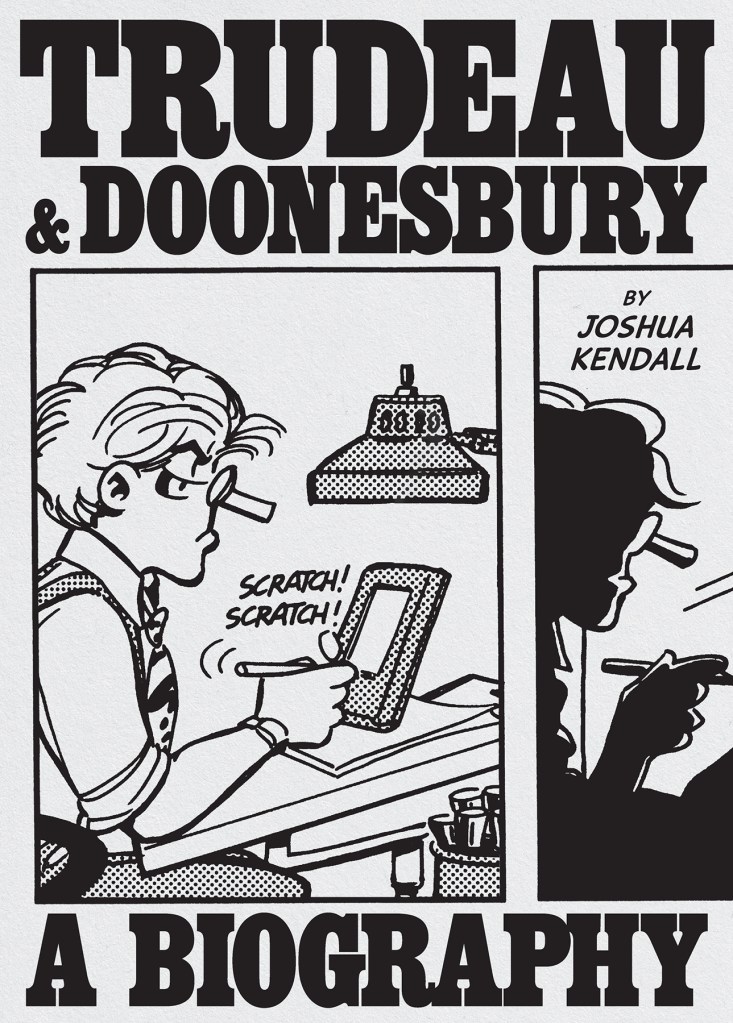
A new biography titled Trudeau & Doonesbury: The Cartoonist Who Turned The News Into Art by writer Joshua Kendall is set to be released next week. This comprehensive work delves into the 50-year history of the iconic comic strip Doonesbury, which has been a mirror reflecting the political and cultural landscape of the United States. From the Vietnam War and the presidency of Richard Nixon to the conflicts in Iraq and the era of George W. Bush, and even the rise of Donald Trump, the strip has consistently captured the essence of its time.
The book also explores the creation of one of Doonesbury's most memorable characters, Uncle Duke, inspired by the legendary gonzo journalist Hunter S. Thompson. It highlights Trudeau's long-standing relationship with Rolling Stone, a publication that played a significant role in shaping his work and career.
The Early Days of Garry Trudeau and Jane Pauley
In the late 1970s, Garry Trudeau was part of an "it couple" with TV anchor Jane Pauley, who was widely recognized as one of the fastest-rising personalities in television history. Their relationship was often the subject of tabloid attention, and Trudeau’s early strips hinted at his reluctance to attend public events with her. Despite their differences, they shared a mutual discomfort with celebrity life, which Pauley referred to as a “mental health disorder.” Trudeau, on the other hand, described fame as both “corrupting” and “time-consuming.”
Pauley was also impressed by Trudeau’s progressive views, particularly his commitment to gender equality. However, there are very few direct references to Pauley in Doonesbury. One notable exception appears in a 2000 strip that briefly mentions her high school:
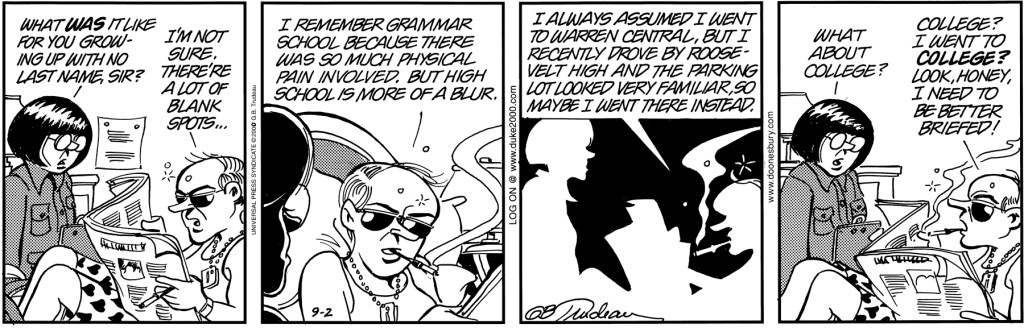
This reference to Warren Central is more of a throwaway line than a significant nod to her life.
The Rise of Uncle Duke
By the late 1970s, Uncle Duke had become one of Doonesbury's central characters. Initially introduced in 1974, he was portrayed as Zonker’s uncle, though the two were actually just family friends. Duke lived in Colorado and worked for Rolling Stone, much like his real-life inspiration, Hunter S. Thompson. As Trudeau later reflected, “Duke wasn’t inspired by Thompson, he was Thompson—right down to the name, taken from ‘Raoul Duke,’ Thompson’s pseudonym.”
Trudeau was a huge fan of Thompson’s work, especially Fear and Loathing in Las Vegas, a novel that chronicled the drug-fueled reporting trip of its protagonist, Raoul Duke. Like Thompson, Duke was known for his love of drugs and guns.
A Connection with Rolling Stone
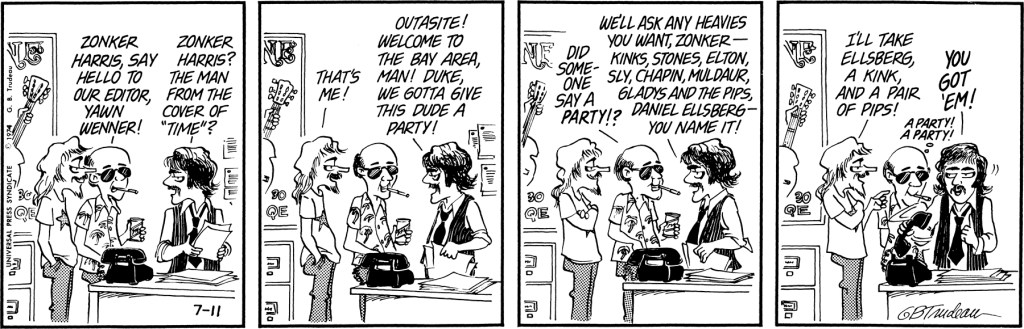
In July 1974, Zonker visited Duke at the Rolling Stone office, where he met his editor, whom Trudeau humorously dubbed “Yawn Wenner.” A few weeks later, Jann Wenner, the magazine’s founder, wrote to Trudeau expressing how the Doonesbury strips had captivated the entire staff in San Francisco. He also noted that Thompson had been mistaken for “Uncle Duke” during a recent visit to Washington to cover the Supreme Court case involving President Nixon and the Watergate tapes.
Wenner also thanked Trudeau for the unexpected side effect of his Duke cartoons: “We had several freelancers show up here with guns and booze, shooting up the office!” This led to a friendship between Trudeau and Wenner, and soon after, Trudeau began contributing occasionally to Rolling Stone.
Christmas and Controversy
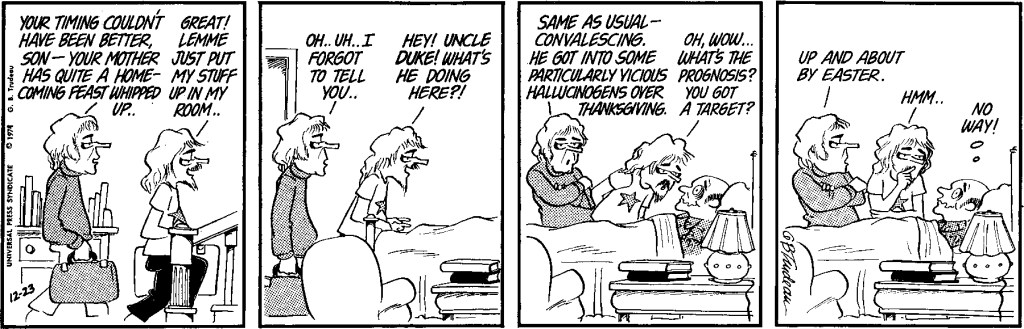
During the 1974 holiday season, Duke took a break due to a bad acid trip. At the time, comics pages were typically sentimental during the holidays, but this strip sparked some controversy. Jim Andrews, a fellow cartoonist, worried that the Christmas strips had gone too far. However, Tom Thornton, then starting his 33-year career at UPS, supported Trudeau, saying, “I was 24 and I loved it. And Garry told Jim that he needed to listen to young people like me. He ended up winning over Jim.”
Uncle Duke and John Denver
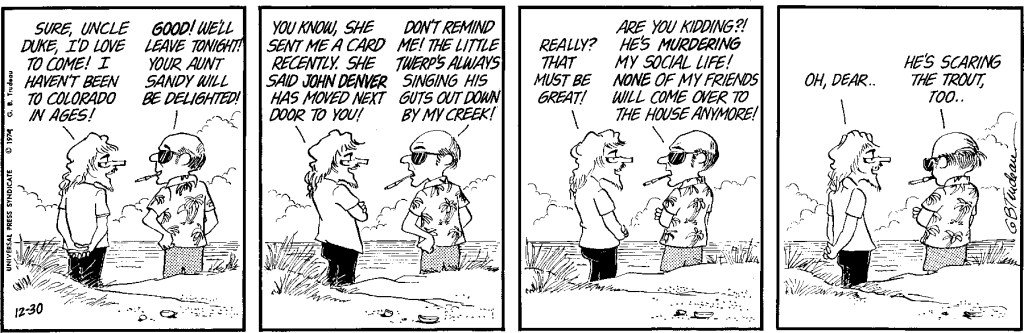
Later that year, Duke expressed his disdain for John Denver, a singer-songwriter turned TV star. This sentiment was shared by many music critics at Rolling Stone at the time. Interestingly, Denver never seemed to mind the insults. After meeting Trudeau backstage at a Madison Square Garden concert, Denver sent him a note saying, “We're both serving people by making it safer for them to experience and to acknowledge that their lives are working.”
The Evolution of Uncle Duke
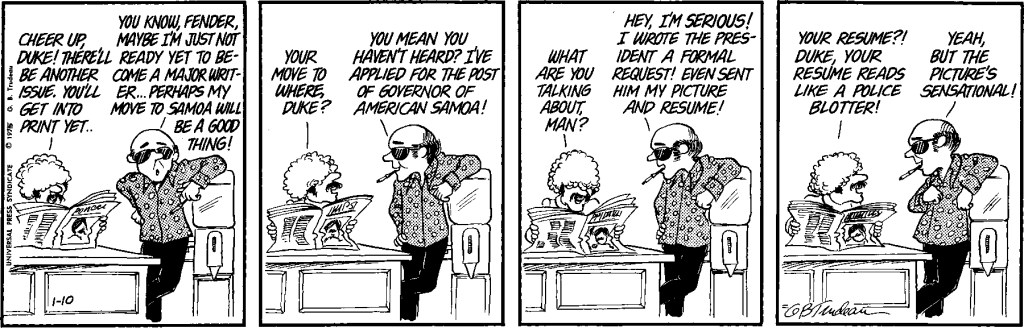
Within a year, Duke’s connection to Hunter S. Thompson faded. As Trudeau noted later, “Duke soon shed the Rolling Stone connection and shipped out to the world’s trouble spots, contriving a never-ending series of debauched schemes.” In February 1975, Trudeau’s life mirrored his art when he signed a contract with Wenner to write a 10,000-word piece about American Samoa, the same island that Duke had previously governed in the comic.
A Journey to American Samoa
Accompanied by a group of seven, including Nicholas von Hoffman and actress Elizabeth Ashley, Trudeau embarked on a journey to American Samoa. The trip was filled with humor and adventure, though they never managed to meet Governor Earl B. Ruth. Instead, they met his wife for drinks on the veranda of Government House, which closely resembled the setting of Uncle Duke’s governorship.
Uncle Duke’s Career Moves
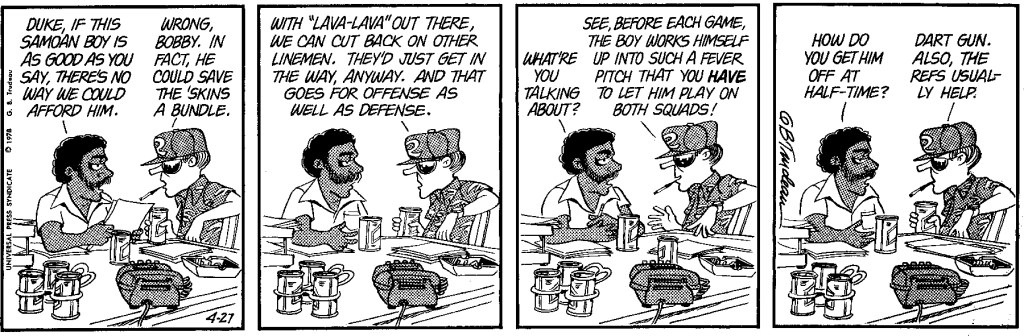
After his brief stint as governor of Samoa, Duke moved on to serve as ambassador to China. In 1978, he attempted to land a dream job—president of Yale or head of ABC News—but failed. However, he eventually found success as the general manager of the Washington Redskins, leveraging his knowledge of high-performance steroids.
Hunter S. Thompson’s Reaction
Despite the popularity of the character, Hunter S. Thompson was not pleased with Trudeau’s portrayal. Though they never met, Thompson repeatedly threatened the cartoonist. He once sent Trudeau an envelope containing only used toilet paper and claimed that the character had harmed his career. However, some of Thompson’s friends believed he was exaggerating, with his lawyer quipping, “You should be grateful. The guy makes you out to be friendly and nice, basically. You're not.”
The Impact of Doonesbury
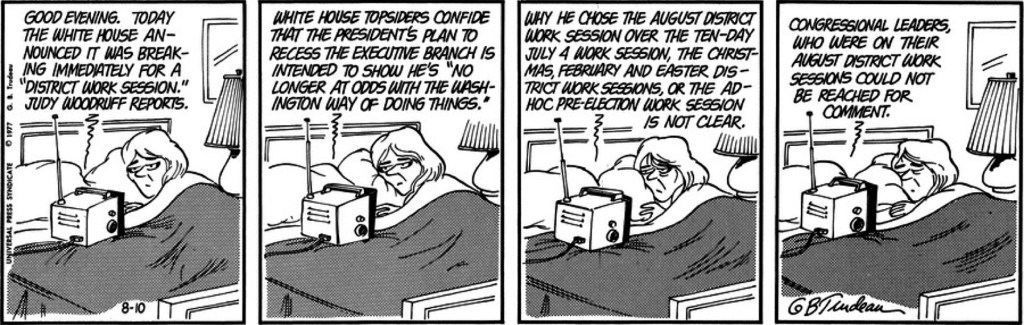
Trudeau’s influence extended beyond the comic strip. In 1977, he briefly mentioned Judy Woodruff in a Doonesbury strip, which led to her gaining recognition. Woodruff later wrote to Trudeau, saying, “It wasn’t until after you used my name in the strip last week that several people who've been ignoring me, walked up and started conversations.” She concluded, “You made my week, my month and maybe my year!”
Conclusion
As the upcoming biography shows, Doonesbury has remained a powerful reflection of American society, capturing the complexities of politics, culture, and personal relationships. Through the lens of Uncle Duke and other characters, Garry Trudeau has created a lasting legacy that continues to resonate with readers today.


No comments:
Post a Comment