
PCOS and PMOS: The New Names Explained
A New Understanding of a Long-Recognized Condition
For decades, polycystic ovary syndrome (PCOS) has been primarily viewed as an ovarian condition rather than a hormonal disorder. However, this perspective is now evolving. A new name, polyendocrine metabolic ovarian syndrome (PMOS), has emerged after two years of research led by Professor Helena Teede from Monash University in Australia. The findings were published in The Lancet Journal, marking a significant shift in how the condition is understood and treated.
“PCOS is not always a primary ovarian disease. There is no increase in pathological or abnormal cysts in this condition. In some cases, patients don’t present with cysts in their ovaries, but exhibit other symptoms. What the name PCOS did was it only focused on the ovaries and left out the endocrine system, even though there’s involvement of insulin, androgens, and reproductive and metabolic hormones,” explains Helena Teede, professor of women’s health, equity and impact at Monash University. “It can be recategorised as an endocrine or hormonal disorder, which means hormone regulation is the first and foremost approach to treating the condition.”
This change in terminology reflects a broader understanding of the condition as a metabolic and hormonal disorder rather than just an ovarian issue. It emphasizes the role of insulin resistance, androgen imbalance, and other hormonal factors that contribute to the condition.
Rising Prevalence and Awareness in India
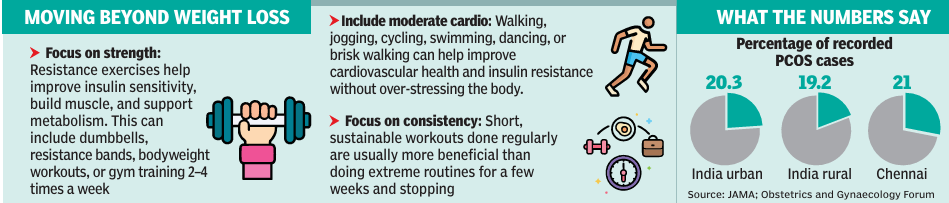
According to a 2024 study conducted in Chennai and published in the Obstetrics and Gynaecology Forum, 21% of school and college girls were found to have PCOS, with some studies suggesting that one in five young Indian women suffers from the condition. The prevalence is higher in urban areas and among adolescents, with reported rates ranging from 4.17% to 22.5% across different regions.
Dr V Mohan, chief diabetologist at Dr Mohan’s Diabetes Specialties Centre, highlights the shift in focus towards metabolism in the treatment of diseases. “Globally, it’s slowly being viewed as a metabolic disease. Another example is the renaming of non-alcoholic fatty liver disease (NAFLD), which was officially renamed a few years ago to metabolic associated steatotic liver disease (MASLD). This has influenced thinking about PMOS, too,” he says.
Dr Mohan also points out that PMOS exhibits insulin resistance, which can be seen in 85% of those with the condition. This increases androgen secretion and disrupts steroidogenesis, the process of synthesising steroid hormones from cholesterol through a series of enzymatic reactions. “It also includes type 2 diabetes, gestational diabetes, obesity and MASLD. These manifestations cause the usual suspects: irregular periods and facial hair growth. But all signs show that it is really an endocrine disease,” he adds.
Impact on Diagnosis and Treatment
Dr Priya Selvaraj, gynaecologist and fertility specialist, believes that greater awareness around the re-naming to PMOS could help gynaecologists, especially those who do not routinely deal with infertility or obesity, recognise symptoms much earlier. “Many doctors now manage it with oral contraceptives and advise only diet and exercise. Recognising PMOS as a metabolic condition will encourage doctors to learn more about it and create better referral channels to endocrinologists and physicians, particularly when patients have developed hypertension or diabetes,” she says.
Dr Priya notes a noticeable rise in PMOS over the past decade, driven by both increasing awareness and lifestyle changes. “Parents and young women are now more aware of irregular menstrual cycles, and are approaching gynaecologists to understand whether it’s temporary or linked to PMOS. In infertility cases, nearly 40% of women present with anovulation and irregular cycles associated with the condition,” she adds. While some patients respond to lifestyle changes and ovulation-inducing medication, others may require advanced fertility treatments such as IUI or IVF while trying to conceive.
A Multidisciplinary Approach to Management
Clinically, this change in nomenclature may encourage metabolic screening and a more multidisciplinary approach to management, rather than focusing only on reproductive symptoms, says Garima Dev Verman, dietitian and health educator at The Healthy Indian Project (THIP), a health information and fact-checking organisation.
While the condition has no cure, it is managed by lifestyle changes and hormone therapy. Several semaglutide drugs, such as Ozempic and Wegovy, are being used to treat diabetes, obesity, fatty liver disease, appetite regulation, cardiovascular protection and kidney protection. “Now that we’ve realised that PMOS is a metabolic condition, soon they may be used to treat PMOS too. The trials have begun in the US,” says Dr Mohan.
Garima explains that PCOS diets mostly focused on weight loss because obesity was commonly linked to PCOS. But now, nutrition therapy will be considered more important to manage insulin and enhance body composition rather than focusing only on weight loss, anti-inflammatory diet, managing sleep and stress, preserving muscle mass, and fertility outcomes. “With the redefinition of PMOS, nutrition will play a central role rather than a supportive care,” she says.

Post a Comment for "PCOS and PMOS: The New Names Explained"