
The Temp Who Grew a £6k Startup into a £1bn Business: Meet GLAS Founder Mia Drennan
Mia Drennan is the protagonist of a modern-day Cinderella story, where women no longer depend on princes or fairy godmothers to create their own happy endings. Instead, they build billion-pound businesses and redefine success on their own terms.
Born to a Tunisian mother, Drennan was adopted at just six weeks by a couple from Essex. She left school without a degree and began her working life by taking on temporary jobs in the City, often commuting via the Tube. Despite these early challenges, she eventually founded GLAS, a high-end loans administration business that she started with just £6,000. The company has now been valued at an impressive £1 billion.
Drennan recently won the Entrepreneur of the Year UK award, organized by EY, and will represent Britain at the world finals in Monte Carlo later this month. This event is described as a mix between Eurovision and The Apprentice, and if she wins, she would be the first British woman to triumph in such a competition.
“It wasn’t the £1 billion valuation that gave me external proof of my worth,” Drennan says. “It was the award itself, as I never expected it, or the outpouring of support. The valuation was the icing on the cake.”
She admits that she only felt ‘good enough’ after winning the UK prize, overcoming imposter syndrome along the way. Her ambition is to grow the company to at least £5 billion, possibly even £10 billion.
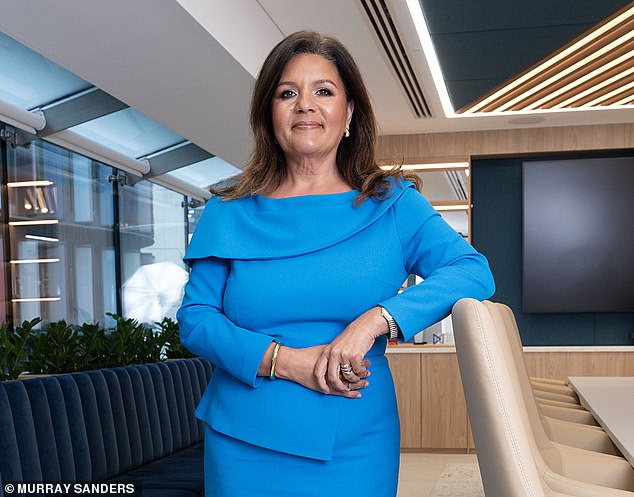

Her journey to success has not been without its challenges. The billion-pound valuation came on New Year’s Day when UK private equity firm Oakley Capital took a majority stake in GLAS. This made GLAS a rare 'unicorn'—a start-up valued at over a billion pounds. It is even rarer to find one founded by a woman.
Drennan is currently preparing for a Goldman Sachs event called Unicorn School, which is more about mentoring and networking than anything magical. She believes there are many women in their 40s and 50s who start businesses but lack a community or guidance.
“Part of this is about how you build a team around you that gives you the confidence to try things, to be resilient, and to keep going,” she explains.
Does she think other female entrepreneurs share her feelings of not being 'good enough'? Drennan says: “I do think women are probably less confident in their abilities than they should be.”
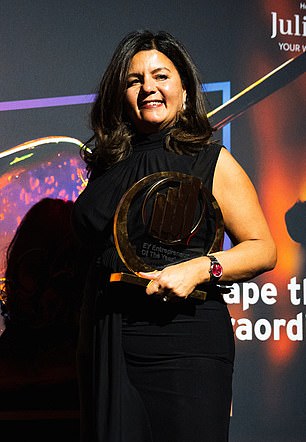
Drennan recalls the moment she realized her company had reached the billion-pound mark. It happened on New Year’s Day, after a team of ten worked around the clock during Christmas. On New Year’s Eve, the deal was almost finalized, but they decided to sleep for a few hours. By midnight, the documents were signed, and Drennan celebrated alone, sipping champagne while watching TV.
“My husband Stuart said: 'Why didn't you wake me?' I just wanted a moment to take it all in,” she says.
Stuart, who has retired from corporate life, has been a huge mentor throughout her career. He and her grown-up daughter, Tia, are accompanying her to Monte Carlo, as is her best friend, who is flying in from Australia. Her adoptive parents are following the event from afar.
“I don’t know anything about my biological parents and have no connection with them,” Drennan says. “I am at peace with that. My biological mother was Tunisian and came to the UK to have me. I can only imagine she must have spent a lifetime wondering what happened to me.”
Being an only child created a unique dynamic for Drennan, pushing her to find her own path. Her maternal grandfather was her mentor, and she believes he would be proud of her achievements.
“How I went from temp to entrepreneur” is a question Drennan often reflects on. Unlike some tech entrepreneurs who made billions while young, she found success later in life. She initially dreamed of becoming a fighter pilot, an ambition that was thwarted by her gender. When she was a teenager, there were no female Top Guns.
Did she always think she would make it in business? “Not at all,” she replies. “I just got on with things. I would turn up on a Monday morning as a temp, go from office to office, and just get on with whoever I was working with. I had a strong work ethic and I loved what I was doing.”
The idea for GLAS came after the 2008 financial crisis, when Drennan saw an opportunity for an independent credit agent. Today, GLAS is the largest outside the US, handling the administration and oversight of complex loans involving several lenders.
“We now have over 500 people in 11 countries with 15 offices on a single platform. We're servicing over $850 billion (£650 billion) of assets under management and will probably reach a trillion dollars this year.”
Is she worried about the Bank of England's warnings of risk in the private credit sector? “Every time there's a downturn, we do well, because that's exactly when complicated distressed situations arise,” she says. “Private credit grew up alongside us, and 50 per cent of the debt we service is private credit-originated.”
While GLAS recently made four acquisitions and is looking at others, Drennan’s focus is on becoming a digital company. “We’re on a road to build something unique that doesn't exist in the market. That will require significant investment in tech and artificial intelligence.”
For a woman who spent decades feeling not quite good enough, Monte Carlo awaits. So too, perhaps, does the next five billion pounds—or ten.
Post a Comment for "The Temp Who Grew a £6k Startup into a £1bn Business: Meet GLAS Founder Mia Drennan"