
Wikipedia Volunteers Battle AI-Generated Articles to Protect Its Encyclopedia
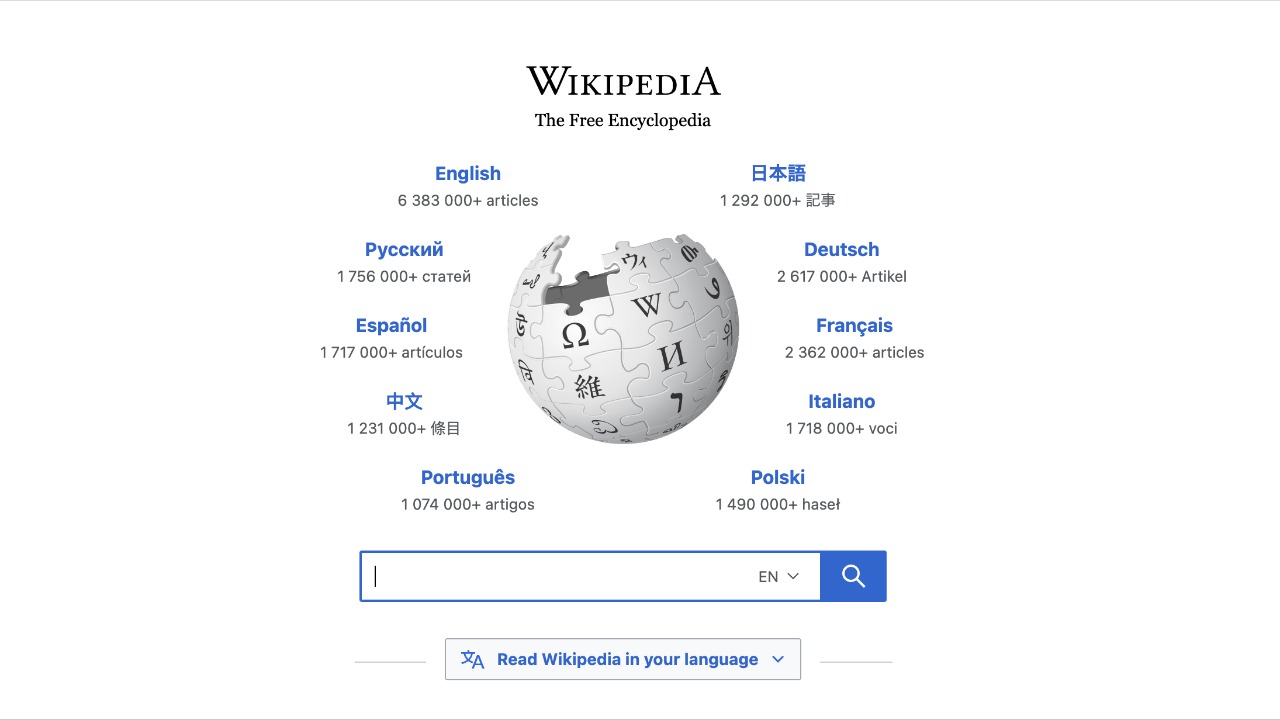
Somewhere on Wikipedia at this moment, a volunteer editor is looking at a newly created article and pondering a question that would have appeared ridiculous just five years ago: Did a person actually write this? More and more, the response is no. Aresearch project published on Cornell's arXiv preprint platformdiscovered that over 5 percent of new English Wikipedia entries were identified as AI-generated by two separate detection systems. Since these tools were specifically designed to minimize false alarms, the researchers believe the actual figure is likely much higher.
The discovery has pushed Wikipedia's extensive network of volunteer editors into a fresh conflict. By mid-2026, they have been revising deletion guidelines, creating detection processes, and methodically removing pages that show signs of large language models. This represents one of the most significant volunteer-led quality assurance initiatives online, with the majority of Wikipedia users unaware of its occurrence.
The magnitude of the issue
A study from arXiv that used both GPTZero and an open-source classifier on a set of new English Wikipedia pages provides the most clear-cut empirical evidence to date. Both systems were adjusted for high accuracy, meaning they were built to identify only the most evident machine-generated content and allow uncertain cases to go through. Despite these strict criteria, the 5 percent limit was exceeded. The researchers presented the finding as a minimum, not a maximum.
That figure might seem small, but Wikipedia receives thousands of new article submissions each month. At this volume, even a cautious 5 percent results in a continuous flow of automatically generated pages being added to the encyclopedia, some of which include made-up references that initially appear credible. Fabricated citations, where an AI creates a realistic-sounding academic paper with fake page numbers and DOIs, are among the most frequent indicators.
How editors fought back
A scholarly article that has been reviewed by experts and published in the journalAI and Society, available through Springer’s platform, details how Wikipedia's editing community reacted between 2022 and 2025. Entitled "Failed comprehensiveness, successful minimalism: Wikipedia’s 3-year struggle to govern AI-generated content," the research outlines a transition from fragmented informal alerts to established deletion guidelines incorporated into official rules.
Two additional red flags have been incorporated into Wikipedia's rapid-deletion guidelines. The first focuses on content that includes "communication directed at the user," which is the type of language that sounds like a chatbot replying to a query instead of an encyclopedic entry describing a subject. The second flag addresses "unreliable sources," specifically tackling the issue of fabricated references.
The scientists refer to the result as "successful minimalism." Instead of trying to implement a broad restriction on AI-generated writing, which would be extremely difficult to enforce uniformly, editors chose limited, precise standards that they could effectively implement. This method was practical: identify the most obvious violations, remove them quickly, and update the guidelines as the technology advances.
This development occurred via Wikipedia's internal governance system. Editors identified trends in questionable edits, suggested new guidelines on community discussion pages, discussed the wording, and approved the modifications through voting. There was no corporate order influencing this process. It remained consistent with Wikipedia's original principles, being entirely driven from the ground up.
Where the gaps remain
Despite advancements, major areas of concern remain. No study addresses a crucial question: how many flagged articles are truly removed? The Wikimedia Foundation has not provided official statistics on AI-related quick deletions, leaving the gap between identification and action unclear. It's possible that editors are identifying and removing most automatically generated pages within a short time frame. Alternatively, more subtle cases may be slipping through, gradually affecting the encyclopedia's accuracy in ways that are difficult to quantify.
Detection tools themselves represent a developing vulnerability. GPTZero and similar classifiers face challenges with brief texts, content that has been minimally edited by humans post-generation, and non-English languages. The arXiv researchers recognized these constraints, yet the underlying calibration data used for their thresholds remains undisclosed to enable independent verification. Moreover, the models that these tools are designed to identify are already becoming outdated. Advanced large language models equipped with retrieval-augmented generation can access real citations from actual papers, possibly eliminating one of the most trusted indicators that editors currently use.
The Springer research, on the other hand, examines governance discussions up until 2025. It remains unclear in either paper whether editors have revised their deletion standards to consider the capabilities of models from 2026. Policy statements created just a few months ago might already be outdated compared to the technology they were meant to regulate.
There is also no categorization by subject area. The arXiv researchers assessed new articles in a general manner without organizing the results by discipline. Papers focusing on specific biographical themes or emerging academic fields, which often have fewer seasoned editors reviewing them, might be significantly more at risk compared to entries about long-established historical events that have extensive monitoring. This theory is reasonable but has not been verified.
And the image on the English Wikipedia page is nearly completely empty. The detection methods discussed in the arXiv paper were designed for English. The governance study in the Springer article centers on English-language policy discussions. Smaller language versions, which often have significantly fewer active contributors, might encounter similar challenges without the same protections.
What does it mean if you use Wikipedia
Wikipedia is not in disarray. It continues to be one of the most valuable reference resources online, and its volunteer contributors are well aware of the AI challenge and are actively taking steps to manage it. However, the increase in automated submissions introduces an additional level of risk, especially for articles that are new, have limited edits, or pertain to less common subjects.
Some practices can be beneficial. Examine the sources listed at the end of any article, particularly for more recent or concise entries. If the references point to non-existent documents or if the links direct to irrelevant material, approach the article with caution. Be alert to writing that seems like a generic AI-generated summary: overly polished, filled with general statements, lacking specific dates, numbers, or academic debates, and missing the slightly inconsistent style that results from several human editors contributing to the same page over time.
Wikipedia's own features can be helpful in this case. The "View history" tab indicates when a page was established and the number of contributors who have participated. A page that was recently created by one user, using generic wording and lacking any conversation on its discussion page, requires more careful examination compared to an article that has been around for a longer time, has a detailed editing history, and is actively managed.
A volunteer force confronting a rapidly advancing issue
The main conflict lies in speed. Advanced language models can produce convincing encyclopedia entries in a matter of seconds. Volunteer editors, regardless of their commitment, operate at a human pace. The guidelines they've created are intelligent and specific, but each new wave of AI models poses a challenge to the previous detection standards.
As of mid-2026, the evidence indicates that Wikipedia's community has implemented a genuine and quantifiable defense mechanism. The 5 percent detection threshold demonstrates that the issue is not just theoretical. The governance changes outlined in the Springer study show that the response is not random or improvised. However, the future outcome hinges on whether a decentralized group of unpaid volunteers can continue to evolve more quickly than the technology they aim to regulate. This question remains unanswered.
More from Morning Overview
- The NSA urgently alerts all mobile phone users regarding a feature that most individuals keep enabled
- Wolves that are 5,000 years old on a secluded island challenge the theory of domestication
- Scientists might have discovered a Type II civilization
- EPA finally removes 'senseless feature' from 60% of American vehicles following 14 years of driver frustration
*This article was researched using AI assistance, with human editors responsible for the final content.
Post a Comment for "Wikipedia Volunteers Battle AI-Generated Articles to Protect Its Encyclopedia"