
Breakthrough tech in Canberra could cut 70 million tonnes of milk waste annually
A Breakthrough in Dairy Technology
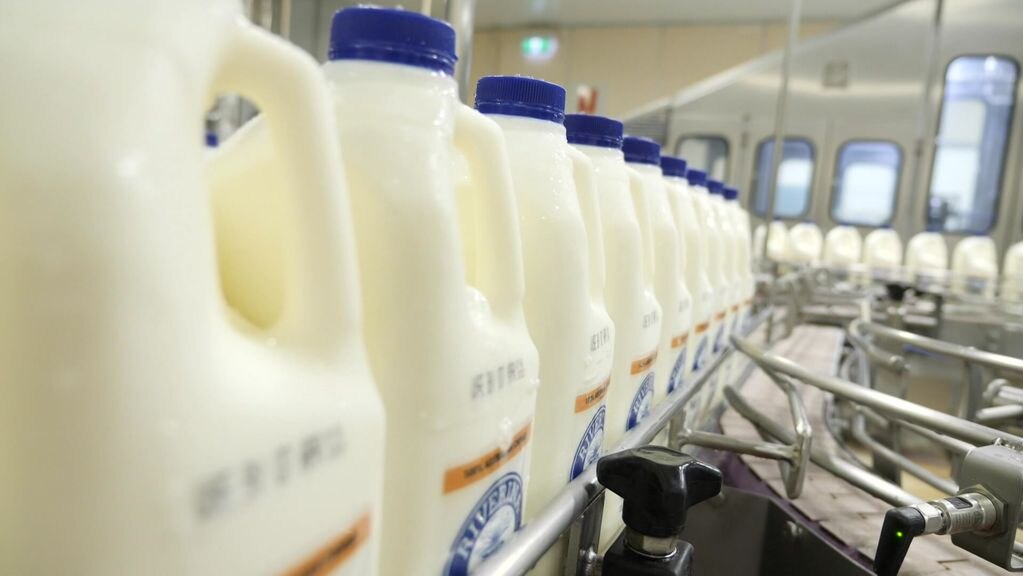
A significant portion of the world's milk is wasted annually, with over 150 million tonnes lost each year. However, a Canberra-based company has introduced innovative technology that could help drastically reduce this waste. This new solution allows dairy companies to conduct routine laboratory tests on-site in just three minutes, a process that previously took two to three days.
Stephen Trowell, the founder of PPB Technology, explains the science behind the innovation. "We engineer proteins, known as biosensors, which can measure things very accurately," he said. These biosensors are designed to detect protease, an enzyme that can spoil finished dairy products. "Some products are more sensitive to protease, and their shelf life is more affected by it than others. The most sensitive product is long-life or UHT milk."
By having a better understanding of protease levels, dairy companies can use the milk for less sensitive products like cheese or yoghurt or apply appropriate treatments to prevent waste. Mr Trowell believes that combining this technology with its ability to identify problematic enzymes in supply chains could prevent more than 70 million tonnes of milk from being wasted each year. "We can probably save a third of the milk to a half of the milk that's going to waste at the moment," he said.
Diverse Applications of the Technology
The technology developed by PPB Technology was not initially intended for the dairy industry. Mr Trowell worked at the CSIRO for 30 years, where he led the Cybernose project. This technology was used for wine testing and detecting explosives. "The original idea was to couple biological receptors, sensing proteins, to a machine so that you could help winemakers objectively assess some of the parameters of wine," he explained.
Although the commercial demand for wine testing was limited, there was a strategic need for explosive detection. Eventually, Mr Trowell left the CSIRO to form his own company and developed Cybertongue technology, which is now being used in the dairy industry. "The technology was developed for early detection of explosive vapours," he said. "And then we went, 'You know what? We can use it for a whole heap of other applications in food, in environmental testing, and also potentially medical.'"
Addressing Milk Waste Globally
The United Nations Food and Agriculture Organization estimated world milk production at 979 million tonnes in 2024. According to research by the Dutch independent dairy and food research institute NIZO, up to one-sixth of that milk is wasted, or more than 150 million tonnes. Mr Trowell believes his company's technology can significantly reduce this figure, especially in preventing losses of long-life milk.
"UHT milk is a really big deal, it has a total value that is close to $100 billion," he said. "Globally, it's really important; it's at least half of all drinking milk. It's available in lots of middle-income countries where they don't necessarily have a chill chain to the consumer. It's really important in the nutrition and food security of lots of people in the world."
Mr Trowell added that using the technology to locate where problematic enzymes originate in farms, supply chains, or factories could be vital. "In some countries in the world, they don't get nine or 12 months' shelf life in the supermarket for their UHT, they get three months — and struggle to get that," he said. "So our technology, our measurement of the protease helps Australian processors avoid the problem of the export. It helps the overseas processors extend their shelf life and have it able to sit on the supermarket shelf safely for maybe six months, not two or three."
Expanding Beyond Dairy
PPB Technology launched its dairy technology in 2023, and it is already being used in North America, Europe, Africa, Oceania, Central Asia, and India. While the company is currently focused on dairy quality issues, Mr Trowell believes the technology could have wider benefits in the future. "We do want to move into the food safety domain with some other tests in the future, things like testing for food allergens and even some bacterial toxins," he said.
"In the future, we also aim to help with some of those more human health catastrophes. I think there are multi, multi-million-dollar sales opportunities for this technology … that's a way of measuring the impact that we can have. I honestly believe that we've got the opportunity for what you might call a unicorn, a billion-dollar valuation company, if we get the delivery and execution right."
Post a Comment for "Breakthrough tech in Canberra could cut 70 million tonnes of milk waste annually"