
Costa Rica Urged to Act as Power Lines Kill Hundreds of Howler Monkeys
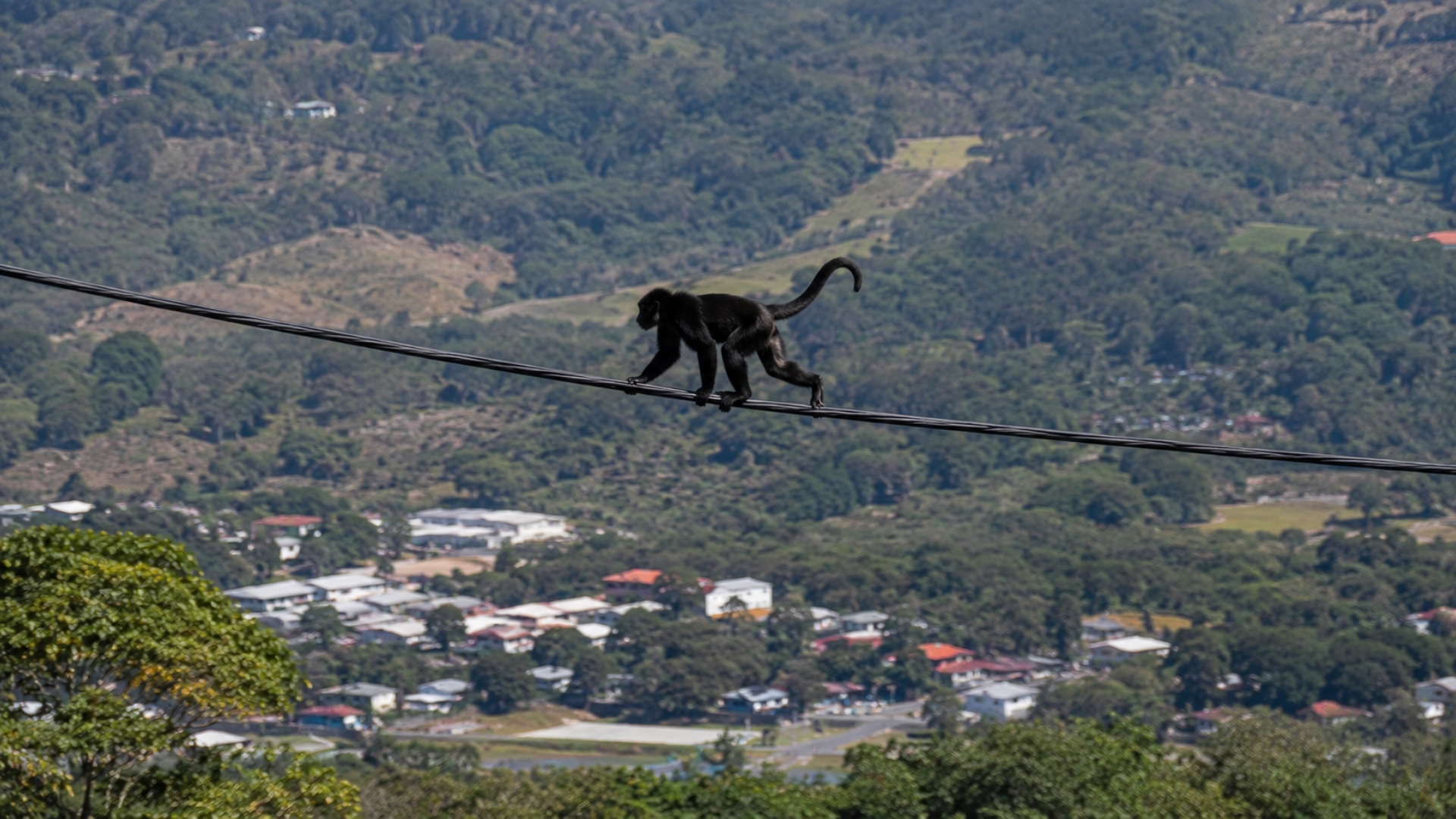
A Conservation Crisis Hidden Above the Forest Floor
For Costa Rica's howler monkeys, one of the greatest threats is not a predator or a poacher. It is the network of power lines stretching across their shrinking habitat.
A landmark ruling by Costa Rica's constitutional court has ordered authorities and the state electricity provider to take action against a growing wave of wildlife electrocutions that conservation groups say is killing hundreds of animals every year. The decision focuses on the Pacific district of Nosara, where rescue centres have documented a troubling increase in injured and dead monkeys found beneath electrical infrastructure.
The case is being viewed as a major test of whether modern development can coexist with one of Central America's most iconic wildlife species.
Why Monkeys Mistake Power Lines for Forest Pathways
The tragedy begins with a simple misunderstanding.
Howler monkeys evolved to move through connected forest canopies, travelling from tree to tree in search of food, shelter, and social groups. As forests become fragmented by roads, housing developments, hotels, and other infrastructure, power lines can appear to provide a convenient route between isolated patches of habitat.
Conservation experts describe the problem in strikingly simple terms: to a monkey, a power line can resemble a line of connected trees. When animals attempt to cross electrical cables or transformers, many suffer fatal shocks or severe burns.
Even animals that survive the initial electrocution may face broken bones, internal injuries, falls from height, or secondary dangers once they reach the ground.
Development Has Expanded the Risk
The issue has become increasingly visible in parts of Costa Rica that have experienced rapid growth.
Nosara has grown into a popular destination for tourism and international residents, bringing new homes, restaurants, and infrastructure into previously forested landscapes. Wildlife rescuers report that electrocution incidents are now appearing in areas where they were rarely seen in the past.
At one rescue centre alone, more than 100 electrocuted animals were treated in 2025, with howler monkeys accounting for the vast majority of cases. Conservation groups argue that expanding development without adequate wildlife safeguards has intensified a problem that already existed.
The challenge is not unique to Costa Rica. Similar incidents involving primates and other mammals have been documented in Africa, Asia, and elsewhere, particularly where forests have been fragmented by human activity.
A Court Ruling Could Change Wildlife Protection
The legal decision represents one of the most significant wildlife protection rulings of its kind in Costa Rica.
The constitutional court concluded that the state electricity company, known as ICE, and the Ministry of Environment and Energy had failed to adequately address known risks posed by uninsulated power lines in the affected area. The court ordered corrective measures to be implemented within six months.
Conservation organizations hope the ruling will establish a precedent that extends far beyond a single district.
If successful, the measures could eventually influence how electrical infrastructure is designed and maintained throughout the country, reducing risks not only for monkeys but also for sloths, squirrels, birds, and other tree-dwelling wildlife.
The Solutions Already Exist
Unlike some conservation challenges, experts say the technology needed to reduce wildlife electrocutions is already available.
Insulated power lines are widely viewed as one of the most effective solutions. Additional protective devices can prevent animals from reaching dangerous electrical components, while specially designed canopy bridges allow wildlife to cross roads and open spaces without touching power infrastructure.
In some locations, burying power lines underground may also be an option, though the cost can be substantial. Conservationists argue that prevention is ultimately far less expensive than losing wildlife and treating injured animals after accidents occur.
The Bigger Story Is Habitat Fragmentation
Although the court ruling focuses on power lines, the deeper issue lies in how landscapes are changing.
When forests become divided into isolated patches, animals are forced to navigate increasingly dangerous environments. Roads, buildings, fences, and electrical infrastructure create obstacles that many species never evolved to encounter.
The electrocution crisis illustrates how conservation problems often emerge not from a single threat but from the interaction between development and habitat loss. Power lines become deadly because they occupy spaces where forests once provided safe passage.
Why the Outcome Matters
Costa Rica is internationally known for its commitment to biodiversity and environmental protection. The country's forests support extraordinary numbers of mammals, birds, reptiles, and amphibians, many of which depend on connected habitats to survive.
The court's ruling is not merely about protecting one monkey species. It is about recognizing that infrastructure designed for people can have unintended consequences for wildlife and that those consequences can be reduced through thoughtful planning.
For howler monkeys moving through Costa Rica's forests, the difference between a safe crossing and a deadly one may come down to whether a power line continues to look like a tree. And for conservationists, that makes this ruling far more significant than a local legal dispute, it may become a model for wildlife protection in a rapidly developing world.
Post a Comment for "Costa Rica Urged to Act as Power Lines Kill Hundreds of Howler Monkeys"