
MV-75 Cheyenne II Achieves Major Production Milestone
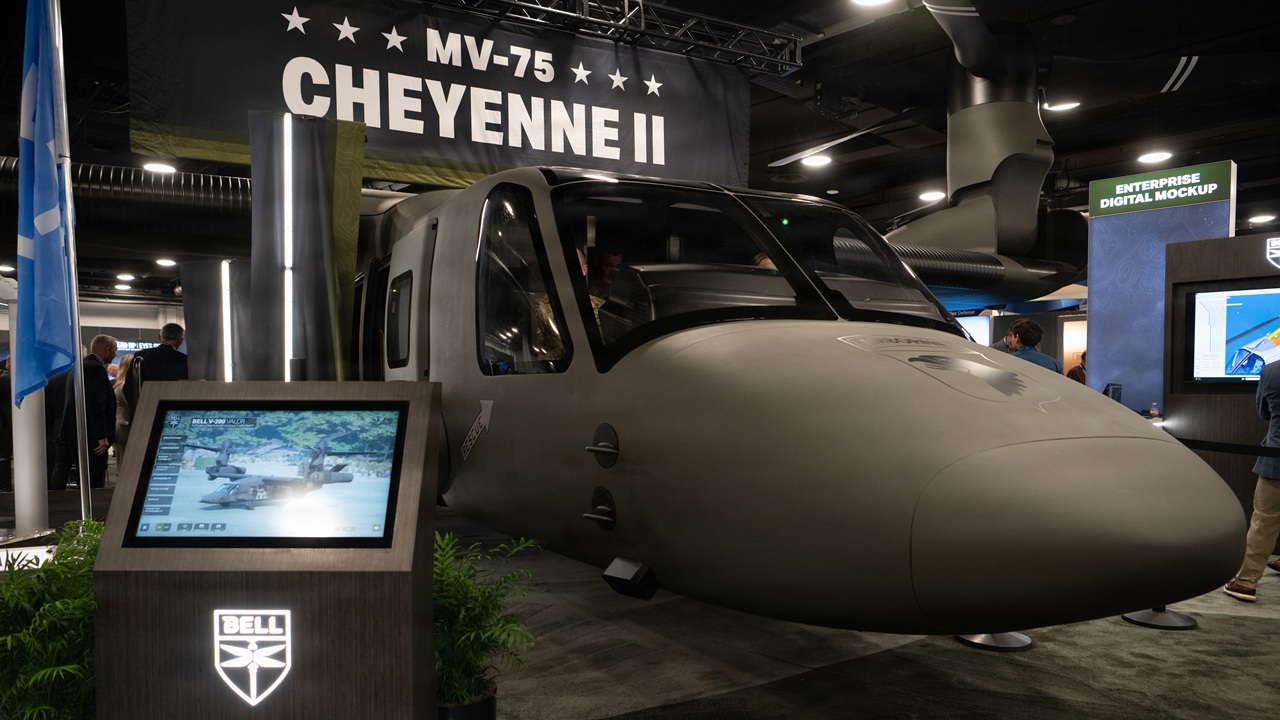
The MV-75 Cheyenne II: A New Era in Army Aviation
Bell Textron has made a significant breakthrough in the development of the US Army’s new MV-75 Cheyenne II, completing the first two wing structures for the Future Long-Range Assault Aircraft (FLRAA). This milestone marks a crucial step forward in the evolution of Army Aviation, aiming to enhance battle space agility and operational capabilities.
The tiltrotor wing is the structural backbone of the MV-75, designed to provide robust strength and optimized stiffness for maximum survivability in combat environments. Bell Textron emphasized that all key components, including composite wing skins and spars, tailored aluminum substructure, and final assembly, are developed in-house. This approach leverages the company's extensive experience with the V-22 Osprey, which the MV-75 will eventually replace.
Efficiency and Innovation in Production
The manufacturing process for the MV-75’s wings has proven to be significantly more efficient than that of the V-22 Osprey. The first wing was completed in February, requiring 90 percent fewer labor hours than the initial V-22 wing. The second wing saw an additional 40 percent labor savings, highlighting the improved efficiency and affordability of the MV-75’s production.
The next phase involves mating the wing structures to the fuselage and nacelles, paving the way for the test phase and eventual first production run. This progress underscores the Army’s commitment to modernizing its aerial fleet with cutting-edge technology.
Specifications of the MV-75 Cheyenne II
- Year Introduced: Expected late 2020s (first flight prototypes targeted ~2026)
- Number Built: In development (FLRAA program; initial production planned)
- Length: ~50 ft (15.2 m)
- Wingspan: ~81 ft (24.6 m)
- Weight (MTOW): ~30,000 lbs (13,600 kg)
- Engines: Two Rolls-Royce AE 1107F turboshaft (~6,000–7,000 shp each)
- Top Speed: 300+ knots / ~345 mph / ~555 km/h
- Cruise Speed: ~280 knots / ~322 mph / ~518 km/h
- Range: ~2,100 nmi ferry / ~2,415 mi / ~3,890 km
- Combat Radius: ~500–800 nmi / ~575–920 mi / ~925–1,480 km
- Service Ceiling: ~20,000–25,000 ft (est.)
- Loadout: 14 troops or ~10,000 lbs external cargo (sling load capable)
- Aircrew: 4 (pilot, co-pilot, crew chiefs)
Enhanced Capabilities for the Army
The MV-75 represents a significant upgrade over the current air assault fleet. As a medium-sized, vertical lift, multi-mission aircraft, it combines the vertical agility of a helicopter with the speed and range of an airplane. This combination allows the MV-75 to fly twice as fast and twice as far as previous air assault helicopters, enhancing the Army’s operational reach and expanding its response capacity.
Brent G. Ingraham, Assistant Secretary of the Army for Acquisition, Logistics, and Technology, highlighted that the MV-75 will enable “full squad insertion at extended range, expanding medevac reach well beyond today’s golden hour, and enabling large-scale, long-range air assault operations that can reshape the battlefield.”
Modular and Adaptable Design
The MV-75 is supported by an adaptable digital backbone that allows a modular open-systems approach to upgrades and necessary modifications. This design facilitates rapid integration of necessary modifications without costly redesigns, shortening response times in crisis scenarios and positively impacting readiness figures.
The Significance of the Name: Cheyenne II
The MV-75 is the Army’s first entirely new aerial platform since the 1980s. The aircraft originated with the Army’s 2025 Mission Design Series (MDS) MV-75. The “MV” designation refers to its multi-mission, vertical take-off characteristics, while the “75” honors the Army’s founding in 1775.
The name “Cheyenne II” continues Army Aviation’s tradition of naming its aircraft for Native American tribes with warrior traditions. The Cheyenne’s history of adaptability, resilience, and determination inspired the naming choice. Colonel Jeffrey Poquette, FLRAA’s Project Manager, noted that the name “pays tribute to an indomitable warrior spirit and signals a decisive step forward for Army aviation.” The name was first applied to a 1960s-era AH-56 attack helicopter, which did not proceed to the production stage. The Cheyenne Tribe formally approved its current use.
Funding and Future Prospects
President Donald Trump’s recent Fiscal Year 2027 military budget request included an additional $600 million for the MV-75 project. The Army confirms that the project is moving ahead quickly, but has not yet committed to a date for flight tests or when the aircraft might be operational.
About the Author
William Lawson is a military historian focusing on World War II and 20th century conflicts and the American Civil War. His specialty is operational level warfare, especially American amphibious doctrine. He writes on history, politics, and firearms for multiple publications and historical journals. He serves on the editorial advisory board for the Saber & Scroll Journal and Military History Chronicles and is a member of the Society for Military History and the American Historical Association. Lawson is based in Virginia.
Post a Comment for "MV-75 Cheyenne II Achieves Major Production Milestone"