
Young Britons Shun War. Finnish Youths Step Forward
A New Reality for Young Finns
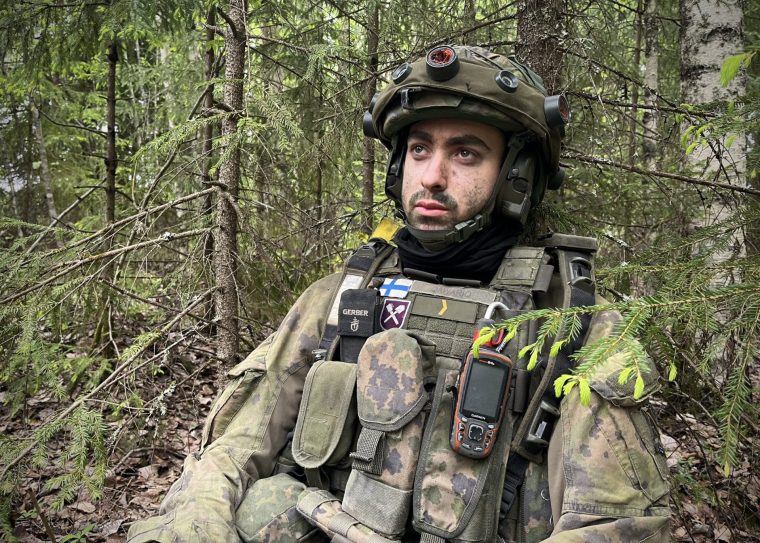
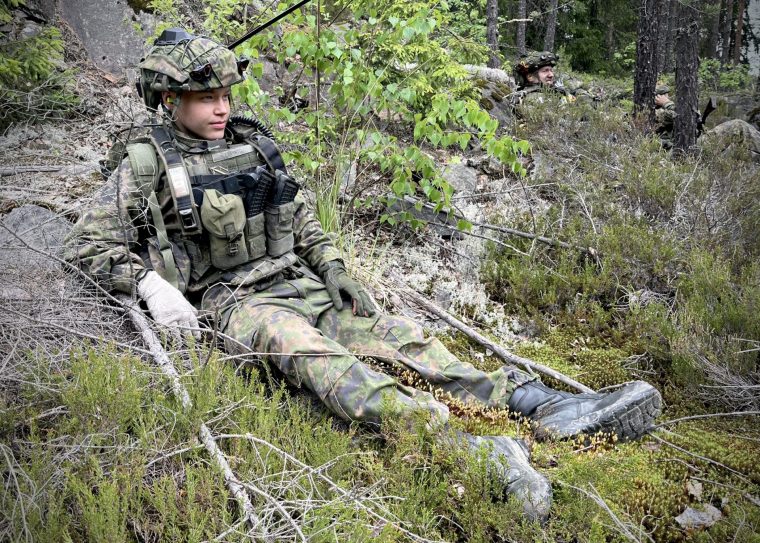
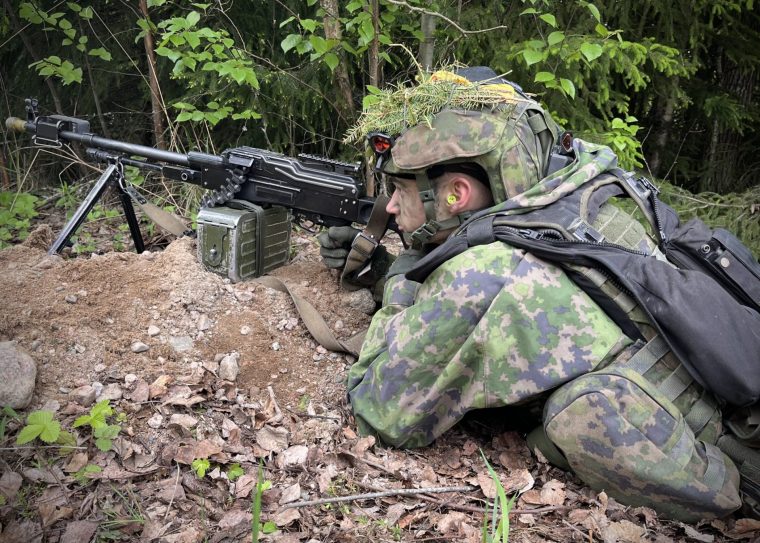
Just four months ago, 19-year-old Gabriel Qawariq was playing video games at home. Now, his life resembles one. Crouched on the forest floor in eastern Finland, holding an assault rifle, the teenager is part of a military drill preparing troops for war.
Qawariq is one of Finland’s annual 20,000 conscripts. National service is compulsory for men, who are usually drafted between the ages of 18 and 25, and voluntary for women. Conscripts can choose between military or non-military service, working at sites such as hospitals, schools or museums.
The i Paper has been granted access to a major Finnish military exercise; the final test in the service programme for conscripts like Qawariq.
“We’re getting the tanks going, learning how to get out of the tank, destroy mines, make a bridge, and then when that’s done, get back to the tank,” the teenager said, wearing a helmet, body armour and camouflage paint.
It was a sharp learning curve from his civilian, teenage life. “It’s not fun at first, but then your whole group becomes your family,” he said. “Your stamina gets better, you’re not as lazy, you make more friends, you’re more socially active.”
As the threat from Russia grows, countries around Europe are re-examining their approach to military service.
Lithuania, Sweden and Latvia brought back mandatory military service in 2015, 2018 and 2024 respectively, and France and Germany both recently introduced voluntary military service schemes.
There are calls for the UK to follow suit. General Sir Patrick Sanders, the then-head of the British Army, said in 2024 that the UK should “train and equip” a “citizen army”, but stopped short of advocating mandatory conscription.
This week, veterans minister Louise Sandher-Jones said that youngsters facing unemployment should “seriously” consider a career in the Armed Forces.
Last year, Whitehall announced a voluntary gap-year scheme for school-leavers to experience a paid year in the Armed Forces. In 2024, the Conservatives proposed a mandatory national service model in which school-leavers would either volunteer with local organisations or spend 12 months in the military.
But recent research suggests the Ministry of Defence faces an uphill battle to engage Gen Z with the military.
One poll found that only 11 per cent of youngsters would fight for their country, while another survey showed that for half of young Brits, there are no circumstances in which they would go to war.
A 2024 poll ranked the Armed Forces alongside fast-food and delivery firms as the least attractive places for Gen Z to work.
But there are indications this may be changing as the Russian threat looms. Research from Serco found that 53 per cent of Gen Z and millennial respondents said the geopolitical climate is making them more open to a career in national defence – higher than older demographics.
In Finland, the results are dramatically different. A 2025 poll found that 71 per cent of Finns aged 18 to 25 were prepared to fight “in all situations”. More than a third want Finland to spend more on defence, even if it meant cuts to other public services.
Most Finnish military personnel who spoke to The i Paper attribute this to two factors; the geographical proximity to Russia, and the history of violent conflict with the country.
Finland shares an 830-mile border with its hostile neighbour, by far the longest of any Nato member and second in Europe after Ukraine.
Finns have also seen first-hand the Russian aggression that Europe is preparing for, having been invaded in 1939 and forced to cede 11 per cent of its territory – still living memory for some Finns.
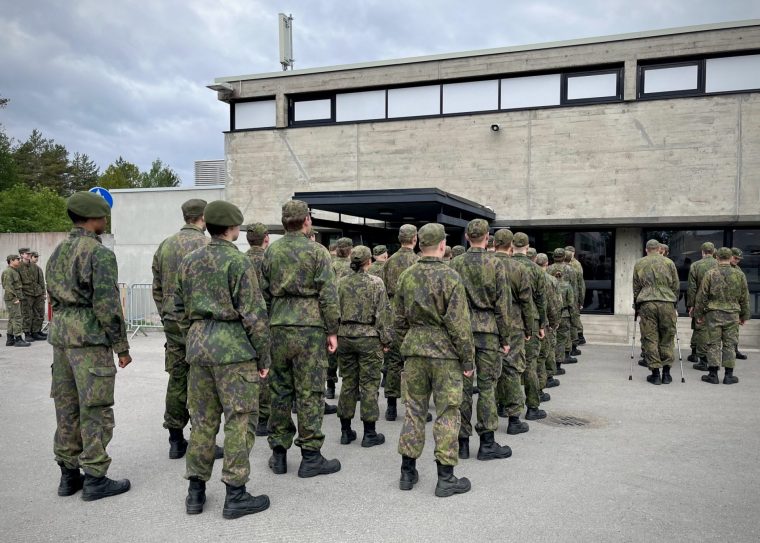
Before his conscription, 20-year-old Aapo Heikkilä was finishing school and working a summer job in a zoo. Now, he is in the final stage of an 11-month stint with the military, after receiving a conscription letter in the post and choosing military, rather than civilian, service.
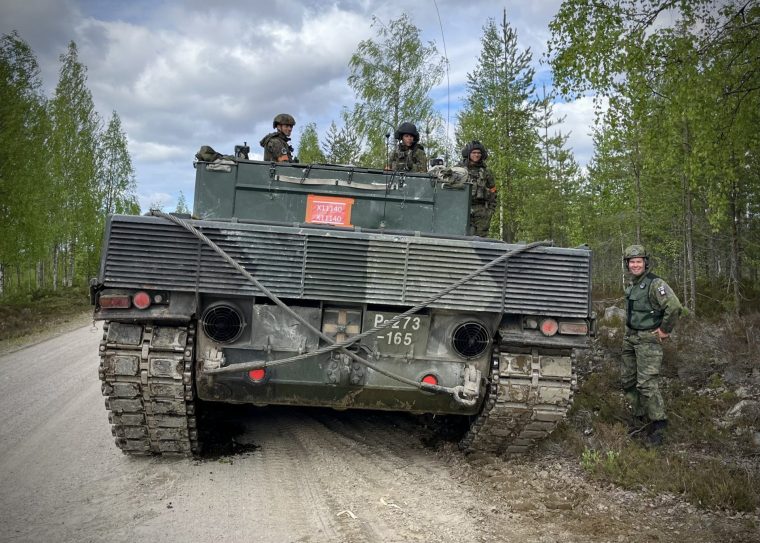
Heikkilä’s spell in the forces began with six weeks of basic training, before he spent four months in specialised tank operations, followed by five months of readiness exercises.
“Life now is pretty different,” he said. “I’ve worked at a zoo, and this is a rather radical change from that. I can’t have as much free time as before, and I can’t see my friends, but I’ve made new friends here.”
After his service, Heikkilä will go to university to study civil engineering, but won’t leave the military behind entirely. All conscripts are transferred to the reserves after completing national service so they can be called upon in times of emergency, and they undergo regular refresher training to keep their skills up to speed.
This model means almost one million people could be mobilised from a population of just 5.5 million.
Finland also provides training to both civilian and military leaders in either national or regional defence courses, with several associations promoting survival, home economics, and first aid skills.
Unlike the UK, the “overwhelming majority” of young Finns want to complete the service, Heikkilä said.
“For many people, it can be a little boring, a task you have to do, but everybody is ready to do it. And there are also many people who just want to do it, like women who don’t have to serve. We have many women here serving; our tank driver is a woman who came here voluntarily.”
It is “definitely” the proximity to Russia which creates this willingness, along with “our history”, Heikkilä said.
“We’ve seen it many times before, that we have to have a strong defence because of what lies in the east. I think when compared to the rest of the western world we are much more on the front line. If somebody asked you to defend your country, it means to defend from an invasion, while in some other countries that might mean to go to the other side of the globe.”
He said the model has made Finland stronger, adding: “Personally, I wouldn’t be so calm about our situation if we didn’t have a huge army.”
While there is little prospect of conscription being introduced in the UK, a series of former top officials have suggested the British Government take inspiration from countries like Finland to boost preparedness at home.
Former defence minister Tobias Ellwood said that the UK should be adopting Finland’s approach of maintaining a large reserve force and upskilling the wider population to cope with emergencies. He predicted the UK will have a form of conscription within five years in response to the growing Russian threat.
Admiral Lord West, the former head of the Navy, and the former home secretary Amber Rudd have both backed France’s introduction of a voluntary military service scheme – with the caveat that it would supported by significant new funding.
Heikkilä said he would recommend national service to British youths.
“I’ve become more tolerant to different circumstances. I’ve got more grit and [am] also much more adult,” he said. “It’s not for everybody, but I think that… a lot more people could be doing it, and a lot more could be enjoying it, even.”
Post a Comment for "Young Britons Shun War. Finnish Youths Step Forward"