
AOC Claims Airbnb Fuels Evictions From Puerto Rico to Jackson Hole — Homeownership Out of Reach for Young People
The Debate Over Short-Term Rentals and Housing Affordability
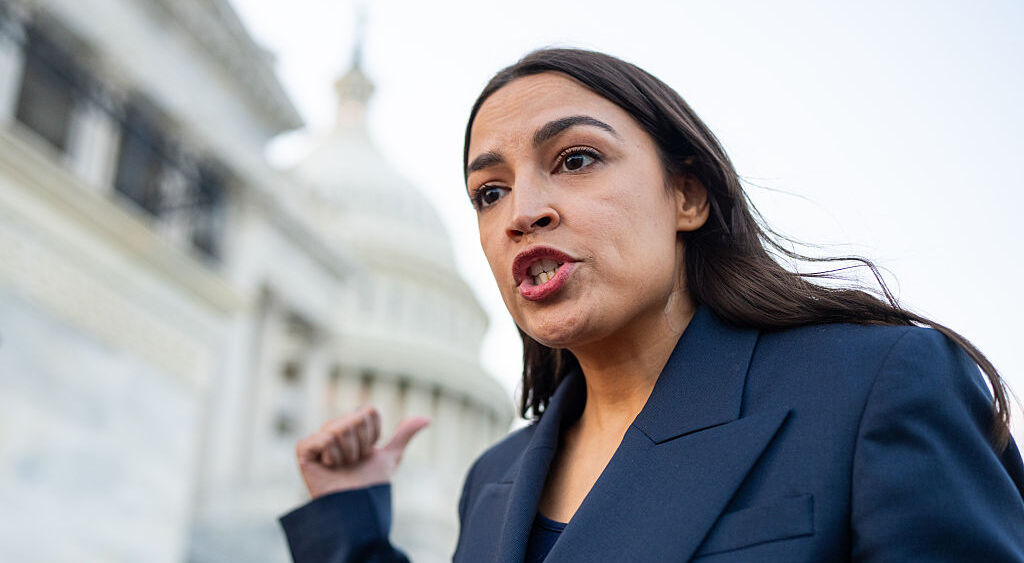
Rep. Alexandria Ocasio-Cortez (D-NY) has long been vocal about the issues of concentrated wealth, corporate power, and speculative housing markets. One of her key arguments is that short-term rental (STR) platforms like Airbnb are worsening a housing crisis that feels increasingly dire for millennials and Gen Zers.
"Airbnb could not exist at its current scale and size without the housing market destabilizations, displacements and exploits that are supercharging the evictions of working people everywhere from Puerto Rico to Jackson Hole," she wrote on X. Her comments come at a time when housing affordability has become a defining economic issue.
On one hand, rental platforms like Airbnb offer property owners an opportunity to earn relatively passive income, meaning those who can afford to purchase homes have access to an alternative revenue stream. And the investors who snatch up several properties can earn the big bucks by running STRs out of them. But Ocasio-Cortez contrasts this with the idea that while these investors profit, "millions of everyday Americans are bearing the cost."
The Long-Term Problem with STRs
In tourist destinations—like San Juan or Rincón, Puerto Rico, and Jackson Hole, Wyoming—AOC and other critics warn that STRs reduce available inventory for local residents while driving rent and home prices upward. In a May appearance on the “It's Open” podcast with Ilana Glazer, AOC argued that extreme wealth accumulation often depends on exploitative systems, labor imbalances and market dominance—and the housing market is one example.
Her comments have sparked fierce backlash from conservatives and business advocates, but they have also resonated with young voters who feel locked out of traditional milestones like buying a home, establishing savings or starting families.
Puerto Rico is a particularly charged place for AOC, whose roots trace back to the island. Following years of economic instability, hurricane recovery struggles and an influx of wealthy mainland investors attracted by tax incentives, Puerto Rican residents are being priced out of their own neighborhoods. A New York Times report notes that wealthy investors are "turning entire neighborhoods into Airbnb corridors and creating a shortage of inventory for local residents."
Prioritizing Nightly Profits
Property owners are often incentivized to prioritize high nightly or weekly profits over stable local tenants, especially in scenic destinations where demand for tourism shows no signs of slowing. That means there are fewer long-term rentals available altogether, and demand is increasingly strong for those that are, driving rents up.
Many essential workers in these communities are forced to commute long hours to work because they cannot afford to live locally anymore. And some have even faced related evictions.
The case of Chris Butler, who was evicted from his rent-controlled apartment in San Francisco, is a prime example. Butler was evicted on the grounds that the owner's husband needed to move in—a situation legally accepted as "owner-occupied move-in," according to SF Gate. But Butler says the owner's husband never moved in, existing tenants were moved around and units in the building were listed on Airbnb for up to $145 per night (adding up to a lot more than the $1,840 monthly rate the tenant paid). Butler is now suing for unjust eviction.
"They forced me out of a home I loved," he said, adding that a difficult hunt ultimately culminated in him now paying over double what he was initially paying in rent.
Cities Crack Down on Airbnbs
In the meantime, many cities in the U.S. and across the globe have been cracking down on Airbnbs. Some cities, like New York, don't allow rentals for under 30 days unless the owner is also in the home. San Francisco also has strict regulations regarding who can be an Airbnb host.
But the tension underlying the Airbnb debate reflects a larger philosophical divide. Supporters of the platform argue that STRs help ordinary homeowners earn supplemental income, especially during periods of inflation and economic uncertainty.
They also point out that housing shortages are often driven by restrictive zoning laws, underbuilding and decades of failed housing policy, rather than a single tech platform.
Some Everyday Homeowners Benefit
There are, of course, at least two sides to every story. "The idea that Airbnb causes the housing crisis is wrong,” Taylor Marr, Airbnb's senior housing economist, responded to the debate on X, which was shared with. “In the more than two years since NYC all but banned Airbnb, rent has gone up 8.1%—above the national average—while vacancies have gone down. Across Airbnb's 50 biggest cities around the world, 'dedicated' listings made up only 0.4 percent of the housing stock overall."
Never mind that Airbnb has been able to afford some everyday homeowners a life of which they've always dreamed.
Lauren Marinelli, an Airbnb host in Colorado, has been able to pursue her dream of working for herself while traveling the world as a digital nomad by renting out rooms on the platform. She got the travel bug in 2008, which inspired her to want to work for herself so she could be free to travel when and where she wanted. But it took until 2015 to finally go out on her own and do just that—largely thanks to Airbnb.
Kalei White, a California native, decided to purchase a property in Playa del Carmen, Mexico, turning it into an Airbnb. She opted to invest internationally because "beyond [her] love for the area, the price point was a huge draw." She explained that a comparable property in San Diego, where she lives, would have cost at least five times as much.
Emerging Alternative Platforms
As lawmakers and housing advocates continue to criticize STR platforms like Airbnb for driving up rents and reducing long-term housing supply, other tech platforms are emerging as longer-term alternatives.
"The Airbnb debate is really a supply debate," Atticus LeBlanc, founder and CEO of PadSplit, told. "Every unit that shifts from long-term rental to short-term rental is one fewer home for someone who needs a place to live."
PadSplit, the largest rent-by-the-room rental model in the nation, works in the opposite direction, he says. It's designed around affordable, flexible coliving for essential workers and people in transition.
Meanwhile, platforms like Kindred allow both owners and renters to turn their homes into vacation rentals only when they feel like traveling themselves—without having to operate their homes like rentals around the clock.
Balancing Investment and Basic Needs
Ultimately, younger Americans face rising student debt and enduring pandemic-era inflation, and they are now confronting mortgage rates and housing prices that feel mathematically impossible. This explains why AOC's rhetoric is finding traction even among some people who may not fully embrace her politics.
As home prices soar and long-term rentals disappear in tourist-heavy cities, Americans are increasingly questioning whether stable, affordable housing is still attainable—and if the very reason critics argue that it's not can actually pose opportunities for passive income.
Ultimately, the future of housing will depend on balancing tourism, investment and the basic needs of locals.
Post a Comment for "AOC Claims Airbnb Fuels Evictions From Puerto Rico to Jackson Hole — Homeownership Out of Reach for Young People"