
Before Chasing SMCI's SpaceX Rally, Recall Its Past Failures

Supermicro (SMCI) has experienced a significant turnaround in the past few days, with its stock surging after the company revised its gross margin guidance upward. Previously, Supermicro had expected margins to fall between 8.2% and 8.4%, but now it anticipates them to land between 15% and 17%. This shift has sparked optimism among investors, especially given the recent announcement of a potential partnership with SpaceX for an AI data center within a year. However, while these developments may seem promising, they should not be taken at face value.
Key Considerations for Investors
One of the first things to note is that Supermicro’s revenue guidance has remained unchanged, with expectations for revenue to land at the lower end of its projected range. At the same time, the company's backlog has increased significantly, indicating that it is taking on more orders than it can currently fulfill. If the gross margin improvement is not coming from increased revenue, then where is it coming from? It is unlikely to be due to a sustainable shift in pricing power, which could mean that the improvement is temporary and could reverse quickly.
Another factor to consider is the association with SpaceX. While the partnership has been highlighted as a major development, neither company has officially confirmed the scale or nature of the collaboration. This means that much of the positive sentiment surrounding the deal is speculative, driven more by hype than concrete evidence. Investors should be cautious about overvaluing this connection, especially given Supermicro’s history of legal and financial challenges.
A History of Controversy
Two years ago, Hindenburg Research published a short report alleging accounting manipulation at Supermicro, which led to a delayed annual filing, a U.S. Department of Justice (DOJ) investigation, the resignation of an auditor, and subsequent class-action lawsuits. More recently, the company faced accusations of illegally exporting chips to China, with three individuals associated with the firm being indicted. These incidents raise serious concerns about the company's governance and compliance practices.
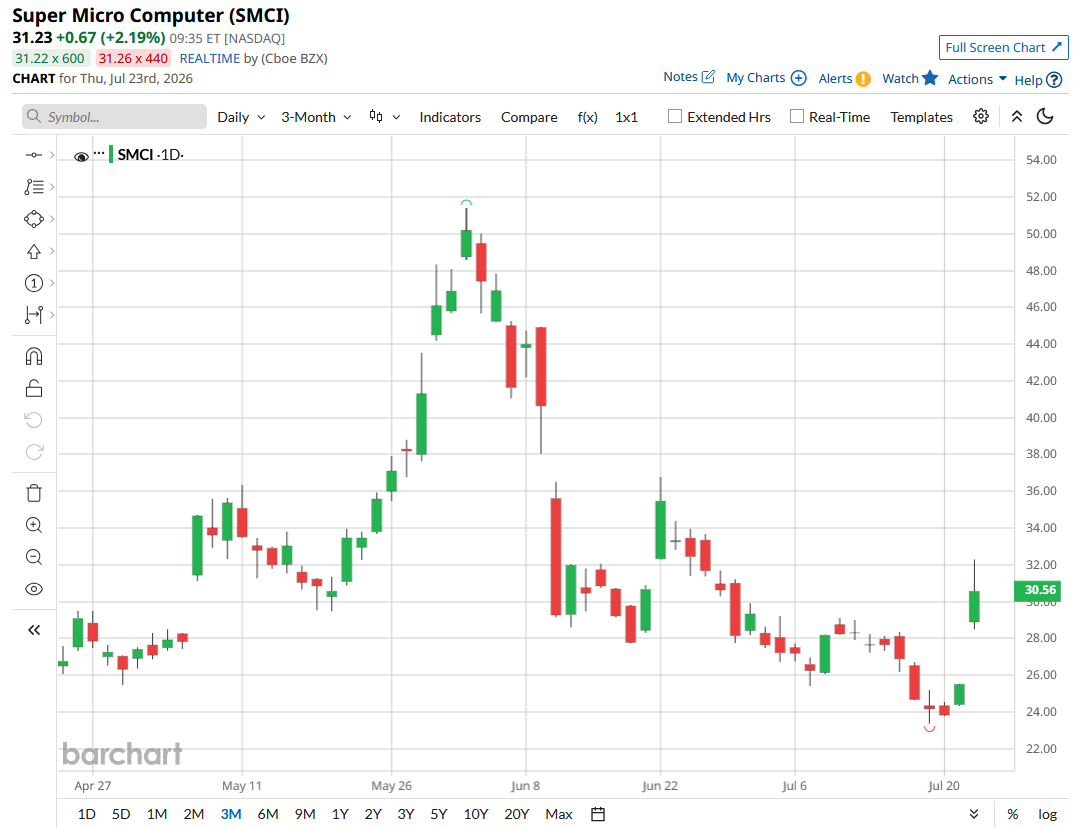
Despite these issues, Supermicro has seen a recent surge in investor interest, partly due to a rating upgrade from GF Securities. Over the last five days alone, SMCI stock has gained 27%, prompting many investors to re-enter the market. However, this momentum should be tempered with caution, particularly when considering the company’s financial health and ongoing legal risks.
Financial Overview and Valuation
Supermicro is a technology company that designs and manufactures servers and storage systems for AI data centers, cloud computing, and enterprise clients. Its product portfolio includes AI servers, GPU platforms, storage systems, and networking solutions. Founded in 1993, the company is based in San Jose, California.
Over the past 12 months, SMCI stock has lost more than 40% of its value, significantly underperforming the S&P 500’s 17% gain during the same period. The decline has been attributed to lower-than-expected revenue and gross margins, ongoing legal concerns, and a $7 billion equity offering in June 2026. Despite these challenges, some analysts believe the stock is undervalued, citing its low forward price-to-earnings (P/E) ratio of 11.3 times and a forward price-to-sales (P/S) ratio of 0.6 times—both well below sector averages.
However, the company’s balance sheet presents a different picture. Supermicro carries a debt of $9.1 billion against just $1.3 billion in cash, which raises concerns about its financial stability. Additionally, while the EPS growth trajectory looks healthy for the next few years, it is expected to turn negative in 2029. This suggests that the current valuation discount may be justified given the company’s long-term risks.
Recent Earnings Performance
In its third-quarter fiscal 2026 earnings report, released on May 5, Supermicro achieved exceptional growth in both key metrics. Revenue more than doubled year-over-year, increasing from $4.6 billion to $10.2 billion, while EPS rose from $0.31 to $0.84. The company also improved its gross margin from 9.7% to 10.1%, although this was still below the updated guidance of 15% to 17%.
CEO Charles Liang highlighted the company’s transformation into a complete data-center solutions provider, pointing to improving margins and the growing DCBBS business as signs of underlying strength. He also mentioned that newly built U.S. production facilities in Silicon Valley have enhanced Supermicro’s ability to meet rising AI demand.
For the next quarter, management expects revenue of $11 billion to $12.5 billion, with non-GAAP EPS of $0.65 to $0.79. For the full year, Supermicro has guided revenue of $38.9 billion to $40.4 billion. However, Liang noted that component costs have increased significantly, contributing to expected margin pressure in Q4.
Analyst Perspectives
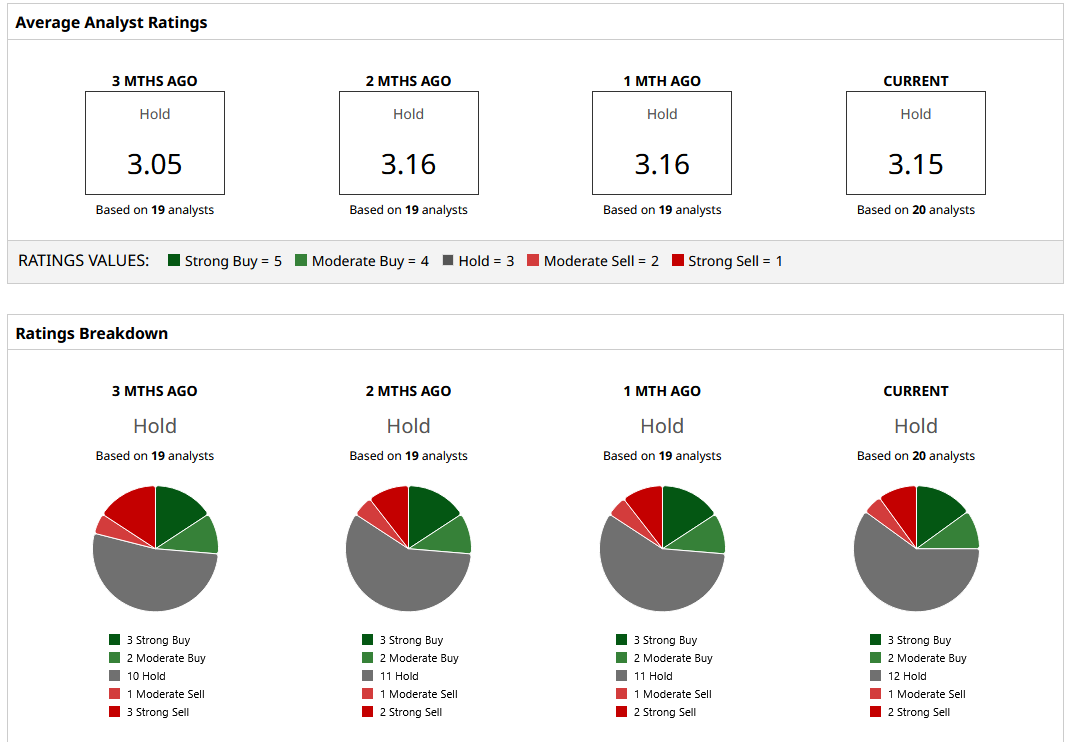
Based on 20 Wall Street analysts covering the stock, SMCI has a consensus “Hold” rating. The mean price target of $35.56 suggests potential upside of 19% from current levels. Analysts remain divided on the stock, with bulls emphasizing the company’s $60 billion order backlog and strengthened SpaceX relationship, while bears remain cautious due to ongoing legal issues and a questionable track record.
Post a Comment for "Before Chasing SMCI's SpaceX Rally, Recall Its Past Failures"