
Brown: Minnesota Wildfires Threaten Homes, Not Just Tourist Spots
A Personal Account of Evacuation and Loss
Catherine Conlan was at home north of Two Harbors, Minnesota, on May 15 when her mail carrier informed her about a small wildfire nearby. She went to check it out, only to find people stomping on a tiny grass fire. "I didn’t even see any flames," she said.
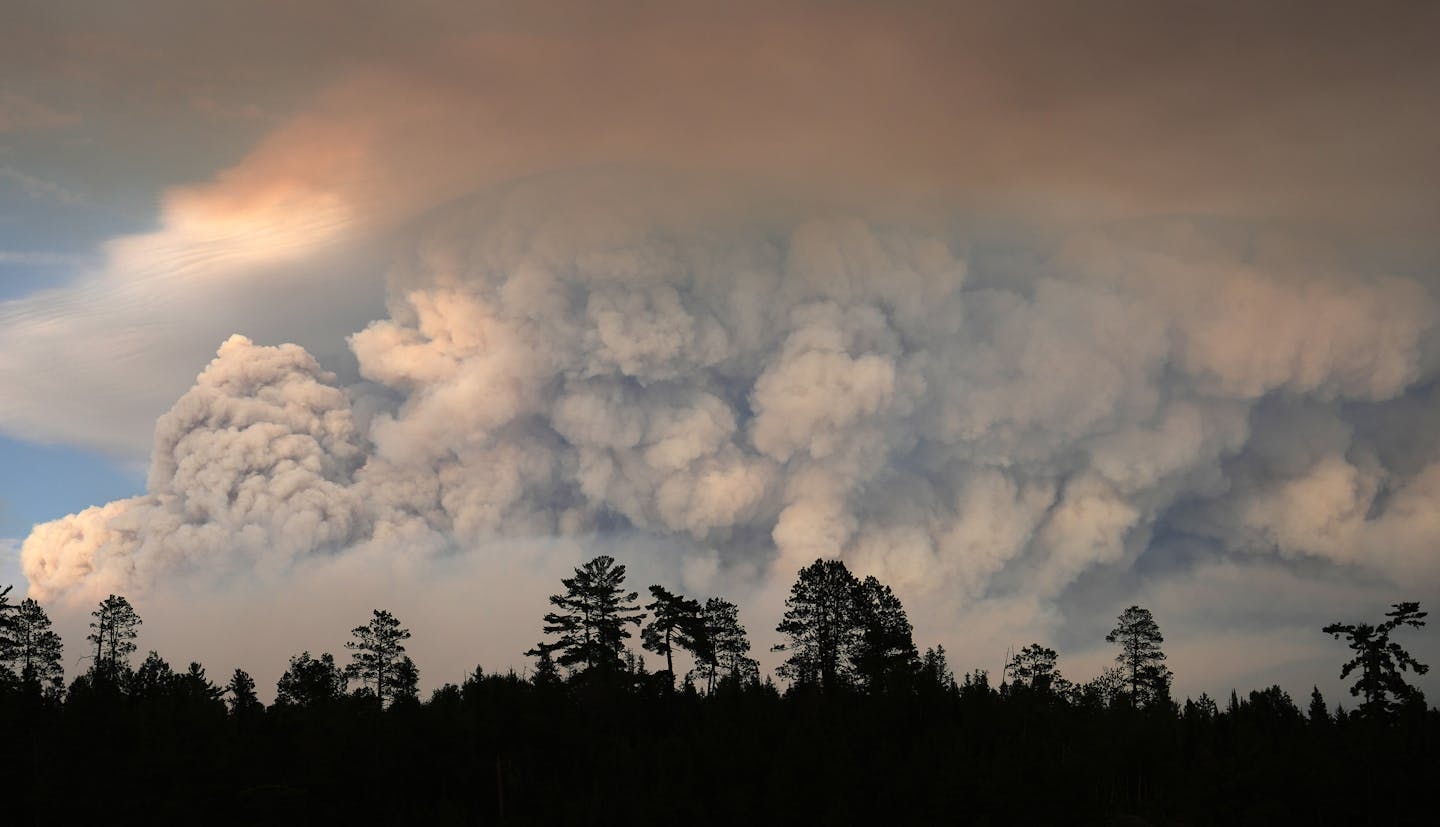
She returned home, thinking little of it, until a half hour later when "the sky blinked." The wildfire had exploded in size, with dry winds whipping a massive plume of dark smoke in front of the sun. Conlan went outside and realized she could hear the fire. "That was the moment where I was like, this is a really big problem," she said. "It had come through this half mile of wooded land between Highway 3 and our house."
With her husband, Matt, on the road for work, she loaded their dogs, Moose and Corbu, and little else into her vehicle. "At that point I could see the flames," she said. "The flames were there at the house. And it was just so very clear in that moment that there was nothing I could do, like with a hose or anything. I had to get out of there."
She drove away, passing a forestry truck racing up the driveway to fight the fire. They would not be allowed to return to their property for three days.
This terrifying scene is being repeated this week across northern Minnesota as people evacuate from the path of wildfires in northern St. Louis and Lake counties. As of midday Wednesday, July 15, the four largest fires had burned almost 30,000 acres. Evacuation zones included some well-populated roads near Ely, Minn. Some people had advanced warning, but others — like Conlan two months ago — had precious little time to decide what to bring and what must be left behind. Like Conlan then, they now wait to see what happened to their homes and belongings.
Impact on Communities and Tourism
Wildfires typically happen in forests, which often include popular tourism and recreation areas. This week’s fires closed the Boundary Waters Canoe Area Wilderness during peak camping season, along with many resorts. For many Minnesotans, this is the first concern when seeing the news.
I see this on our neighborhood social-media group in the rural community where I live in Itasca County. After a bad storm, cabin owners jump into the chat asking about their seasonal properties while year-round residents are still without electricity, clearing trees from roads and assessing damage to our homes. Though no harm is intended, it’s very frustrating when you’re in the thick of a disaster.
Conlan experienced this after she fled her home last May, waiting along Hwy. 61, which had been closed because of the fires. She couldn’t see her home behind the trees and flames, but could see the smoke turn dark black, indicating that the fire was consuming a building. Just then, a passing tourist commented that the closed road would prevent them from getting to their vacation destination in Grand Marais.
Conlan said she screamed a phrase that cannot be published. Something similar happened online, as commenters expressed gratitude that the wind blew the fire away from Betty’s Pies, a popular North Shore destination near Conlan’s home.
"Well, the wind blew the fire away from Betty’s Pies onto my property and up the shore," said Conlan. "So, I get it. People love Betty’s Pies. And when they think of the North Shore, that’s the image they have. But we’re living here, and we’re not all working at Betty’s Pies. This is a full community that’s as valid as any other community."
Dealing with Helplessness and Moving Forward
Feelings of helplessness come in different forms. Conlan was full of adrenaline, having fled her home. Her husband, Matt, was headed home in a truck crossing the Missouri/Iowa border when she called him with the news. "There’s a wildfire and I’ve evacuated and I have nothing and I don’t know what you’re coming home to," she remembers telling him.
He had to sit with those fears for a long day’s drive. At the same time, Conlan noted, life goes on. They had planned to attend a funeral the next day, so they bought new clothes and went. Their son’s wedding was the following week.
Ultimately, the May 15 fire destroyed three of the Conlans’ outbuildings, including their garage, and two vehicles. Their house was spared. Two months later, Catherine said she finally feels able to speak about what she learned from the experience that others face today. As someone who likes to meticulously plan her life, she said she was surprised by how inadequate her plans were.
"When you’re planning, don’t assume you have even half an hour because I did not. I went from ignorance to ‘I have to leave right now’ to leaving the property in like 10 minutes," said Conlan.
Lessons Learned and Moving On
She said making a list of what you really need to survive is crucial. That list might omit things that are more ephemeral. For instance, she considered running back into the house for the quilt one of her ancestors stitched in Bohemia before immigrating to the United States a century ago.
"I had this voice," she said. "I didn’t hear it, but it was like my brain just like went blank except for these words: Don’t, because if you start you won’t stop and you have to go now."
Since the fire, she’s been decluttering. She realized with the sudden loss of everything in her garage that the stuff she carries around isn’t as important as she once thought.
The woods around the Conlan home are gone. Every day reminds them of what was lost but also what it means. "I’m trying to focus on watching it come back," said Conlan. "There is joy in that, and just a lot of beauty in that. But it has changed, and that’s how it is from now on."
The same might be said of the rising fire danger in Minnesota, where ecology and climate change are altering lives, even today. If this is how it will be, let us all remember that people live here, and that the road back from disaster is more than just a vacation route.
Post a Comment for "Brown: Minnesota Wildfires Threaten Homes, Not Just Tourist Spots"