
Economist's Fed Road Map Echoes Kevin Warsh's Vision
The Federal Reserve and the Path to Reform
Federal Reserve Chairman Kevin Warsh has been navigating a complex landscape of monetary policy challenges. During his first news conference in June, he avoided direct answers on several key issues, instead referencing the formation of five task forces to examine the Fed’s operations. These groups, composed of Harvard-trained economists, former central bankers, and private-sector executives, are expected to release their findings later this year. Their focus areas include the central bank’s inflation and labor-market frameworks, communications strategy, balance-sheet policy, and data sources.
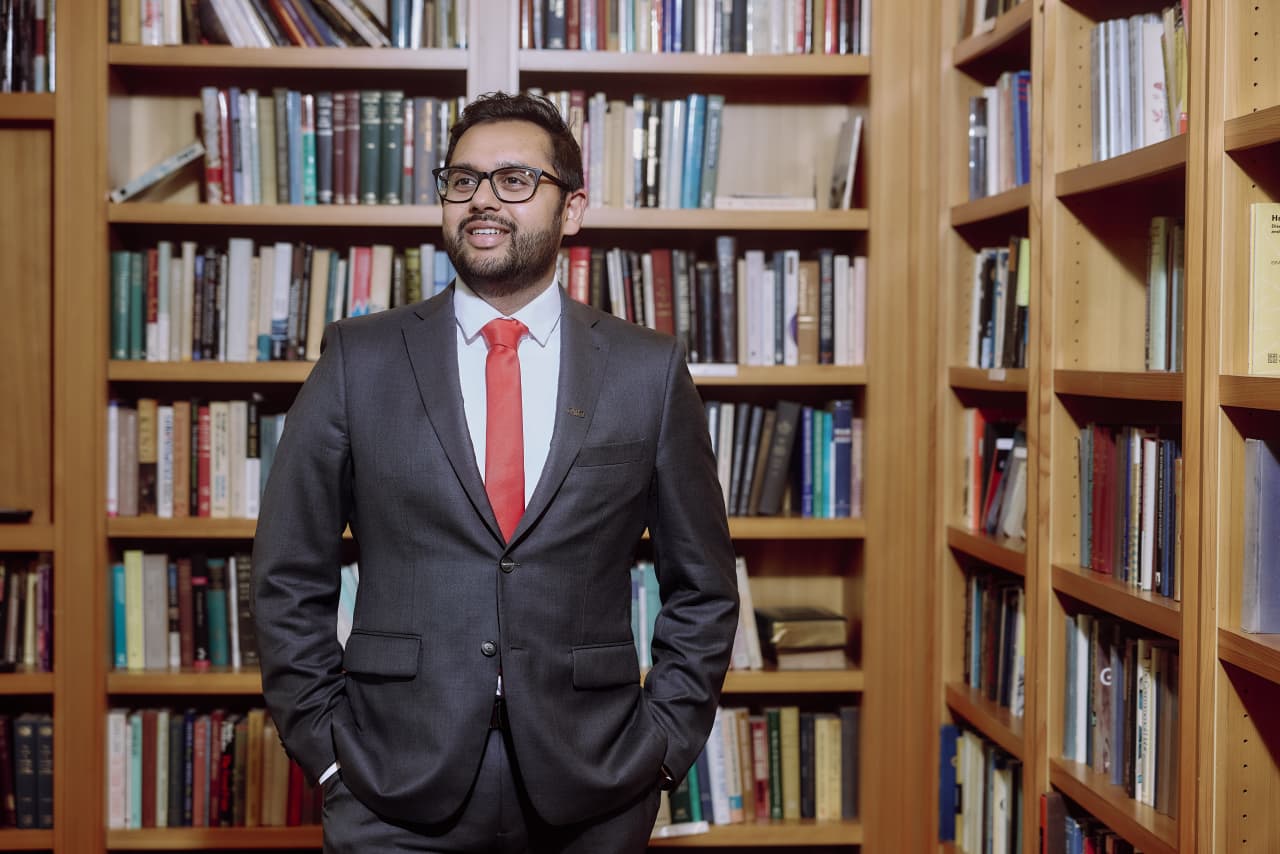
Interestingly, these topics align closely with the research of Jai Kedia, a Cato Institute research fellow who earned his doctorate in economics from the University of California, Irvine. Kedia has written extensively on what he sees as the Fed’s missteps in monetary policy and the necessary changes for new leadership. His work appears to serve as a potential blueprint for Warsh's initiatives, especially regarding the need for a return to more traditional Fed practices.
Reverting to Pre-2008 Practices
Kedia envisions the Fed reverting to its pre-2008 methods, which would involve reducing public communication about interest-rate outlooks and the scope of its work. He suggests that the Fed should regulate banks less and shrink its balance sheet, returning it to levels seen before the 2008-09 financial crisis. This would mean reducing the Fed’s holdings from roughly 26.5% of all assets held by U.S. commercial banks to just 10%.
He also advocates for a rules-based approach to monetary policy, such as the Taylor rule, which sets the ideal federal-funds rate based on a formula incorporating inflation and economic growth. Kedia argues that the correlation between the rate a policy rule indicated and the actual fed-funds rate fell significantly under recent chairs, and he believes that getting this number closer to 100% should be a priority.
Rules-Based Policy vs. Discretionary Policymaking
In an interview with Barron’s, Kedia elaborated on his vision for the Fed. He emphasized that while optimal decision-making is not possible, following a monetary-policy rule can provide clarity and reduce political interference. He noted that during the Great Moderation, the U.S. experienced low inflation and unemployment when the Fed followed a predictable rule.
Rules-based policy, according to Kedia, provides markets with a clear direction for interest rates and serves as a buffer against attacks on Fed independence. He also questioned the necessity of forward guidance, suggesting that a rule itself could indicate the future path of interest rates.
The Role of AI and Economic Data
Warsh has expressed optimism about AI-driven productivity gains being disinflationary, but Kedia disagrees. He argues that relying on AI projections for policy decisions introduces discretion, which he believes is unnecessary in a rules-based system. If AI leads to structural changes in the economy, Kedia suggests revisiting the inflation target every five years, as the current 2% target lacks academic support.
He also criticizes the Fed’s reliance on retrospective government data, which is subject to frequent revisions. Kedia calls for improved accuracy in government statistics and suggests that private data sources should benchmark their offerings to ensure reliability.
Fiscal Policy and the Fed’s Role
Kedia advocates for the Fed to step back from bailing out private companies, arguing that such assurances create conditions for future failures. He believes the Fed’s role should be limited to maintaining stable prices and maximum employment, rather than supporting private business.
Regarding the Fed’s balance sheet, Kedia supports a gradual reduction over 10 years to avoid disrupting the economy. He emphasizes the need for patience and careful planning in this process.
Congressional Involvement
Congress has previously attempted to reform the Fed through legislation like the Fed Oversight Reform and Modernization Act. Kedia supports such efforts but calls for clarity on the time frame for implementing policy rules. He believes the timeline should be long enough to prevent frequent changes but flexible enough to allow adjustments if needed.
Final Thoughts
Kedia offers advice to Warsh, urging him to stay focused on his mission despite potential criticism. He emphasizes the importance of making tough decisions, such as raising rates, regardless of external pressures.
Write to Emily Russell at emily.russell@barrons.com
Post a Comment for "Economist's Fed Road Map Echoes Kevin Warsh's Vision"