
Gold prices drop, buyers vanish as demand plummets 70%
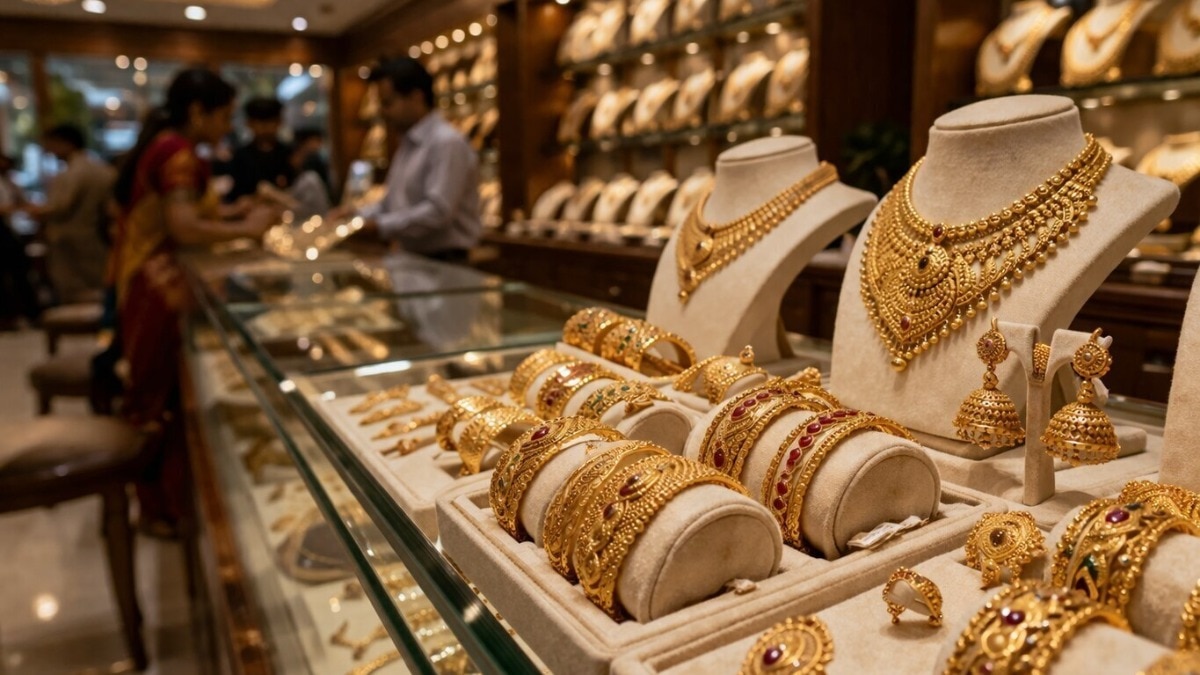
Gold's Sharp Correction Reshapes Indian Buying Behavior
Gold, once a symbol of wealth and security for many Indian households, is now facing a significant shift in how it is perceived and purchased. The sharp correction in gold prices has led to a dramatic change in consumer behavior, with many opting to sell existing gold rather than invest in new purchases.
After falling nearly Rs 50,000 from its record high earlier this year, gold demand in the domestic market has dropped by more than 70%, according to the India Bullion and Jewellers Association (IBJA). This decline comes as households increasingly choose to monetize their old jewelry instead of making fresh purchases. The situation reflects a broader trend where the value of gold has become less attractive due to various economic factors.
On Wednesday, MCX gold was trading at around Rs 1,42,546 per 10 grams, which is more than Rs 50,000 below its all-time intraday high of Rs 1,92,991. Globally, spot gold slipped 0.6% to $3,981.69 an ounce after hitting a seven-month low in the previous session. This drop has been attributed to expectations of higher US interest rates, which have continued to weigh on bullion.
Surendra Mehta, Secretary of the India Bullion and Jewellers Association (IBJA), explained that gold demand in India has fallen significantly after the government increased customs duty on gold from 6% to 15% in May. He also noted that demand has remained subdued following Prime Minister Narendra Modi's appeal to citizens to postpone gold purchases for a year. The customs duty hike came just two days after the prime minister's appeal, according to the report.
Households Are Selling, Not Buying
The sharp fall in prices has prompted many households to sell their existing gold holdings rather than purchase new jewelry. According to a Moneycontrol report, the sale of old gold jewelry during the April-June quarter is estimated to be close to 50 tonnes, which is more than 50% higher than the corresponding period last year.
Mehta mentioned that consumers and investors are selling gold in the open market due to fears that prices could fall further. This trend highlights a growing uncertainty among buyers about the future trajectory of gold prices.
Why Has Gold Been Falling?
Gold has been under pressure globally as investors move away from safe-haven assets amid expectations that the US Federal Reserve will keep interest rates higher for longer. Spot gold has slipped below the key $4,000-an-ounce mark and is heading for its fourth straight monthly decline, while this quarter is set to be the steepest quarterly fall since 2013.
Higher interest-rate expectations have strengthened the US dollar, reducing the appeal of non-yielding assets such as gold. According to Dr. Renisha Chainani, Head of Research at Augmont, gold has now declined for four consecutive weeks and is down nearly 30% from its January 2026 all-time high of $5,597 an ounce. She pointed out that a combination of a hawkish US Federal Reserve, elevated inflation, and a stronger dollar has remained the biggest headwind for bullion.
Dr. Chainani noted that although the recent US-Iran conflict briefly boosted demand for safe-haven assets, the rise in crude oil prices shifted the market's focus back to inflation and the possibility of further interest-rate hikes, limiting gold's ability to recover.
Will Gold Fall Further?
According to Dr. Chainani, investors should closely watch key US economic data, particularly the non-farm payrolls report and manufacturing data, as these could influence expectations around future Federal Reserve policy. She suggested that a weaker labor market or softer inflation could help gold recover towards the $4,100-$4,150 range. However, a strong US jobs report could push prices back towards the crucial $4,000 support level.
In its latest daily bullion report, Augmont said gold has already broken below the important $4,000 level and is trading around $3,960. If this support fails, prices could decline further towards $3,600 (around Rs 1.30 lakh per 10 grams). However, given that the market is now in oversold territory, a short-term relief rally towards $4,100-$4,165 (roughly Rs 1.45 lakh-1.47 lakh) also remains possible.
What Should Investors Do?
The nearly Rs 50,000 correction from record highs has made gold significantly cheaper than it was a few months ago. However, experts advise investors not to rush into lump-sum buying simply because prices have corrected sharply.
The near-term direction of gold will largely depend on US interest rates, the strength of the dollar, and developments in global geopolitics. Investors looking to add gold to their portfolios may be better served by accumulating gradually rather than trying to predict the exact bottom.
Post a Comment for "Gold prices drop, buyers vanish as demand plummets 70%"