
GST Day 2026: India's Nine-Year GST Journey Celebrates Tax Reform Triumph
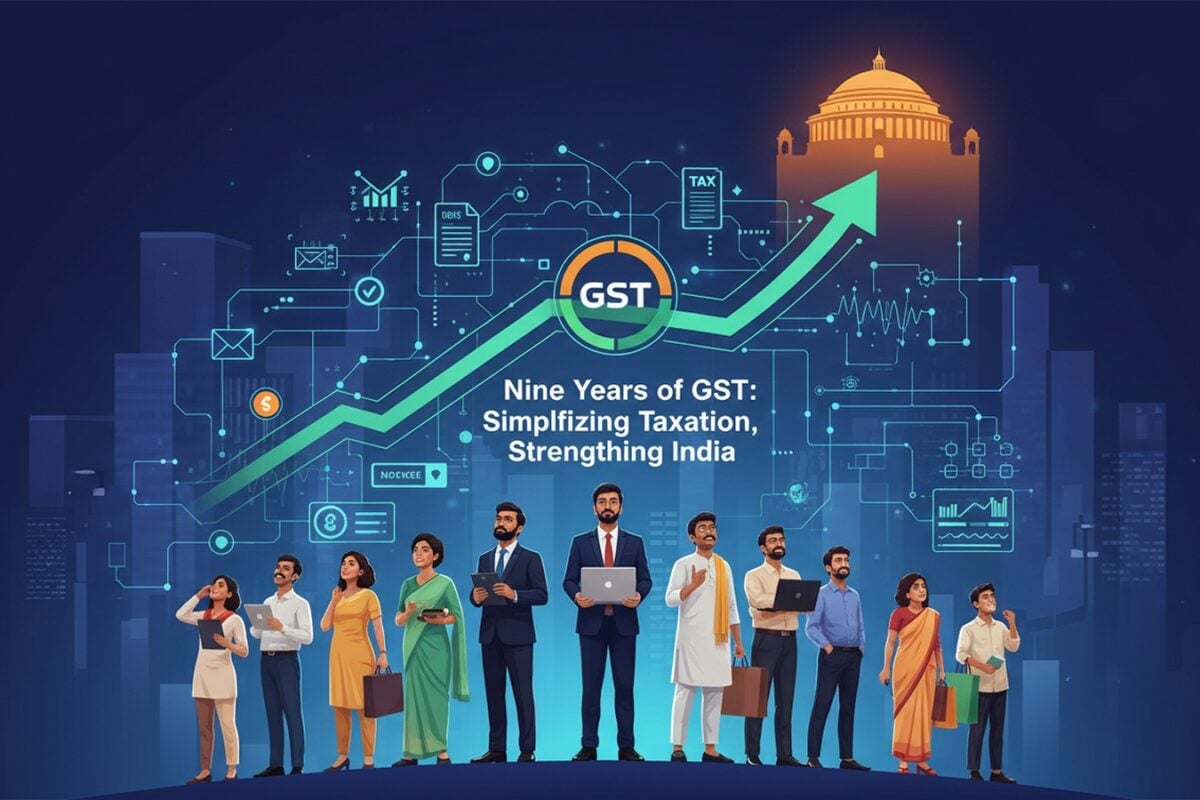
GST Day 2026: A Milestone in India’s Economic Transformation
India is celebrating GST Day 2026, marking nine years since the introduction of the Goods and Services Tax (GST), one of the most significant economic reforms in the country's history. Launched on July 1, 2017, GST replaced multiple indirect taxes with a unified tax system under the vision of “One Nation, One Tax.” Over the past nine years, this reform has transformed India’s taxation landscape through digitalization, improved compliance, simplified procedures, and stronger coordination between the central government and states.
The latest GST 2.0 reforms introduced in 2025 have further streamlined tax rates, eased compliance, and expanded benefits for consumers, businesses, MSMEs, exporters, and farmers. As India observes the ninth anniversary of GST, the indirect tax regime continues to evolve with reforms aimed at making taxation simpler, more transparent, and technology-driven.
A Landmark Reform in India’s Tax System
GST fundamentally changed how indirect taxes are levied by taxing the supply of goods and services instead of separate taxes on manufacturing, sale, and services. As a destination-based consumption tax, revenue is shared with the state where goods or services are consumed. The reform also established uniform tax rates across the country and introduced a robust digital ecosystem through the Goods and Services Tax Network (GSTN), enabling online registration, return filing, and tax administration.
Since its launch on July 1, 2017, GST has unified India’s fragmented indirect tax structure by subsuming 17 taxes and 13 cesses into a single framework. The reform eliminated the cascading “tax on tax” effect and created a common national market, improving the ease of doing business while promoting economic integration across states.
Key Features of GST
Some of the major features of the GST regime include:
- One Nation, One Tax framework
- Destination-based consumption tax
- Uniform tax rates across India
- Dual GST structure comprising CGST, SGST, and IGST
- GST Council for policy decisions
- Technology-driven compliance through GSTN
GST Council Strengthens Cooperative Federalism
The GST Council has emerged as a unique institution that brings the Centre and States together to make consensus-based tax decisions. Over the years, the Council has regularly revised tax rates, simplified compliance procedures, and introduced reforms to respond to changing economic conditions. Its collaborative approach has strengthened cooperative federalism while ensuring policy stability.
GST 2.0: The Next Generation of Tax Reforms
A major milestone came in 2025 when the GST Council approved the Next-Generation GST reforms, popularly known as GST 2.0. The reforms simplified the tax structure by introducing two primary tax slabs, 5% and 18%, while imposing a 40% rate on luxury and sin goods such as tobacco, online gaming, lottery, aerated drinks, yachts, and private aircraft.
GST 2.0 also introduced faster registrations, quicker refunds, simplified return filing, and lower compliance costs, particularly benefiting MSMEs and startups.
Relief for Consumers and Businesses
The reforms have reduced tax burdens on several essential goods and services while improving affordability for households. GST exemptions on insurance and essential medicines have strengthened household financial protection and improved healthcare access. For industries, lower GST rates on sectors such as cement and handicrafts have reduced production costs and enhanced competitiveness. Correcting inverted duty structures has also encouraged domestic manufacturing and exports.
Easier Compliance for MSMEs
Over the years, several measures have simplified GST compliance for small businesses. These include:
- Raising the GST registration threshold from ₹20 lakh to ₹40 lakh for goods suppliers.
- Increasing the Composition Scheme limit to ₹1.5 crore.
- Introducing the Quarterly Return Monthly Payment (QRMP) Scheme.
- SMS-based NIL return filing.
- Simplified GST registration for low-risk applicants.
- Lower pre-deposit requirements for GST appeals.
- Relief from interest and penalties for eligible legacy tax disputes.
Technology Drives GST Administration
Technology has become the backbone of the GST ecosystem. The GSTN portal, e-invoicing, automated return filing, and invoice matching have significantly improved transparency while reducing paperwork and manual intervention. Artificial intelligence, machine learning, and data analytics are increasingly being used to detect tax evasion, identify high-risk taxpayers, and improve compliance without burdening honest taxpayers. These initiatives have made tax administration more efficient while improving fiscal transparency.
GST Collections Reflect Economic Growth
The steady rise in GST collections reflects India’s expanding formal economy and improving tax compliance. The number of registered GST taxpayers has increased from 66.5 lakh in 2017 to 1.65 crore as of May 2026, highlighting greater formalization of businesses. Annual gross GST collections have grown from around ₹7.4 lakh crore in 2017-18 to nearly ₹22.27 lakh crore in 2025-26, while collections during April-May 2026 reached around ₹4.37 lakh crore, indicating sustained economic momentum.
GST’s Continuing Reform Journey
Nine years after its launch, GST continues to evolve as one of India’s most significant structural reforms. From creating a unified national market to embracing digital governance and introducing GST 2.0, the tax regime has simplified compliance, strengthened cooperative federalism, and expanded the formal economy. As India celebrates GST Day 2026, the reform stands as a symbol of the country’s ongoing efforts to build a simpler, more transparent, and growth-oriented tax system while supporting the vision of a Viksit Bharat.
Post a Comment for "GST Day 2026: India's Nine-Year GST Journey Celebrates Tax Reform Triumph"