
Hawaii's Historic Disasters: Why Now is the Perfect Time to Visit
A Journey of Healing and Rebuilding in Hawaii
"Coming Back" is a USA TODAY series spotlighting destinations that are ready to welcome visitors in the aftermath of hardship. Hawaii, often seen as paradise, has faced its share of challenges in recent years.
Hawaii is a perennial destination that draws visitors eager to experience its stunning beaches, cascading waterfalls, and rich culture, guided by the warmth of aloha. However, for many residents, the reality has been far more complex.
Ronald Williams, a Maui business owner, lost nearly everything in the 2023 wildfires that decimated the town of Lahaina overnight. "At the beginning, I was hoping that recovery would be a little quicker," he said. "We tried everything possible. But unfortunately, everything ... started to take its toll on the company. It's been a hard journey; it's been a long time."
The past three years have brought two historic disasters to the islands of Oahu and Maui. On Aug. 8, 2023, downed power lines sparked wildfires that burned homes, businesses, and cultural sites to the ground in Lahaina, marking the deadliest wildfire in modern U.S. history. This past March, a series of Kona low storms slammed into the state with torrential rain and high winds, causing severe flooding.
Thousands were evacuated because of the threat of a dam break, while others were trapped by flooded roads, and nearly 400 homes were submerged. Reaching a place of healing for these two islands has been a tricky balancing act between their heavy dependence on tourism and their grief over what was lost.
Nearly a quarter of Hawaii's economy is tourism, with Maui and Oahu being the most visited of the four main islands. In 2024, the sector supported 211,000 jobs and generated $20.72 billion in visitor spending, driven by over 9.7 million tourist arrivals statewide. The state recently launched a $2 million initiative to educate and encourage travel to Hawaii this summer.
In the aftermath of these events, travelers were uncertain whether it was appropriate to visit and whether doing so would cause more harm to a community already in crisis. Visitor arrivals to Oahu in March dropped 1.7% compared with the same month last year because of cancellations and closures. Maui has seen steady recovery in visitor arrivals, with a 7% increase in 2025 compared with 2024, but remains below 2023 levels.
Welcoming Back Travelers
Welcoming back travelers is a critical part of the future of the West Maui and North Shore towns. Visitors are asked to be mindful of the loss and support the local businesses that make up the heart of these communities. Meanwhile, the impacts of their tourist dollars run much deeper than just economic.
"Through this whole thing, you only think about how to survive it, but your dreams got washed away," Williams said. "So, by reopening again, now we can dream again about, you know, kids having a great education, doing what they want to do, not worrying about paying your bills and stuff."
It's been nearly three years since the wildfires, but Lahaina is still rebuilding, both physically and emotionally. Although major strides have been made, progress doesn't fully relieve the psychological toll of the fires. A University of Hawaii Economic Research Organization (UHERO) survey from January 2024 and February 2025 found higher risks of depression and anxiety among burn zone residents.
Still, the community celebrates the milestones. As of June, over 200 homes have been rebuilt, including an affordable housing complex, with 355 additional building permits for residential and commercial structures in the process. More businesses and areas are open, but some roads and parts of town remain closed to the public.
And there's more to come, with a master plan to restore Lahaina's historic Royal Complex – "a deeply sacred area in the heart of Lahaina" that was once the political capital of the Hawaiian Kingdom – in development. Community members have been asked to weigh in on the plan, expected to be finalized in the summer of 2027.
A Hard Journey on Maui
Born and raised on Oahu's North Shore, Pono Choy remembers waking up at 3 a.m. that March morning and being told his family had to evacuate their home to the nearby high school. The rivers by his house had flooded over. As soon as the road reopened, he went back to find his studio that's rented to a tenant a foot underwater. His own house flooded by a couple of inches.
"It was very surreal," said the project superintendent for Hensel Phelps Construction. "Of course, some people, they lost everything. It was so crazy, no one really knew what was going on and how bad it was here or there."
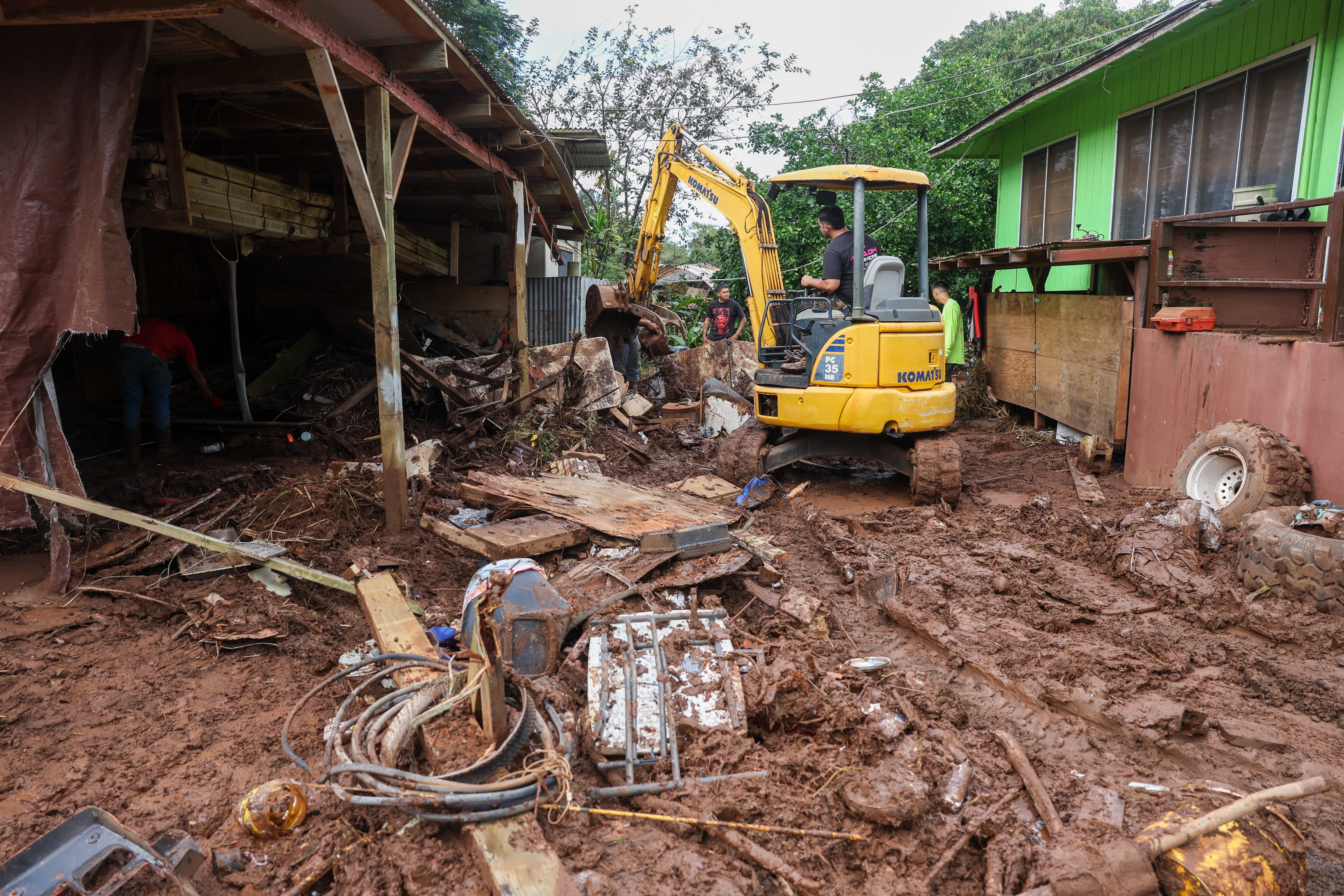
North Shore residents immediately leaped into action, helping their neighbors who were trapped, and cleaning out homes swamped in mud and clearing debris. "I think North Shore is a very community-based, you know, like help-your-neighbor kind of a deal," Choy said.
Through word of mouth, a wife of Choy's co-worker, who is "super tapped into" the community, began compiling a list of North Shore residents whose homes were damaged and didn't know next steps. One family had nearly 6 feet of water flood their house. In response, Choy coordinated with Hawaii Rep. Sean Quinlan to create a volunteer Hensel Phelps team who met with and helped households rebuild, whether providing resources or construction services.
Since the floods, Choy's team has assisted around 10 North Shore families, and continues to meet with more. While much of North Shore has since reopened, there's still work to be done, including home construction, road work and dredging the rivers.
Tips to Support Recovery in Hawaii
If you're staying in Waikiki this summer, the Hawaiian Council, Hawaii Visitors and Convention Bureau, Hawaii Tourism Authority, and E Noa Tours have partnered to launch a roundtrip shuttle to the North Shore to bring patrons to struggling businesses, called North Shore Huakai. The cost is $5 for non-residents, and riders must show a receipt from a participating business to reboard. The shuttle runs until Sept. 26.
One of the most impactful ways tourists can support Hawaii right now is to directly support local businesses. To find which have reopened and need support, check out online resources such as What's Open Maui and the Go Hawaii website.
As Pezzulo put it, there are still parts of Lahaina and the North Shore that are in slower recovery. If you see homes under construction or signs prohibiting the public from entering, be respectful and give these residents space.
Post a Comment for "Hawaii's Historic Disasters: Why Now is the Perfect Time to Visit"