
How Startups Are Revolutionizing the Pentagon's Drone Sector
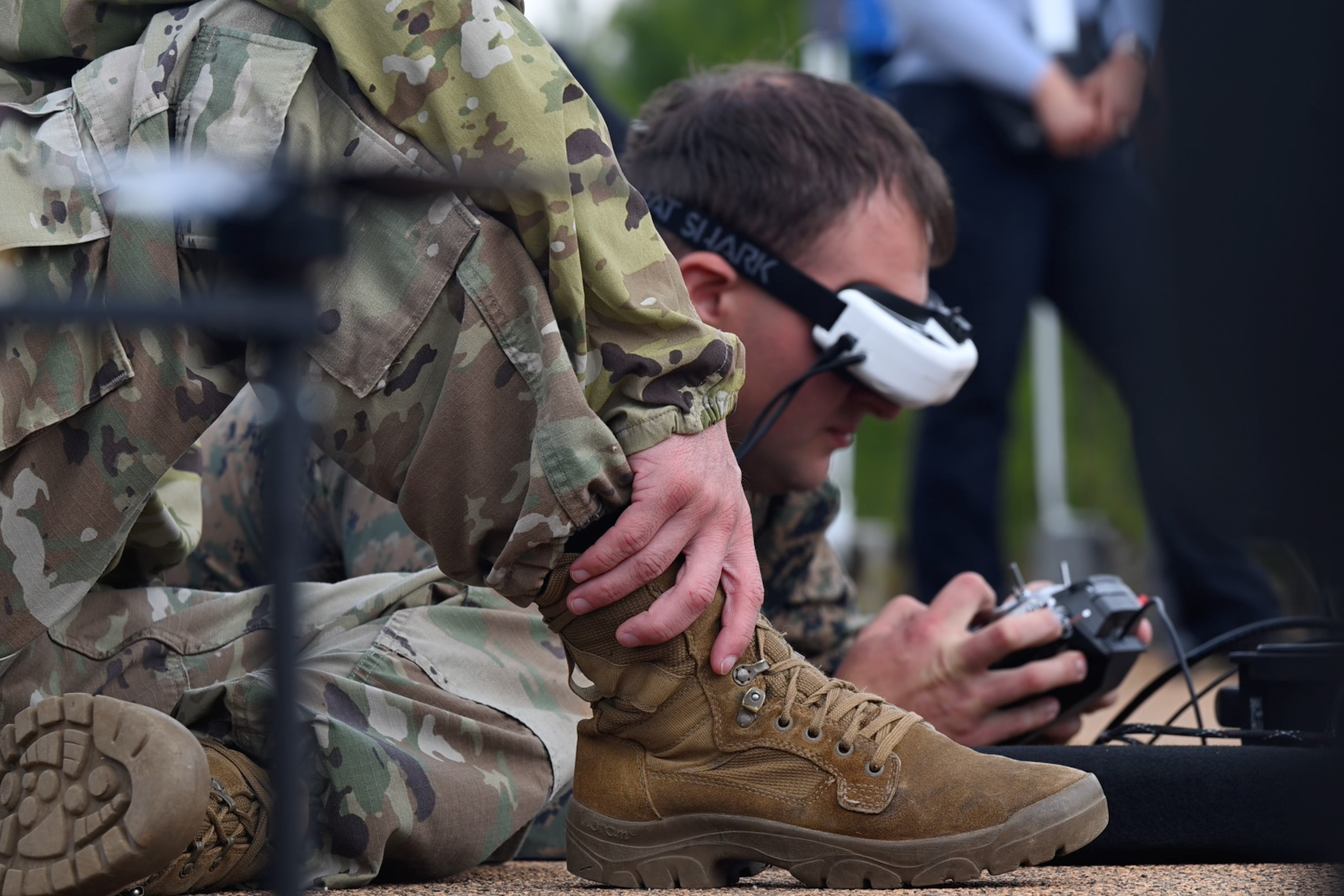
Overview of the Drone Dominance Competition
Last month, the Defense Department concluded another round of the Drone Dominance competition, a $1.1 billion initiative designed to bolster the domestic drone industry and supply commercially developed drones to the military. This 12-day event took place at Camp Grayling, Michigan, where 49 companies participated across various mission sets. Officials evaluated their small unmanned aircraft systems based on performance, ease of use, and the companies' ability to produce at scale. By the end of the event, 19 companies advanced to the next round of testing, which is scheduled to begin in August.
The list of finalists provides insight into the rapidly evolving defense drone industry. Nearly all are privately held companies focusing on small UASs rather than traditional weapons. About half of them already have systems on the Defense Department's Blue UAS Cleared or Blue UAS Select lists, making it easier for military units to purchase these systems. Most of the companies are relatively young: seven were founded within the past 13 years, and eight within the past four.
Insights from Industry Experts
To better understand the current state of the field, Military Times spoke with J.R. Mullis, a retired Air Force contracting officer who founded the defense technology consultancy ellimaC Partners and Watchtower, a nonprofit that connects emerging defense technology companies with military organizations and hosts its own Best Drone Team Competition.
Mullis noted that while many of the companies are young, they are considerably "more mature" than the average drone startup. More importantly, they are developing technologies that the military can deploy today. "They're able to be deployed right now," he said.
According to Mullis, the finalists share less in common than many observers might assume. Rather than competing to build the same aircraft, many are developing different pieces of the same capability, from airframes and sensors to autonomy software. "If you were to circle all of them and mash them together," he said, "I think it would make a really good capability."
Still, the dominance of younger companies reflects a broader shift in how the Pentagon acquires technology. Mullis said the government has become more willing to identify operational gaps, giving entrepreneurs with specialized expertise an opportunity to build products that directly address military needs.
Manufacturing Challenges for Small Companies
While coming up with a good idea is only part of the challenge, according to Mullis, the biggest obstacle facing small defense companies isn't developing technology, but rather producing enough of it. A startup may successfully build a prototype, sell a handful of systems, and convince the military it has a winning product. However, when the government suddenly wants thousands, a small company or startup may lack the manufacturing capacity and capital needed to meet demand.
One example of how companies overcome this hurdle is the partnership between Georgia-based Kinetic Frames and Alabama-based Griffon Aerospace. Kinetic Frames is a relatively young company with a modest public presence, while Griffon has received more than $400 million in federal contracts since 2009. Together, the companies have produced and delivered more than 2,000 drones to the Defense Department, illustrating how smaller innovators can pair with established manufacturers to meet the military's production demands.
"Scaling in order to meet the needs of the government is, I would say, one of the valleys of death [for a small company]," Mullis added.
Role of Major Defense Contractors
At first glance, Drone Dominance appears to be dominated by startups, but Mullis said that doesn't mean major defense contractors are ignoring the market. Many of the industry's largest "prime" contractors—companies that hold the government's primary contracts—are already working on similar technologies through existing programs. Because those efforts are often backed by long-term government funding, he said, they don't need the visibility that comes with participating in a public competition.
"The publicity matters for those small companies," Mullis said. "It does not matter at all for those primes." That doesn't mean established companies are absent from the competition, though. Among the current finalists are publicly traded companies such as Kratos Defense & Security Solutions and Red Cat Holdings, both of which have built businesses around unmanned aircraft. Others represent partnerships between established defense manufacturers and newer drone developers, reflecting the increasingly collaborative nature of the market.
The Future of Defense Companies
Mullis believes that Drone Dominance is doing more than selecting companies for future contracts. He said the competition reflects a broader shift in defense acquisition by "encouraging and almost forcing collaboration." Earlier this year, the Defense Department announced the Drone Dominance Lethality Prize, which paired drone competitors with approved manufacturers capable of supplying standardized explosive payloads for one-way attack drones.
Even companies that fail to win contracts stand to benefit. "The best founders in the world wear failure like a badge of honor," he said. "If you go to Drone Dominance, you get, if nothing else, real feedback on your technology." In an increasingly crowded drone market, that feedback should be considered valuable. "Even if they're not selected, they'll have their marching orders and they'll know what to do to make it better," Mullis said.
Post a Comment for "How Startups Are Revolutionizing the Pentagon's Drone Sector"