
Human Body Limits: 25 Shocking Feats Ever Achieved
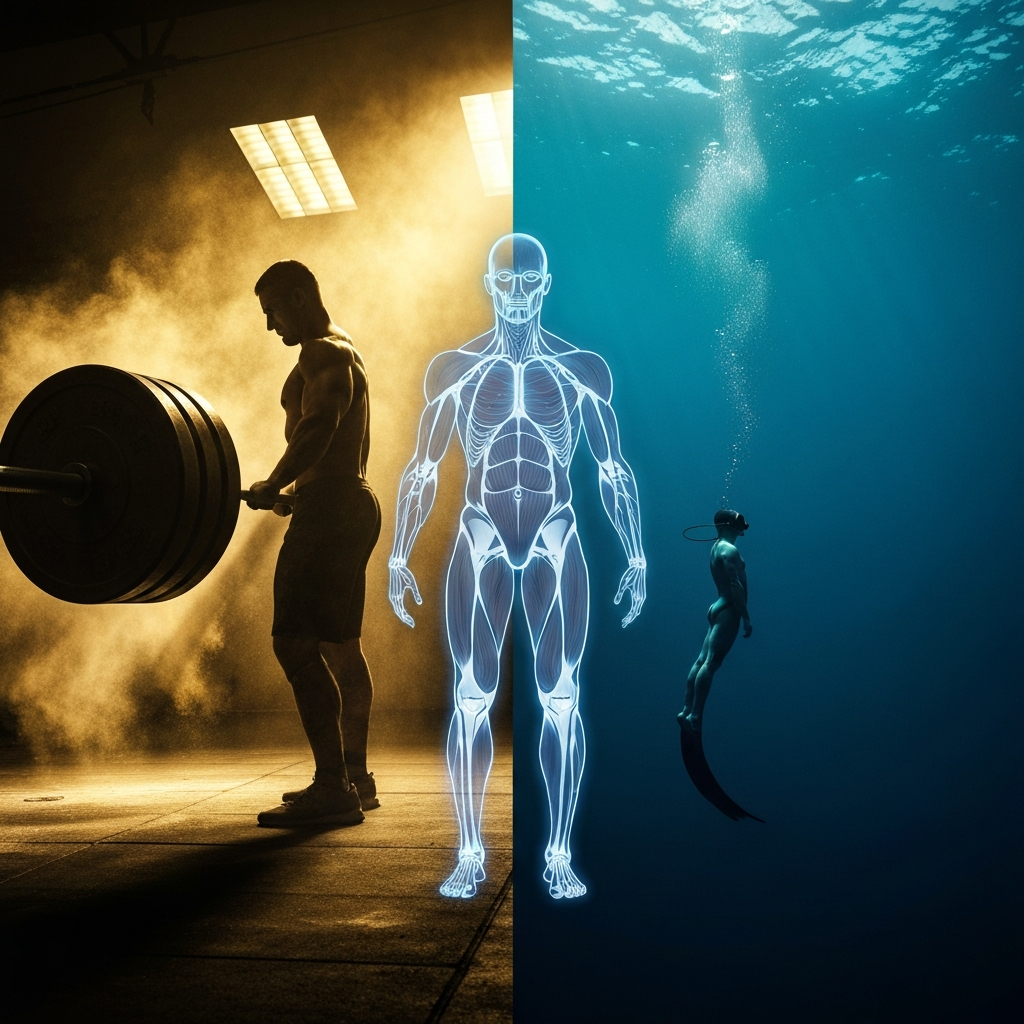
Feats of Incredible Strength and Power
- Hafþór Björnsson’s 501 kg Deadlift
On May 2, 2020, Icelandic strongman Hafþór Júlíus Björnsson — best known as “The Mountain” from Game of Thrones — pulled 501 kg (1,104.5 lbs) off the floor in a deadlift that shattered the previous world record. To put that in perspective, he lifted the equivalent of a fully-grown polar bear with room to spare.
What makes this possible isn’t just muscle mass. Elite strongmen train their central nervous system to recruit an almost absurd percentage of available muscle fibers simultaneously, something untrained individuals simply cannot do. Björnsson’s lift remains one of the greatest single moments of raw human power ever recorded.
- Kevin Fast Pulls a 188-Tonne Aircraft
Canadian strongman and reverend Kevin Fast has made a career out of pulling things that have no business moving because of a single human. In 2009, he pulled a CC-177 Globemaster III aircraft weighing 188.83 tonnes (416,299 lbs) a distance of 8.8 meters, setting a Guinness World Record for the heaviest aircraft pulled by a man.
The key isn’t just brute force — it’s leverage, friction management, and an explosive initial burst. Fast wore a harness, dug into the ground, and used his entire body as a lever. Still, the raw power required staggers the imagination.
- Georges Christen’s Jaw of Steel
Luxembourg strongman Georges Christen built a career on doing things with his teeth that most people wouldn’t attempt with both hands. He has used his jaw to support automobiles, lift heavy platforms bearing multiple people, and perform dental feats that would make any dentist wince.
Human jaw muscles are actually among the strongest relative to their size in the body, capable of generating up to 160 pounds of force at the molars. Christen’s extreme training pushed that to extraordinary levels — a reminder that even overlooked muscles hold hidden power.
- Paul Anderson’s Back Lift Record
In 1957, American weightlifter Paul Anderson performed a back lift of 2,844 kg (6,270 lbs), a feat still cited as one of the greatest displays of raw human strength in history. Anderson raised a table loaded with automobile parts and a lead-filled safe using nothing but his back and legs.
This feat highlights the incredible compressive strength of the human spine when properly positioned and supported by trained musculature — a biological architecture refined by millions of years of evolution.
Feats of Extreme Endurance and Stamina
- Dean Karnazes Runs 50 Marathons in 50 Days
In 2006, ultramarathoner Dean Karnazes completed 50 marathons in 50 consecutive days, running one in each of the 50 U.S. states. That’s 1,310 miles of running back-to-back, finishing his final marathon in New York City’s Central Park.
Karnazes’ body operates differently than most — genetic testing revealed his muscles clear lactic acid at an unusually efficient rate, meaning he doesn’t “burn out” the way typical runners do. He reportedly also ran 350 miles non-stop, stopping only to sleep briefly. Even with rare genetics, his training regime was relentless.
- Sarah Thomas Swims the Channel Four Times Non-Stop
In September 2019, American swimmer Sarah Thomas became the first person ever to swim the English Channel four consecutive times without stopping — a total of approximately 130 miles (209 km) in 54 hours and 10 minutes. She completed this after being treated for breast cancer, making the feat even more remarkable.
Open-water swimming at this level demands more than lung capacity. The body must regulate temperature through a combination of fat insulation and increased metabolic heat production, all while fighting tidal currents that can add miles to any crossing.
- Budimir Šobat Holds His Breath for 24 Minutes and 37 Seconds
In March 2021, Croatian freediver Budimir Šobat set a world record for static apnea (breath-holding while submerged and motionless) at a stunning 24 minutes and 37 seconds. The previous record he broke was also his own.
Elite freedivers train their spleens — yes, their spleens — to contract and release a surge of oxygenated red blood cells into the bloodstream, a physiological trick also seen in deep-diving marine mammals like seals. Combined with extreme breath-holding techniques and heart rate reduction through the mammalian dive reflex, these athletes temporarily transform their biology.
- Randy Gardner Stays Awake for 11 Days
In 1964, 17-year-old Randy Gardner stayed awake for 11 days and 25 minutes (264.4 hours) as part of a supervised science experiment in San Diego. Guinness World Records has since stopped monitoring this category due to the extreme health risks involved.
By the final days, Gardner experienced hallucinations, memory lapses, and paranoia — a testament to just how profoundly the brain depends on sleep for basic function. His feat remains a benchmark in sleep deprivation research and a dramatic illustration of what sleep loss actually does to the human mind.
- Wim Hof Conquers the Cold
Wim Hof, nicknamed “The Iceman,” has climbed to near the summit of Mount Everest wearing only shorts and shoes, run a half marathon barefoot above the Arctic Circle, and spent nearly two hours submerged in ice baths. He holds over 26 Guinness World Records related to cold exposure.
His “Wim Hof Method” — a combination of controlled hyperventilation, breath retention, and cold exposure — has been studied scientifically. Remarkably, researchers found Hof could consciously influence his autonomic nervous system and immune response, something previously thought impossible. He’s not just tough — he’s physiologically unusual in documented, measurable ways.
Feats of Unbelievable Flexibility and Body Control
-
Daniel Browning Smith — The Rubberboy
Daniel Browning Smith holds the Guinness World Record as the most flexible person alive. He can dislocate both arms and legs, rotate his torso 180 degrees, and squeeze through an unstrung tennis racket. He’s appeared on every major American talk show and holds a jaw-dropping seven Guinness records.Hypermobility of this degree is partly genetic — some individuals have variations in collagen production that allow their connective tissue to stretch far beyond normal ranges. Smith also trained extensively, amplifying natural ability into something that genuinely looks superhuman.
-
Leilani Franco and Extreme Contortion
British contortionist Leilani Franco can perform a headstand while holding her legs in a full backbend touching her own head. She set a world record for the fastest contortion roll, completing it in 3.017 seconds. Her spine bends at angles that would hospitalize most people.Contortionists train from a very young age, and regular extreme stretching gradually reshapes the elasticity of spinal ligaments and the hip capsule. The nervous system also adapts, overcoming protective reflexes that normally prevent joints from reaching dangerous ranges of motion.
-
Zlata — The Human Cobra
German contortionist Zlata (Julia Günthel) is one of the most extreme backbenders in the world. She can fold her body backward until her feet touch her face from behind and hold the position with apparent ease. She has posed inside suitcases, tiny boxes, and wine glasses.Her feats are a masterclass in what years of systematic flexibility training can do to the human musculoskeletal system — transforming limits that feel absolute into mere starting points.
Feats of Extreme Resilience and Pain Tolerance
-
Aron Ralston’s Self-Amputation
In April 2003, climber Aron Ralston became trapped in Blue John Canyon, Utah, when a boulder pinned his right forearm. After 127 hours alone without food and nearly out of water, he amputated his own arm below the elbow with a dull multi-tool, then rappelled 65 feet and hiked out to find rescuers.His survival required extraordinary mental endurance alongside the physical act itself. The human body under extreme duress releases massive adrenaline and endorphin surges — mechanisms that temporarily suppress pain enough to allow survival actions most of us can’t fathom.
-
Firewalking — Walking Across Burning Coals
Firewalking has been practiced in cultures across the globe for thousands of years — from India and Sri Lanka to Japan and Spain. Some individuals walk across coal beds reaching temperatures of 1,000°F (538°C) without visible burns.The physics here matter: wood coals have low thermal conductivity and the foot-coal contact time is brief. But practitioners also undergo significant psychological conditioning, entering states of focused calm that alter their physiological stress response. It’s a striking combination of physics and mental discipline.
-
The Electricity Endurance of José Delgado Rivera
Some individuals have developed unusual tolerance for electrical current, performing stunts with electricity flowing through their bodies at levels that would injure or kill an untrained person. José Delgado Rivera, known as “Electrico,” famously demonstrated passing current through his body, lighting fluorescent tubes and cooking food with his bare hands.While partly explained by technique and control of current pathways, these performers genuinely train their bodies to manage conductivity, showcasing a startling edge of human physiological adaptation.
Feats of Unique Physiological Adaptations and Skills
-
Angus Barbieri Fasts for 382 Days
Between June 1965 and July 1966, Scottish man Angus Barbieri fasted for 382 consecutive days under close medical supervision at the University of Dundee. He consumed only vitamins, electrolytes, and non-caloric fluids. He lost 276 lbs (125 kg), going from 456 lbs to 180 lbs.His body sustained itself almost entirely on stored adipose tissue, a metabolic process called ketosis taken to an extreme rarely documented in medical literature. Electrolyte monitoring was critical — the real danger in prolonged fasting isn’t calorie deprivation but electrolyte imbalance disrupting heart rhythm.
-
Michel Lotito Eats an Entire Airplane
French entertainer Michel Lotito — known as “Monsieur Mangetout” (Mr. Eat-Everything) — consumed approximately 9 tonnes of metal, glass, and rubber over his lifetime. His most famous feat was eating an entire Cessna 150 airplane between 1978 and 1980, consuming it piece by piece.Lotito had an unusually thick stomach lining and exceptionally strong gastric acid. He would break objects into small pieces, lubricate them with mineral oil, and wash them down with large amounts of water. Doctors who examined him found no obvious digestive damage — a genuinely bewildering physiological anomaly.
-
Dominic O’Brien — Eight-Time World Memory Champion
British mnemonist Dominic O’Brien has won the World Memory Championship eight times. He can memorize the order of 54 shuffled decks of cards (2,808 cards) after seeing each card only once and can recite them forward and backward without error.Memory athletes like O’Brien rely on the “method of loci” — a technique that encodes information as vivid spatial journeys through memorized locations. Brain imaging shows memory champions don’t have unusually large memory centers; they use different, more efficient neural pathways than untrained individuals. It’s neural architecture built through practice, not born into.
-
Shakuntala Devi — The Human Calculator
Indian mathematician Shakuntala Devi earned the title “Human Computer” after correctly multiplying two 13-digit numbers — 7,686,369,774,870 × 2,465,099,745,779 — in 28 seconds in 1980. Her answer was verified correct. She performed this feat without any computational tools.Devi demonstrated that the brain’s numerical processing pathways can be trained to execute complex calculations at speeds that seem to violate the logic of conscious thought — a stunning example of what focused cognitive development can achieve.
-
Nik Wallenda Walks a Tightrope Over the Grand Canyon
Seventh-generation aerialist Nik Wallenda has performed tightrope walks across Niagara Falls (2012), the Grand Canyon (2013 — a 1,400-foot wire stretched 1,500 feet above the canyon floor), and between Chicago skyscrapers while blindfolded. His balance and psychological control are beyond measure.High-wire walking at this level requires not just extraordinary vestibular system training and proprioception but an iron mental state — the ability to silence fear responses that would trigger muscle tremors, making the walk impossible. Wallenda reportedly prays continuously during walks to maintain mental focus.
More Mind-Boggling Physical Achievements
-
Daniel Scali Holds a Plank for 9 Hours, 30 Minutes
In August 2021, Australian Daniel Scali held a plank position for 9 hours, 30 minutes, and 1 second — demolishing the previous record and setting a new Guinness World Record. He accomplished this while suffering from Complex Regional Pain Syndrome, a chronic pain condition, in his right arm.A plank of this duration isn’t simply a core exercise — it becomes a total-body metabolic event. The muscles shift from purely contractile work to near-continuous isometric fatigue management, burning through glycogen reserves and demanding extraordinary mental focus to maintain form for the final hours.
-
Ashrita Furman — The Most Guinness World Records Held by One Person
American Ashrita Furman holds the unique distinction of having broken more Guinness World Records than any other individual — over 700 records set, with approximately 200 held simultaneously at various points. His records span everything from running with a milk bottle balanced on his head, to underwater rope jumping, to the fastest mile on a pogo stick.Furman attributes his ability to the spiritual practices of Sri Chinmoy, his guru, and credits meditation with giving him superhuman endurance. His record-breaking literally spans every continent.
-
Wally Hetzel Runs a Marathon Backwards
Retro-running (running backwards) might sound absurd, but it’s a serious athletic discipline. Wally Hetzel set a world record for running a backwards marathon, completing 26.2 miles in reverse in under 4 hours. Backwards running places different stresses on the body — engaging the calves and hamstrings more heavily while reducing impact on the knees.The real challenge isn’t physical — it’s navigational. Running backwards for 26 miles requires either spotters, mirrors, or an extraordinary level of environmental awareness developed through intensive training.
-
Manjit Singh Pulls a Double-Decker Bus With His Ears
British-Indian strongman Manjit Singh has set several Guinness records for pulling heavy objects using only his ears — including dragging a London double-decker bus using hooks attached to his ears. He has also pulled a 7.5-tonne aircraft in the same manner.The cartilage and soft tissue of the ear can withstand surprisingly high tensile forces, particularly after years of conditioning. Singh uses a full-body pulling technique, using his ears as the anchor point while his legs drive the load — though the discomfort involved is, by any measure, extraordinary.
-
Ma Xiangang — The Man Who Can Touch Live Electrical Wires
Chinese factory worker Ma Xiangang reportedly has the ability to handle live wires at 220 volts without experiencing injury, a trait first noticed after he survived an electrocution accident in 1990. He has since become locally famous for repairing live electrical equipment without protection.While the scientific community remains cautious about extraordinary claims, some researchers suggest Ma may have unusually high skin resistance or a unique neurological insensitivity in affected tissues — possibly a result of the original injury permanently altering his body’s electrical properties. It’s one of the most bizarre documented cases of apparent physiological uniqueness on record.
The Science Behind the Superhuman: How Is It Possible?
Reading this list, one question is almost unavoidable: are these people simply born different, or can the human body be trained to these levels?
The honest answer is both — and that’s what makes these feats so fascinating.
Physiological adaptation is the foundation. The human body is not a fixed machine; it’s a dynamic system that remodels itself in response to stress. Bones grow denser under load. Muscles develop new fiber arrangements. The cardiovascular system builds additional capillary networks. Even the brain physically rewires itself — a process called neuroplasticity — in response to repeated skill practice.
Genetic variation also plays a role. Some individuals carry mutations that affect myostatin production (limiting muscle growth inhibition), collagen structure (enabling extreme flexibility), or metabolic enzyme efficiency (enabling extraordinary endurance). These rare variations don’t make the feat automatic — but they open doors that remain closed to most.
Mental fortitude is arguably the most underestimated factor. Research consistently shows that physical failure often precedes actual physiological limit — the brain shuts down effort before the body truly reaches its maximum to protect against damage. Elite performers learn to push past these protective shutoffs through years of mental conditioning, meditation, and exposure to extreme discomfort.
Finally, time and specificity of training matter enormously. Most records on this list represent not talent alone, but 10,000+ hours of highly specific practice that gradually moves the needle of what’s possible in one defined direction.
Conclusion: What These Feats Tell Us About Being Human
The 25 most outrageous feats done with the human body aren’t just spectacles — they’re windows into our species’ extraordinary potential. Every record on this list was once thought impossible. Every person who broke it was told, at some point, that they were asking too much of a human body.
They were wrong.
What these achievements collectively demonstrate is that the human body’s upper limits are far less fixed than we assume. Biology gives us the hardware; dedication, training, and an iron will provide the software. Whether it’s deadlifting half a metric ton, holding a breath for nearly 25 minutes, or eating an airplane piece by piece, these feats force us to ask a genuinely exciting question: if these are the records today, what becomes possible tomorrow?
At , we believe the most fascinating facts are the ones that make you rethink what you thought you knew — and this list delivers on that promise in spades. The human body, at its most extreme, is one of the most jaw-dropping things on the planet.
Post a Comment for "Human Body Limits: 25 Shocking Feats Ever Achieved"