
Securities Stocks Plummet 40% Amid Record Earnings Forecasts
Volatility in Domestic Stock Markets and Its Impact on Securities Firms
Domestic stock markets have experienced significant volatility, with securities stocks struggling to avoid a downward trend. While major brokerage firms are anticipated to report record-high earnings in the second quarter due to active stock trading, concerns are mounting regarding how the recent sharp market decline might affect their performance in the second half of the year.
For brokerage firms, increased trading activity is a positive factor as it boosts brokerage commission income. However, prolonged stock price declines could dampen investor sentiment and reduce trading volumes. Analysts note that securities stocks have been more heavily influenced by market instability and potential declines in trading volumes than by expectations of strong second-quarter earnings.
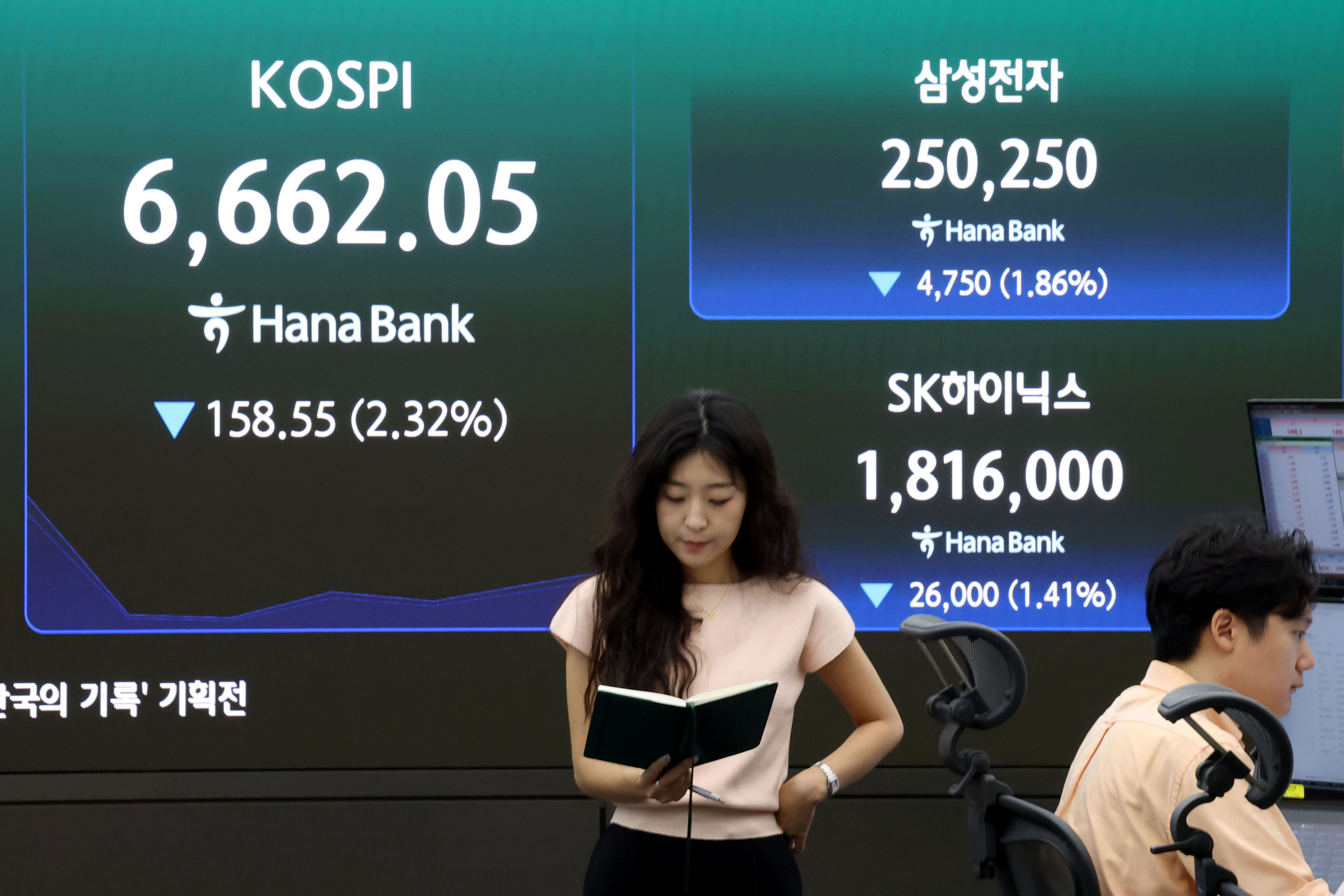
Left Behind During Semiconductor Rally… Fell in Tandem During Sharp Decline
According to the Korea Exchange, the KRX Securities Index stood at 2022.99 on the 20th. This is 39.8% lower than the 52-week high of 3362.84 recorded on May 6 and a 28.4% drop from three months ago. Over the past three months, Mirae Asset Securities fell 46.3%, Kiwoom Securities dropped 30.7%, Korea Investment Holdings declined 17.0%, NH Investment & Securities fell 16.1%, and Samsung Securities decreased 6.9%.
The underperformance of securities stocks compared to the KOSPI is attributed to market liquidity concentrating in semiconductor stocks. While the KOSPI surged 67.8% from 5052.46 to 8476.48 during the second quarter (April–June), the KRX Securities Index fell 10.7% from 2445.11 to 2183.66. Funds driving the KOSPI’s rise were heavily concentrated in a few large semiconductor stocks like Samsung Electronics and SK Hynix, failing to spread sufficiently to other sectors, including securities.
Even after semiconductor stocks plummeted in July, a clear rotation of funds to other sectors has not emerged. Foreign selling and heightened market volatility have pressured the broader market. Securities stocks rose less during the KOSPI’s rally, overshadowed by semiconductor gains, and have since fallen alongside the market during the recent downturn.
Trading activity has also cooled rapidly amid falling stock prices. According to the Korea Exchange, KOSPI trading volume on the 20th was 33.2087 trillion Korean won, a 35.9% decrease from 51.8114 trillion Korean won on July 1. Compared to the peak of over 92 trillion Korean won in May, the decline is even more pronounced.
Market liquidity is shrinking. Investor deposits decreased from 120.0837 trillion Korean won on July 1 to 108.0819 trillion Korean won on the 16th, according to the Korea Financial Investment Association. Margin loan balances also fell 10.7% from 37.3393 trillion Korean won to 33.3624 trillion Korean won over the same period. Analysts warn that prolonged market weakness could reduce brokerage commission income, a key revenue source for securities firms, a concern already reflected in stock prices.
Rising interest rates also weigh on securities stocks. As the appeal of safe assets like deposits and bonds grows, funds flowing into the stock market may decrease, and investment sentiment could weaken. Increased borrowing costs could also reduce margin trading and individual investors’ stock transactions.
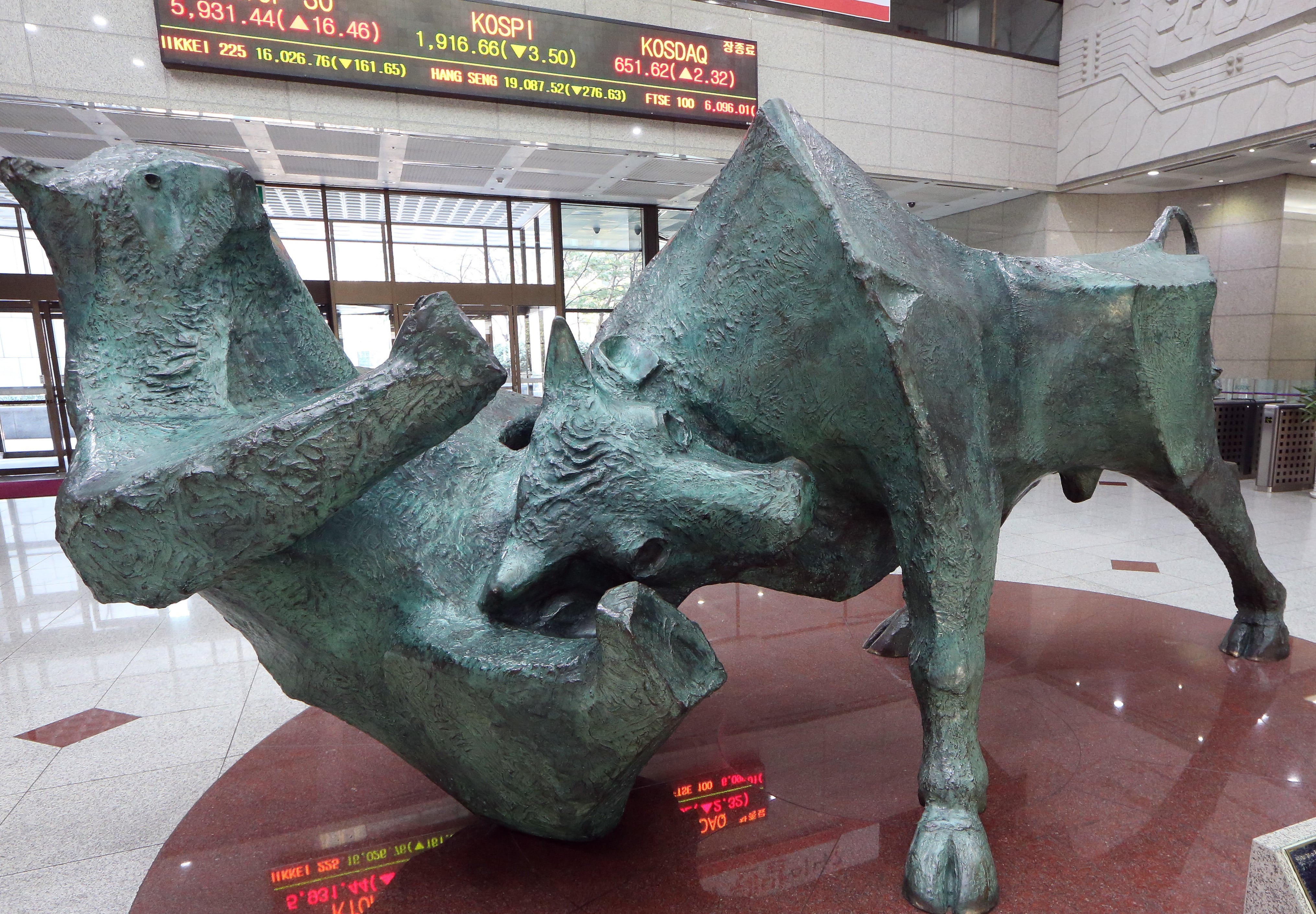
Strong Earnings Outlook Despite Market Weakness
Despite weak stock performance, earnings expectations for brokerage firms in the second quarter have risen. According to FnGuide, the combined operating profit forecast for Mirae Asset Securities, Korea Investment Holdings, Samsung Securities, Kiwoom Securities, and NH Investment & Securities is 4.8438 trillion Korean won. Mirae Asset Securities leads with 1.9019 trillion Korean won, followed by Korea Investment Holdings at 1.0415 trillion Korean won. Samsung Securities is projected at 643.5 billion Korean won, Kiwoom Securities at 637.5 billion Korean won, and NH Investment & Securities at 619.4 billion Korean won.
The earnings improvement is driven by increased stock trading. According to Shinhan Securities, the average daily trading volume for domestic stocks, including ETFs, in the second quarter is estimated at 118.1 trillion Korean won, a 39.8% increase from the previous quarter. Customer deposits rose 10.3% to 121.6 trillion Korean won, and margin balances increased 13.1% to 36.7 trillion Korean won.
Some analysts argue that securities stocks have become more attractive given the recent price declines and strong earnings outlook. “The valuation appeal of the securities sector has increased due to falling stock prices,” said Kim Ji-young, a senior researcher at Kyobo Securities. “Considering ample liquidity and strong corporate earnings, investor interest is likely to persist in the long term.”
월 5900원 멤버십, 신문 독자에게는 2900원, 조선멤버십
55000원 상당의 신문-잡지 8종 마음껏 보기, 조선멤버십
현금처럼 쓸 7000포인트 받아 알뜰한 쇼핑, 조선멤버십
Post a Comment for "Securities Stocks Plummet 40% Amid Record Earnings Forecasts"