
The untold story of Silicon Valley's wealth
The Power of Looking Beyond the Obvious
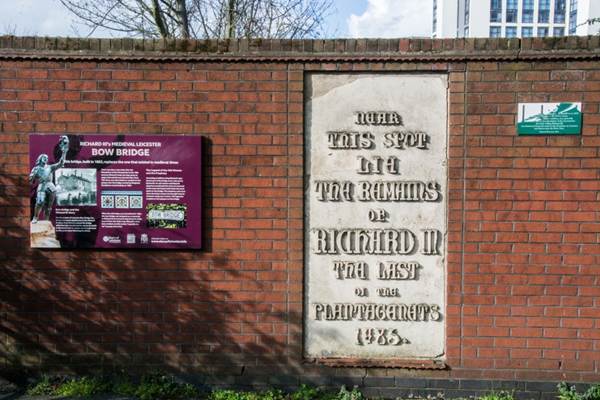
One of history’s most intriguing mysteries was the fate of England’s King Richard III. For over 500 years, no one knew where his remains were. Richard III, the last Yorkist king of England, died in 1485 at the Battle of Bosworth Field. He was often portrayed as a villain in English history and even inspired Shakespeare's famous play.
For generations, historians searched for clues about his burial site. Many theories emerged, but none could confirm the location of his remains. Some believed they had been destroyed, while others thought they had simply vanished into history.
Credit: Steve Travelguide
Then, in January 2011, researcher Philippa Langley approached the University of Leicester to investigate one of the most likely sites. Their assessment showed that the area had been largely redeveloped, but there were still open spaces, including a parking lot, that remained undisturbed since the 16th century.
In 2012, archaeologists broke through the asphalt and discovered a human skeleton. DNA testing later confirmed it was indeed the long-lost remains of Richard III.
This discovery highlights an important truth: extraordinary discoveries rarely happen where everyone else is already looking. This principle also applies to investing.
Every day, millions of investors search for the next big opportunity in the public stock market. They read the same headlines, study the same charts, and discuss the same companies. However, many of the greatest fortunes have not been made in these crowded spaces.
The Investing Path You’re Not Using
Most people begin their investment journey with the assumption that building wealth means buying stocks. Whether through mutual funds, ETFs, or individual companies, this approach has proven effective over time. The stock market has been one of the most powerful tools for wealth creation.
But what if you're seeking returns that go beyond average? What if you're looking for opportunities that can significantly change your financial future?
History shows that many of the biggest success stories started outside the mainstream. Before Google (GOOG), Facebook (META), and Snowflake (SNOW) became household names, a smaller group of investors had already recognized their potential.
Investors like Don Valentine, whose firm Sequoia Capital backed Apple (AAPL), Cisco (CSCO), Google, YouTube, Airbnb (ABNB), WhatsApp, and Nvidia (NVDA), were early adopters of these companies before they were publicly traded.
Peter Thiel, who invested $500,000 in Facebook, saw that investment grow into over $1 billion. Marc Andreessen and Ben Horowitz built fortunes by identifying transformative technology companies long before they reached the public markets.
These successful investors weren’t just buying stocks—they were investing in tomorrow’s public companies while they were still private. The key wasn’t intelligence, but rather a different perspective.
The Important Opportunity Today
We are currently in the middle of the largest technology spending boom since the internet era. Companies like Microsoft (MSFT), Amazon (AMZN), Alphabet, Meta, OpenAI, and Anthropic are investing hundreds of billions of dollars this year alone to build the next great computing platform. This spending is expected to continue for years.
However, history suggests that the biggest breakthroughs don’t always come from the largest companies. Major technology booms create ecosystems of smaller innovators solving specialized problems, developing breakthrough solutions, and building infrastructure that eventually becomes indispensable.
These companies often become acquisition targets or even the next generation of industry leaders. While investors have focused on AI giants, the next phase might belong to the companies that these giants decide they need.
These opportunities may emerge long before they appear on the public stock market. That’s why Luke Lango’s insights are valuable.
Luke has spent years studying technological inflection points before Wall Street recognizes them. He helps his subscribers identify opportunities early, before the big money arrives. He doesn’t chase yesterday’s winners—he looks for the next wave of innovation.
A New Framework for Finding Opportunities
Over the past year, Luke has developed a new framework to identify these opportunities. His PPT filter focuses on three key factors: People, Product, and Timing.
- People: Are the founders the kind of individuals who figure things out when everything goes wrong?
- Product: Does the product solve a genuine problem, and are customers paying for it?
- Timing: Is the market ready for this, or is the company a decade too early?
On July 30 at 1 p.m. ET, Luke will share one company that passes this test. More importantly, he will explain how he found this firm and others, giving you the tools to evaluate them yourself.
As the story of Richard III reminds us, extraordinary discoveries often happen where no one else is looking. Luke believes the same is true in investing.
On Thursday, July 30, at 1 p.m. ET, he will explain why he thinks AI is entering a new phase and reveal one early-stage opportunity that already passes his PPT test.
If you want to learn how to spot tomorrow’s winners before they become household names, I hope you’ll join us. Reserve your seat here.
Post a Comment for "The untold story of Silicon Valley's wealth"