
Trump's Order Hits China-Linked Military Mineral Chains
US Defence Contractors Must Identify Critical Mineral Sources and Reduce Dependence on Beijing-Linked Materials
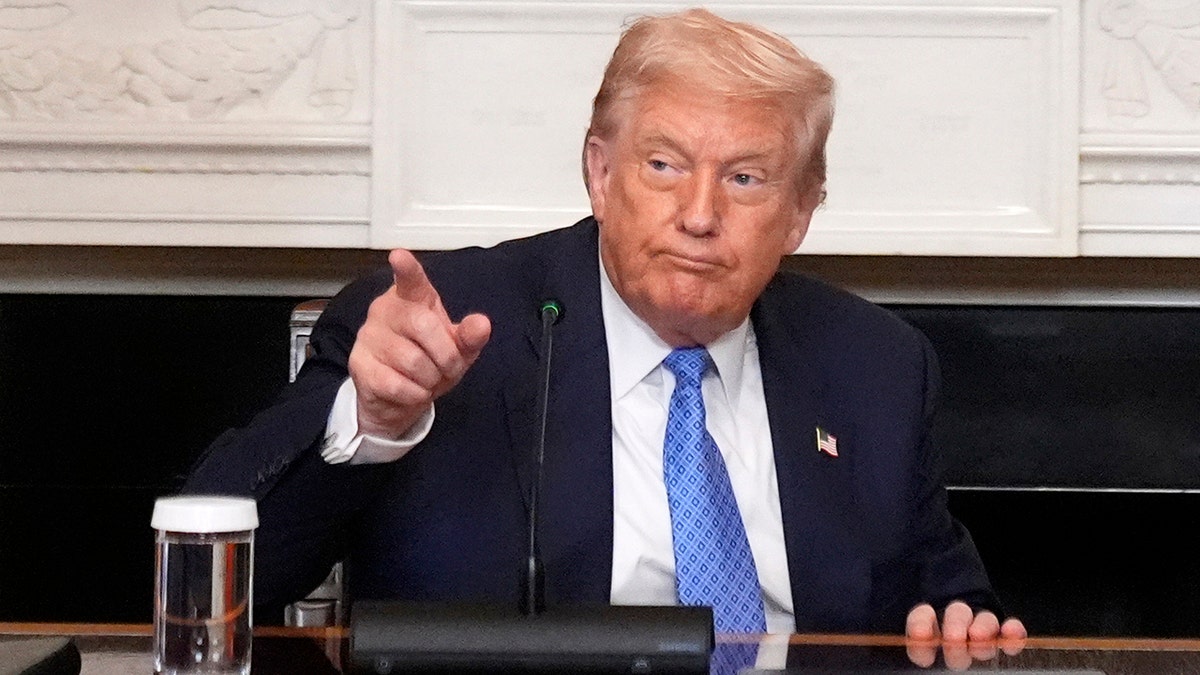
The United States is taking significant steps to ensure its national security by addressing vulnerabilities in its supply chains for critical minerals. President Donald Trump recently signed an executive order aimed at reducing reliance on China for defence-related materials, directing military contractors to shift away from Beijing-linked supply chains starting in January 2027.
Without explicitly naming China, the executive order highlights the need to maintain US military dominance in an era of renewed great power competition. It emphasizes the importance of securing supply chains against physical, cyber, and economic threats. This move comes amid growing concerns about the strategic leverage that China holds over global supply chains, particularly in the area of rare earth minerals.
The Role of Rare Earth Minerals in US Defence
The US Department of Defence heavily relies on critical minerals, including rare earths, for components used in its weapon systems. China accounts for roughly two-thirds of global rare earth mining and about 90 per cent of refining, giving Beijing a significant advantage in this sector. This control over the supply chain has raised alarms among US officials, who are now pushing for greater domestic production and alternative sources.
The executive order, titled "Securing America's Defence Supply Chains and Ensuring Domestic Acquisition of Critical Minerals," requires military contractors to submit formal mitigation plans. These plans must identify non-compliant sources, document exhaustive efforts to find compliant materials, and outline steps to remove non-compliant sources from their supply chains.
Expanding the Scope of the Executive Order
In addition to these requirements, the order directs the US Secretary of Defence, Pete Hegseth, to develop policy and implementation guidance within 180 days. This guidance will focus on requiring contractors to map critical supply chains for national security acquisitions identified by the Pentagon, from raw materials to end products delivered to the military.
Contractors are defined as all tiers of suppliers and subcontractors providing goods, materials, systems, software, or services critical to fulfilling contracts. This broad definition ensures that every link in the supply chain is scrutinized for potential vulnerabilities.
Concerns About China's Strategy
Peter Navarro, the White House senior counsellor for trade and manufacturing, has expressed concerns about China's approach. He described it as a "starve-not-strangle" strategy, where China slows down processes enough to send a message that if the world does not comply with its demands, negative consequences may follow.
However, the Chinese embassy in Washington has rejected these accusations, stating that Beijing does not use economic and trade ties or industrial cooperation as a means of coercion. The embassy spokesperson, Liu Chang, urged the US to abandon the Cold War mentality and stop politicising economic and trade issues.
Escalating Tensions Between the US and China
The executive order comes in the wake of China placing two leading US rare earth companies, MP Materials and USA Rare Earth, along with eight other American firms on its export control list. This move barred 46 US companies from government procurement and extended restrictions to any organisation or individual worldwide that transfers China-origin dual-use items to them.
China's measures were a direct response to the Pentagon's blacklisting of dozens of Chinese companies, including Alibaba, Baidu, and BYD, as "Chinese military companies operating in the United States." In early July, Alibaba secured temporary relief from a California court, allowing it to resume lobbying in the US after suing the Department of Defence over its inclusion on the list.
The Broader Implications
The tit-for-tat measures have marked one of the sharpest escalations since Washington and Beijing reached a temporary rare earth truce in Busan last October. This agreement was reaffirmed during a summit between Trump and Chinese President Xi Jinping in May. However, China's continued use of export controls has added urgency to global efforts to diversify away from its supply chains.
Washington has invested billions of dollars in domestic and overseas projects to reduce reliance on Beijing. This push for self-sufficiency is part of a broader strategy to secure critical minerals and protect national interests.
Conclusion
The executive order represents a significant step in the US effort to secure its supply chains and reduce dependence on China for critical minerals. As tensions between the US and China continue to rise, the importance of diversifying supply chains and investing in domestic production becomes increasingly clear. The outcome of these efforts will have far-reaching implications for global trade, national security, and the balance of power in the international arena.
Post a Comment for "Trump's Order Hits China-Linked Military Mineral Chains"