
Volkswagen cuts model range to save costs - 100,000 jobs at risk
Volkswagen's Restructuring Plan and Its Implications
Volkswagen, one of the world’s leading automotive manufacturers, is embarking on a significant restructuring plan aimed at cutting costs and streamlining its operations. The company is facing mounting challenges that have led to a drastic reduction in its profit margins over the past few years. This has forced the automaker to rethink its strategy and make tough decisions to remain competitive in an evolving market.
The decision comes as Volkswagen grapples with several pressing issues, including high operational costs, excess production capacity, and declining sales in key markets such as China. Additionally, the rise of Chinese automakers and the slow transition to electric vehicles are putting further pressure on the company. Regulatory changes and US import tariffs also contribute to the complex landscape in which Volkswagen now operates.
As part of its strategic shift, Volkswagen plans to cut its model lineup by up to half, focusing primarily on more profitable segments like SUVs. This move is expected to reduce production capacity to nine million vehicles per year, down from the current 10 million. Such a reduction could lead to factory closures and potentially thousands of job losses in Germany.
Challenges and Resistance
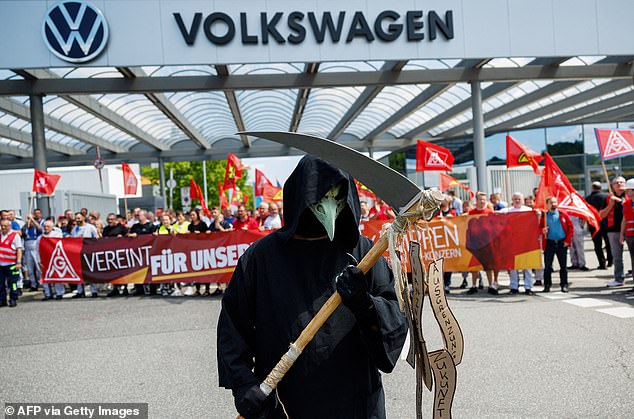
Despite these plans, there is strong resistance from labor representatives within the company. At a recent supervisory board meeting, the proposal to close four German production sites—Hanover, Emden, Zwickau, and Audi's Neckarsulm factory—was met with opposition. These closures could put up to 100,000 jobs at risk, which is double the number initially considered.
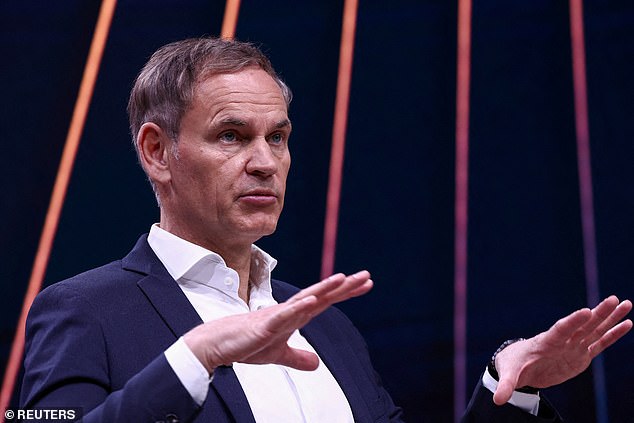
Volkswagen CEO Oliver Blume acknowledged the deteriorating global situation, stating, "The global situation has continued to deteriorate over the past 12 months. That is why we are acting now." However, the proposed measures have not yet received approval from the supervisory board, highlighting the complexity of the decision-making process.
Labor Unrest and Public Protests
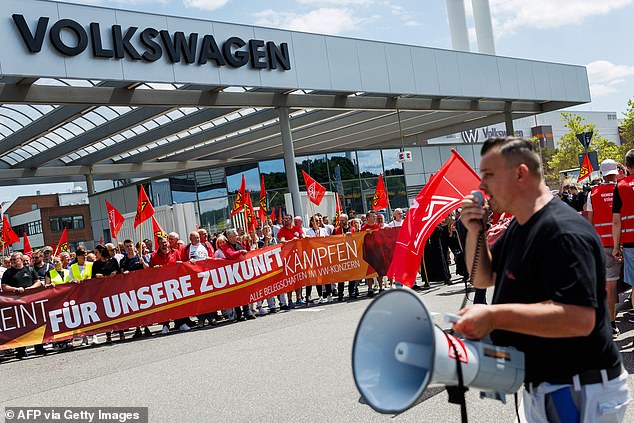
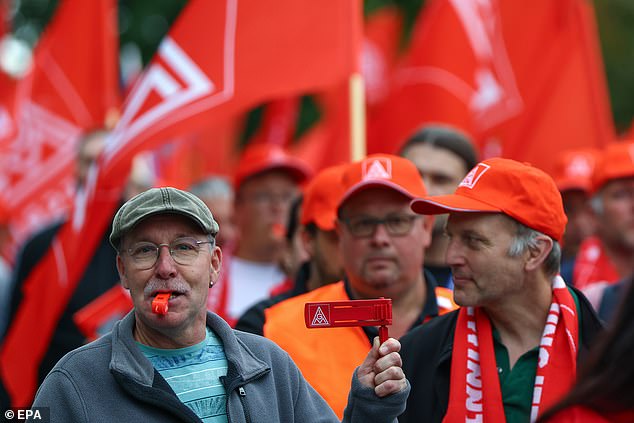
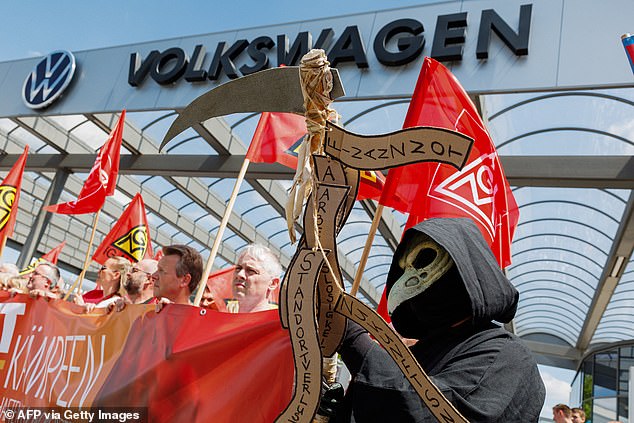
The potential job cuts and plant closures have sparked unrest among workers. During a recent board meeting in Wolfsburg, employees demonstrated against the proposed changes, waving red union flags and chanting "strong together." The IG Metall union reported around 400 participants in the protest, with union representative Thorsten Groeger warning of a potential "major conflict" if the plans proceed.
Daniela Cavallo, head of the company's works council, emphasized that employees are not to blame for the sector's crisis and expressed concerns about the spread of fear and uncertainty within the company. The works council has called on Blume to address the speculation surrounding job cuts and plant closures by a Friday deadline, warning of further staff meetings if he fails to act.
Market Position and Financial Struggles
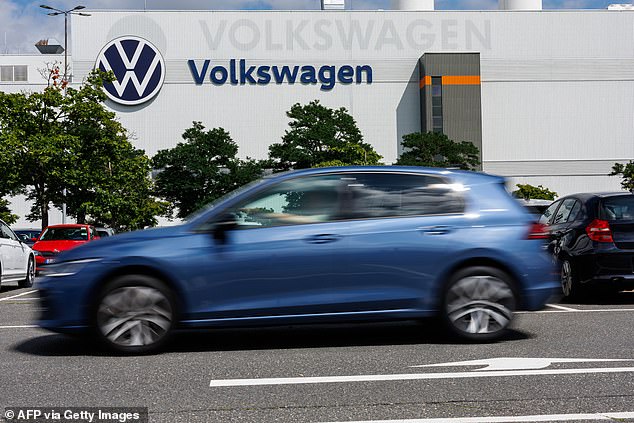
Despite these challenges, Volkswagen remains a significant player in the automotive industry. Last year, it was the UK's best-selling car brand, delivering 178,600 vehicles to British drivers—56,000 more than second-placed BMW. However, the company's financial performance has been turbulent, with shares losing more than half their value over the past 36 months.
The company also faces pressure from the Porsche-Piech owner families, whose investments have seen significant losses in recent years. This adds another layer of complexity to the restructuring efforts, as the company must balance the interests of various stakeholders.
Future Outlook and Industry Reactions
Industry analysts, such as Ferdinand Dudenhoeffer, have pointed out the ongoing uncertainty surrounding Volkswagen's plans. He noted that "uncertainty remains—which is not good for customers, employees, and investors." This uncertainty could impact consumer confidence and investor sentiment, further complicating the company's recovery efforts.
Volkswagen's restructuring also highlights broader economic challenges facing Germany. The country's economy is struggling with weak growth and high labor and energy costs, which are affecting industries across the board. The political landscape is also shifting, with the far-right Alternative for Germany (AfD) capitalizing on Volkswagen's troubles as a point of criticism against the government.
Production Capacity and Strategic Adjustments
Under Blume's previous restructuring agreement, unions secured commitments to avoid plant closures in Germany. As a result, Volkswagen has sought alternative uses for underutilized sites. For example, the Osnabrueck factory is being explored for potential partnerships in the defense sector, while other facilities may be used to produce models tailored for the Chinese market.
According to Mobility Global data, Volkswagen's German plants are expected to operate at 81% of standard capacity in 2026, with this figure projected to drop to 73% by the end of the decade. Among the four sites at risk of closure, Zwickau is forecasted to have the highest utilization rate in 2026 at 88%, but this is expected to fall to 42% by 2030.
Political and Economic Pressures
Conservative Chancellor Friedrich Merz has pledged reforms to enhance Germany's competitiveness, but his party currently trails in opinion polls against the AfD. The AfD has seized on Volkswagen's struggles as a platform to criticize the government, reflecting the broader political tensions in the country.
As Volkswagen navigates these challenges, the coming months will be critical in determining the success of its restructuring efforts. The company must balance the need for cost-cutting with the concerns of its workforce and the broader economic implications of its decisions.
Post a Comment for "Volkswagen cuts model range to save costs - 100,000 jobs at risk"