
VW's U.S. Fixes Can't Hide Global Issues
Volkswagen Group Faces Major Challenges and Restructuring
The Volkswagen Group has been open about the significant challenges it faces, particularly in China and North America. These difficulties are exacerbated by tariff wars with the United States, supply chain instability, and high fuel prices resulting from conflicts in the Middle East.
In a recent update on how the company managed financially during the first half of 2026, executives shared insights into sales trends, product strategy, and plans to eliminate at least 100,000 jobs and close plants in Germany by 2030. The company also highlighted some positive developments in the US market.
Global Manufacturing Realignment
Volkswagen had previously expanded its capacity to build 12 million cars annually but has since adjusted its plan to align manufacturing with nine million vehicles. During a conference call with analysts and media, CEO Oliver Blume shared some positive news about North America while acknowledging that the company has made progress in reducing global production by two million units. However, there is still a long way to go.
Further Capacity Reductions in Key Markets
Blume revealed that the company is considering additional capacity reductions of 500,000 units in China and another 500,000 units in Europe. The goal is to lower the breakeven point to production levels of less than 8 million units.
Streamlining the Model Lineup
The company is working on streamlining its model lineup and reducing costs by cutting optional equipment to simplify manufacturing complexity. VW recently announced a plan to cut the lineup by up to 50%, although the specifics for each of the group’s eight brands remain unclear.
Blume emphasized that this approach allows the company to focus resources on innovation, equipment, and quality, while reducing segment overlaps and substitutions. "Every remaining model shall lead its segment in driving and technology experience," he promised.
Reducing Part Complexity
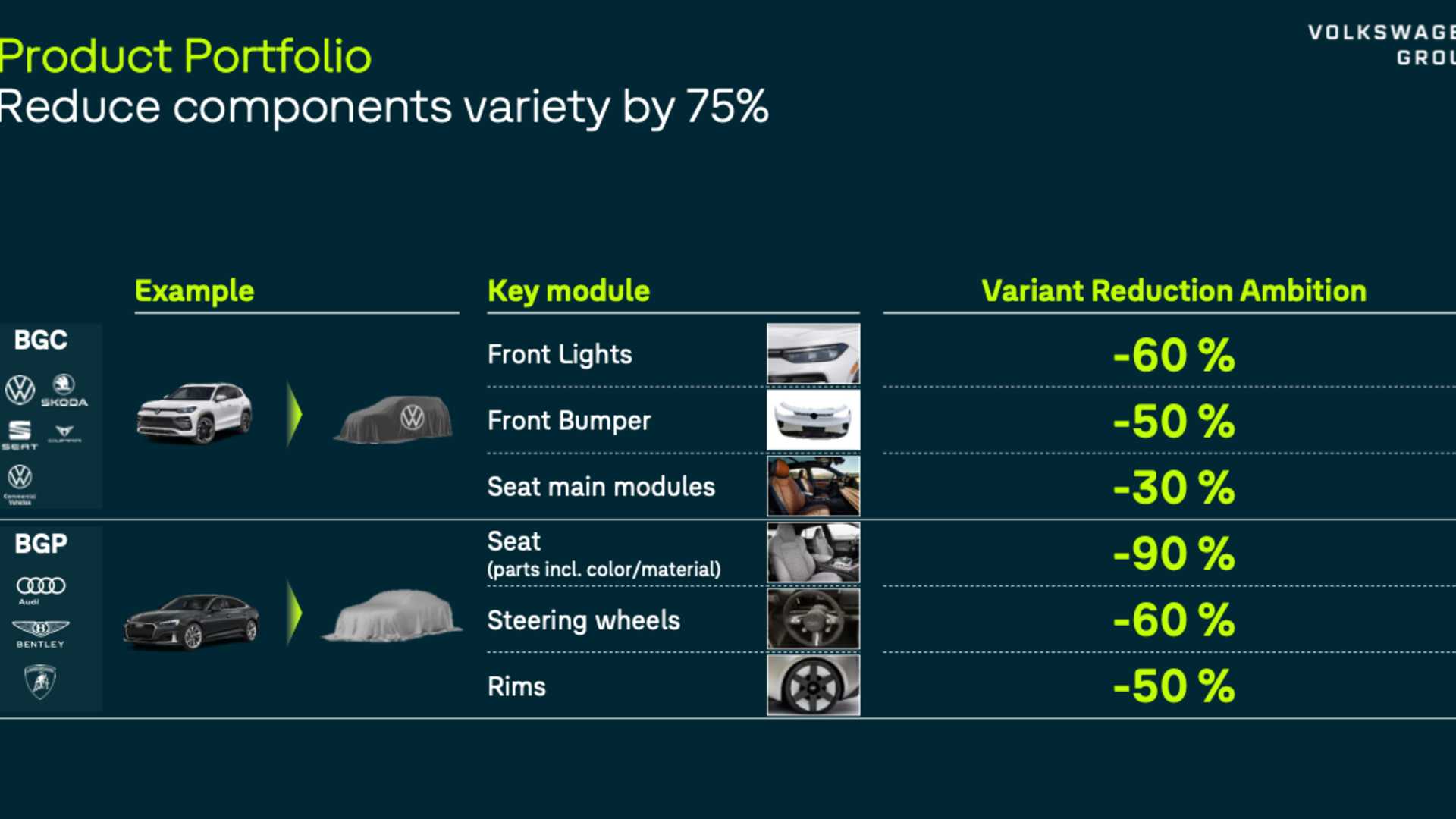
Blume mentioned that the effort to reduce available equipment options by up to 75% is underway and will not compromise product quality. For example, the company plans to reduce component complexity by up to 90% for parts like seats and windshields. Customers will still have meaningful choices when purchasing new vehicles. "We are cutting what is not ordered and we scale what customers demand," said Blume.
Mixed Sales Performance
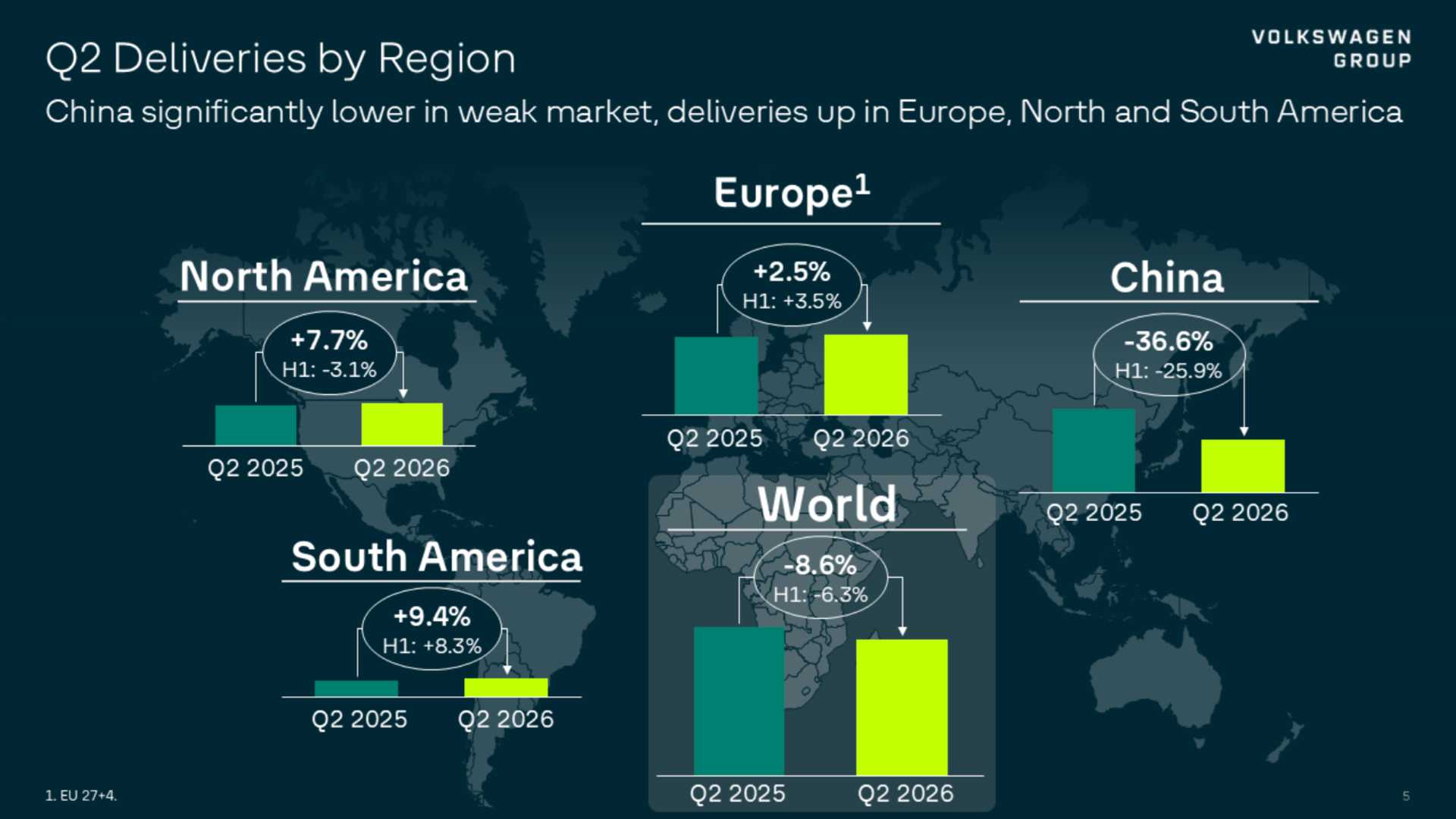
Globally, VW Group reported 4.0 million vehicle deliveries through June, a decrease of 8.4% compared to the first half of 2025. Most of the decline was attributed to China, which used to be the automaker's top region but has now fallen behind Europe.
Through the first half, VW Group sales in China dropped another 31.6%, while growth was seen in other regions: South America (+5.2%), Western Europe (+1.3%), Central and Eastern Europe (+9.6%), and North America (+0.9%). In the second quarter, North America performed even better, showing a 7.7% sales increase compared to the same period in 2025.
Performance of Upscale Brands
The Progressive group, which includes Audi, Lamborghini, and Bentley, sold 528,000 vehicles worldwide in the first half, a decrease of 8% from the first half of 2025 due to challenges in China and the US. However, the group achieved a 3.8% operating profit margin. Blume noted that the launch of new models like the Audi Q7, Q9, and RS5 should benefit the group.
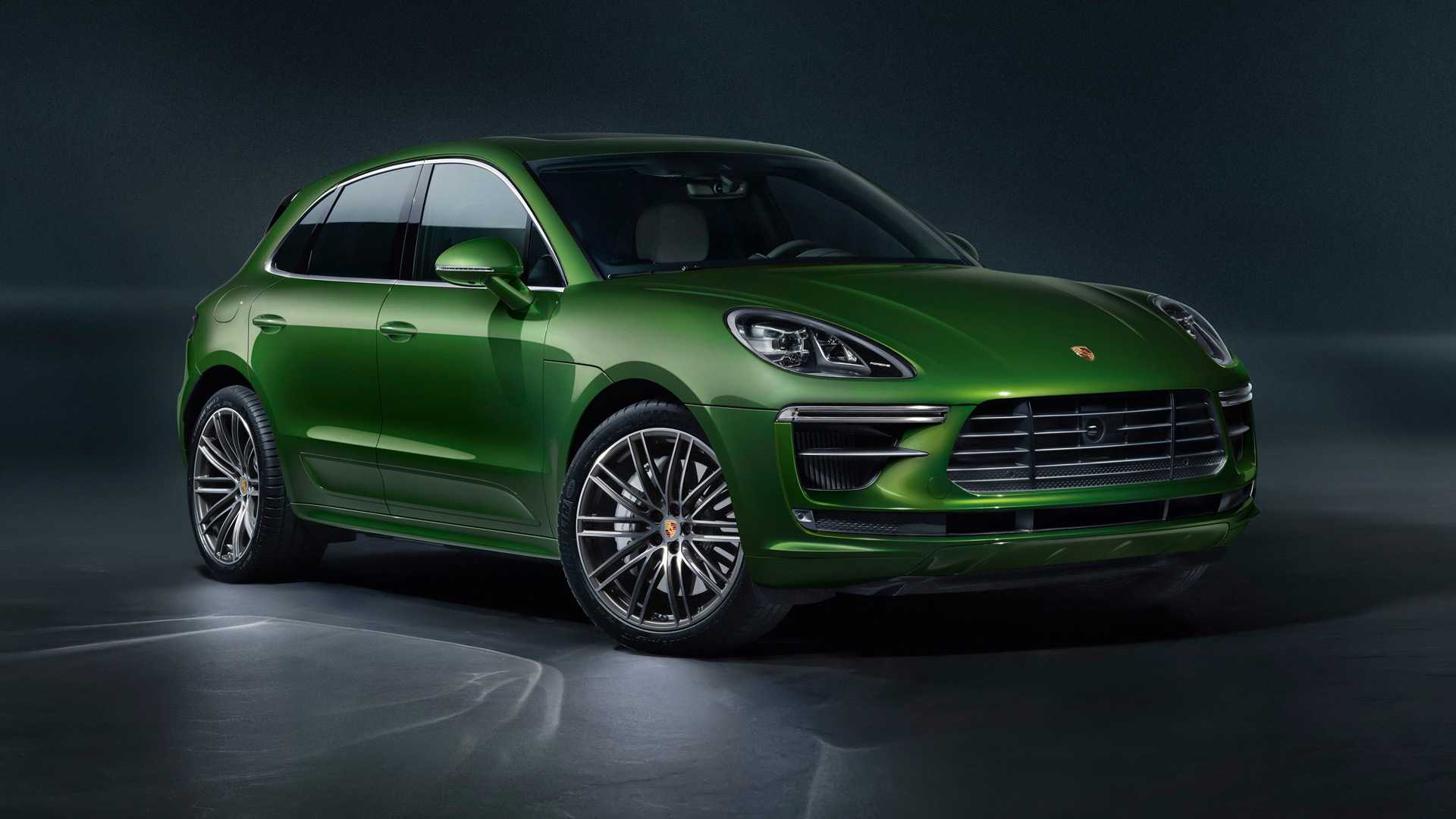
Porsche, the only brand in the Sport Luxury group, sold 121,000 vehicles globally in the first half, down 11% from the same period in 2025, but still recorded an 8% operating profit margin.
Core Brand Group Shows Growth
The high-volume mainstream Core brand group saw positive results, with Škoda leading the way in the Czech Republic with 8.5% sales growth in the first half. The Volkswagen brand also experienced a 2.4% increase. The entire Core brand group sold 2.9 million vehicles in the first half, up 3% from the same period in 2025.
Blume stated that the restructuring plan is yielding results and is not solely focused on cost reduction. "It is a comprehensive plan with a holistic approach to make VW faster, more resilient, more competitive and even more innovative," he said. "We have got our foot on the gas pedal. We are aligning our products, technologies, and structures to succeed in the new market realities."
Why This Matters
Volkswagen Group is undergoing a significant transformation as it seeks to revamp a legacy company where change is challenging. As the company continues its efforts, more updates will come from Wolfsburg, with the next major update being on July 29 when Porsche reports its first-half results. When Porsche struggles, it signals trouble for the entire group.
For now, the Core brand group stands out as the bright spot for the VW collective. Unlike the upscale brands, the Core group grew both sales and revenues (up 1% to $83 billion) in the first half. It would be ironic if the automaker that owns luxury brands like Bentley, Lamborghini, Porsche, and Audi were saved by its mainstream brands. All hail the people's car.
Post a Comment for "VW's U.S. Fixes Can't Hide Global Issues"