
Workplace Democracy Fuels Democratic Strength

The Power Dynamics of the Workplace
As a fourteen-year-old boy getting my first job at the grocery store down the street, I learned about power relationships the very first day I placed the apron on. I realized that what I earned was controlled by the person above me, and that the boss had control over everything. This experience shaped my understanding of authority and how it operates in the workplace.
America has celebrated its 250th year of existence. At the center of the American story is the promise of democracy, freedom, and equality. However, the actual history of the country is far more complex than the grand narrative we often tell about ourselves. One thing remains clear: the American project has always been defined by the struggle to become the democratic nation it claims to be.
But as we look back over the past decade, the democratic ideal does not feel like it is in ascendence. It feels like it is in decline. Autocratic regimes and the politics associated with them have gained power across the world, including in our own country. The question is why. Why has the idea of democracy frayed in the minds of so many people? Why does the idea that democracy is worth fighting for feel less certain than it should?
One major reason is that millions of people do not feel compelled to defend democracy in society because they are being denied any real experience of democracy at work. If people spend most of their lives in workplaces where they have little voice, little power, little protection, and little say over the conditions that shape their lives, it becomes harder for them to believe that democracy can protect them anywhere else.
Americans are taught to believe in two bedrock principles: freedom, and the idea that if you work hard you can succeed. Both principles have always existed in conflict with the reality of American life, but that conflict is sharper today. Americans spend more than a third of their lives at work. For many people, the workplace is the first and most direct place where they experience power. It is where we learn about authority in our public lives, who controls our time, who determines our value, and whether speaking up leads to change or punishment.
A Sense of Self and Dignity
What I was experiencing at work was a benevolent dictatorship. Inside that workplace community, I came to love and respect many people and through the work gained a sense of who I was. I worked hard because that was what I was taught what you did. I also knew I was not going to be there forever. It was a job that allowed me to earn money to support myself growing up because my family could not afford to give me much beyond a roof over my head and food in my belly. The workplace reinforced a sense of self and dignity when you did the job you were hired to do. There were many positives drawn from working at the grocery store, and real meaning came from the work, even if some people dismissed it as “only” grocery work.
But alongside that dignity was constant uncertainty. If the manager did not like you, if expectations changed without warning, or if you could not keep up with whatever standard was being imposed that day, you could not get scheduled, lose opportunities for promotion or at worst lose your job. That uncertainty created a deep alienation from the work and sometimes even your coworkers. It told workers that the dignity they drew from the job was always conditional. It told them that the community they built at work existed only so long as management allowed it to exist.
As I left that job and entered the professional workplace, and later began organizing workers, I saw the same dynamics play out across the workplaces I was organizing. Workplaces were becoming more autocratic, not less. Employers began using technology, scheduling systems, surveillance, productivity metrics, algorithmic management, fear, favoritism, and subtle forms of retaliation to separate workers from one another and weaken the communities that had once been built through work. Some methods were overt: threats, discipline, firings and if workers tried to organize their employers launched anti-union campaigns. Others were covert: unstable schedules, isolation, constant monitoring, favoritism, individual incentives, and the quiet message that speaking up would cost you hours, status, advancement, or your job.
This is one reason the United States is drifting toward autocracy. As workers become less empowered and more isolated from one another, employers gain greater influence over how people experience authority, power, and collective action. Over time, many workplaces have become less capable of fostering the sense of dignity, solidarity, and community that once connected workers to one another. Instead, increasing surveillance, arbitrary decision-making, insecurity, and the constant pressure to compete can leave workers feeling isolated and disposable. The consequences extend beyond the workplace. When people spend much of their lives in environments where their voices carry little weight and collective action is discouraged, they are not only weakened as workers—they are weakened as democratic citizens. The workplace becomes a school for compliance rather than participation, making it harder for people to believe that democratic institutions can give them real influence over the forces shaping their lives.
That Is Why Unions Are Critical
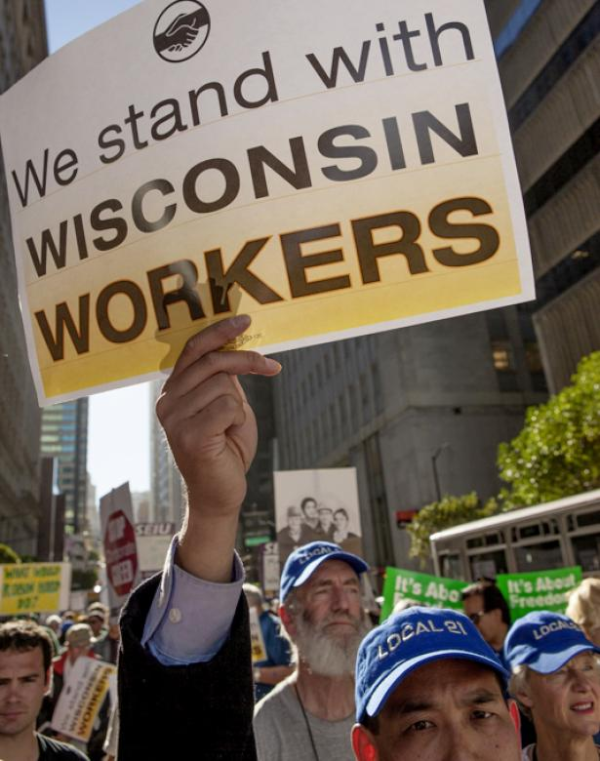
Unions are critical to the core of democracy. Workplace democracy is essential to rebuilding the aspiration of democracy in our communities and in the country. A union gives workers a process for having a voice. It creates a structure for due process, just cause, collective bargaining, grievance rights, workplace representation, and accountability. It limits the ability of employers to make every decision unilaterally. It creates a democratic counterweight inside an otherwise autocratic institution.
Under current American labor law, even under the most favorable conditions, workers face a weak legal framework. But what is not weak is what happens when workers come together, organize, and hold their boss accountable. Unions become schools of democracy because they teach workers how to build collective structures to deal with power. They teach people through elections, negotiations, grievances, contract campaigns, strike votes, and workplace meetings that decisions can be influenced by organized, disciplined, and democratic action.
Even when workers lose a particular fight, the experience can still build democratic capacity. Workers learn how power responds. They learn who stands with them. They learn how to assess strength, build majority support, make arguments, take risks, and try again. That is democratic practice. It is not theoretical. It is lived.
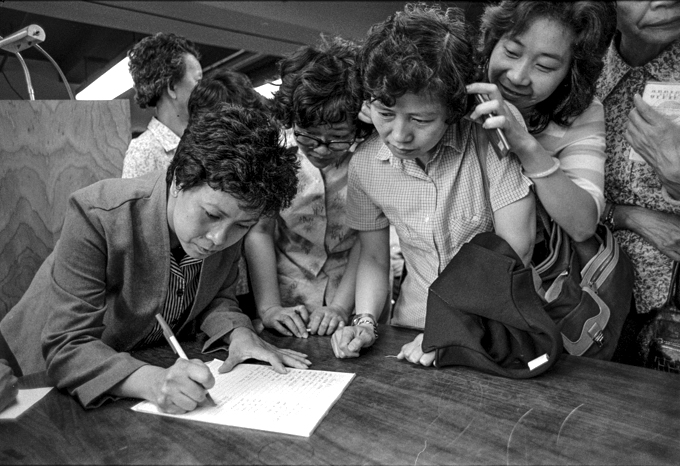
Unions are schools of democracy for another reason: they require people to work with one another differently. A union forces workers to listen to each other, understand different values and judgments, disagree honestly, compromise, and act collectively. It asks people to make decisions together, not simply as individuals trying to survive under the boss, but as a community trying to govern itself. Those are the essential habits of democratic life.
Democracy has to be practiced inside institutions that give ordinary people real agency. Within democratic unions, everyday working people who otherwise have little access to the levers of business or political power begin to understand democratic norms through experience. Unions give the working class collective resources: money, organization, leadership development, public voice, and the ability to influence a broader political agenda. When done right, union political engagement is grounded in the lived experience of organizing, bargaining, negotiations, and collective struggle.
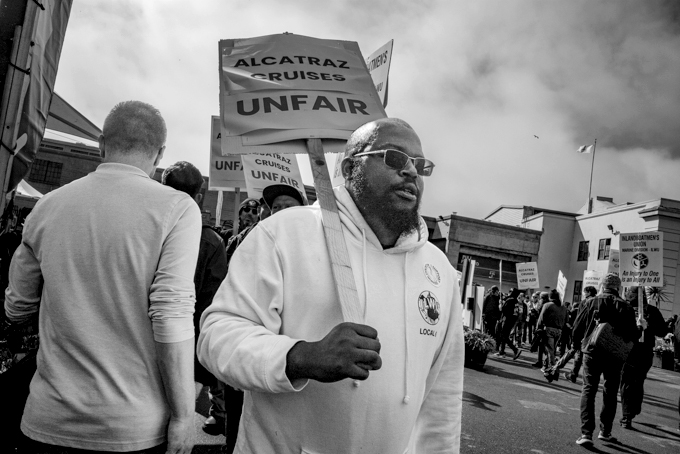
This is also why union members participate at higher rates in elections than comparable nonunion workers. Across similar demographics, union members are generally more likely to vote. That participation is not accidental. It grows out of the democratic habits unions build. Workers who have voted on a contract, elected a bargaining committee, debated strategy in a meeting, filed grievances, or walked a picket line have practiced democracy in a concrete way. They have experienced what it means to act together and challenge power.
That difference can shape major national outcomes. One only has to look at the results of the 2016 presidential election and the impact of right-to-work legislation in states such as Wisconsin and Michigan before that election. Weakening unions did not just weaken labor. It weakened democratic participation and helped put the country on the path toward the autocratic politics we are now confronting as we approach the 250th anniversary of the first modern democracy.
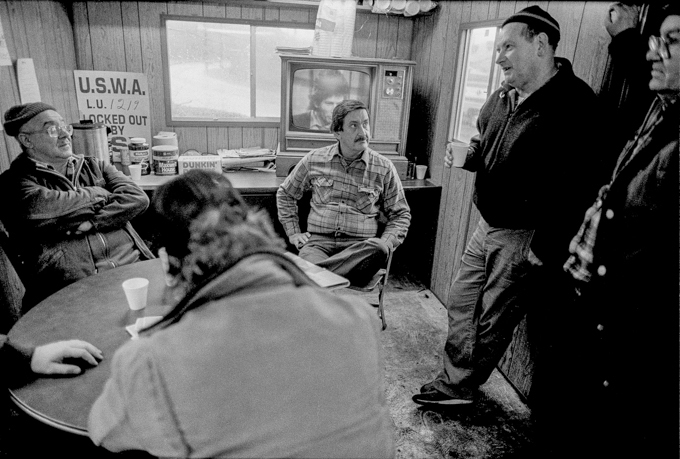
The workplace is where the frontlines against autocracy are built. It is where the working class learns about power. It is also where we have the opportunity to rebuild the aspiration for true democracy. In order for democracy to be defended, it must be practiced. In order for democracy to be practiced, workers must have the ability to exercise voice, build community, contest power, and win real changes where they spend so much of their lives.
That is why labor law reform and union organizing must be central to any serious democracy agenda. If reform movements across this country do not include the right to organize, bargain collectively, and build democratic power at work, they will fall short. We cannot expand democracy in the public square while leaving the workplace governed by fear, coercion, surveillance, and unilateral employer control.
Americans must feel valued. They must have the ability to influence the places where they spend a third of their waking lives. They must experience democracy not only as a vote every few years, but as a daily practice of dignity, voice, accountability, and collective power. Without workplace democracy, the fight against autocracy will remain incomplete. With unions, workers can experience democracy at work first — and from there, they can help defend and expand democracy everywhere else.
James Araby is the Director of Strategic Campaigns for UFCW Local 5, a 25,000-member union based in the San Francisco Bay Area. He works across Northern California to build political, organizing, and bargaining power for workers in the grocery, retail, retail drug, cannabis, coffee, bookstore, outdoor retail, and agricultural industries. Araby leads UFCW Local 5’s strategic campaign work, including political campaigns, coalition building, legislative advocacy, communications, and new worker organizing.
Post a Comment for "Workplace Democracy Fuels Democratic Strength"