
Women and money: The financial pressure on South Africa's sandwich generation

The Hidden Struggles of the Sandwich Generation in South Africa
For many South African women, financial independence does not necessarily mean having the freedom to spend, save or plan for the future. Instead, their income may be supporting an entire family. Between school fees, groceries, household expenses and the needs of ageing parents, women in their 30s, 40s and 50s can find themselves carrying the financial responsibilities of several generations at once. It is a reality often described as being part of the “sandwich generation.” These women are raising children, helping adult offspring who are struggling to find work, supporting elderly parents and, in many cases, trying to keep their own careers and households on track.
The financial pressure can be enormous, particularly at a time when the cost of living continues to climb. But the cost is not only measured in rands and cents. When family finances are stretched, women may be the first to postpone their own medical appointments, put off saving for retirement or sacrifice much-needed time for themselves. Over time, constantly putting everyone else first can take a serious toll on both physical and mental health.
For Women’s Month, it is worth looking beyond the familiar conversations about women and financial independence to examine what happens when a woman’s income is supporting an entire family, and what that pressure is costing her.
A South African Reality
The sandwich generation is often associated with people in their late 30s to late 50s. However, Lance Blumeris from Unu Health says South Africans frequently take on these responsibilities much earlier than people in many other countries. "While it is often associated with people in their late 30s to late 50s, the reality is that many South Africans begin carrying these responsibilities much earlier due to our unique social and economic circumstances," he explains.
Unlike countries where families tend to operate more independently, South African households often provide support across several generations. Adult children may remain financially dependent for longer because of high unemployment and the rising cost of living. At the same time, elderly parents are living longer, often with chronic health conditions that require ongoing care and financial assistance.
"What makes South Africa different is that many households are already supporting extended family members, whether that is elderly parents, unemployed relatives, or children who remain financially dependent for longer periods," says Blumeris. This places particular strain on middle-income earners. "They may earn too much to qualify for certain forms of assistance but not enough to comfortably absorb the rising costs of healthcare, education, housing and daily living expenses for multiple generations."
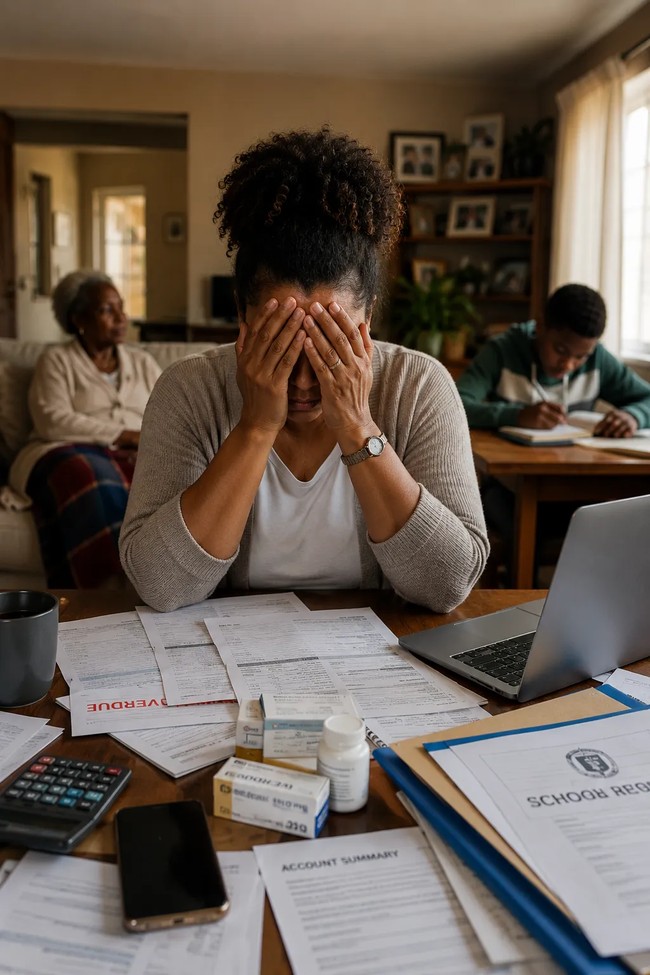
The Hidden Health Crisis
Much of the conversation around the sandwich generation focuses on emotional stress, but healthcare professionals are increasingly warning that the effects run far deeper. People caring for multiple family members often become responsible for healthcare decisions across several generations. They manage medications, coordinate appointments, monitor chronic illnesses and provide emotional support, all while trying to keep their own lives running smoothly.
The irony, says Blumeris, is that caregivers frequently end up neglecting themselves. "What we're seeing is a group of people who are constantly managing other people's health, but often neglecting their own." Over time, that neglect can have serious consequences. Healthcare providers regularly see symptoms linked to chronic stress among caregivers. Anxiety, depression, sleep disturbances, persistent fatigue, headaches, high blood pressure and increased cardiovascular risks are all common.
"One of the biggest concerns is that caregivers often become patients themselves," says Blumeris. The problem is that burnout rarely arrives dramatically. It builds slowly over months or even years. "People become accustomed to functioning under pressure until physical or mental health symptoms become impossible to ignore. By that stage, intervention is often more complex and costly than it would have been if preventative care had occurred earlier."
When healthcare becomes a luxury
South Africans have faced years of rising food prices, fuel costs, electricity hikes and financial uncertainty. For those supporting multiple generations, healthcare often becomes another difficult balancing act. Many caregivers find themselves making impossible choices between their own well-being and the needs of their family members.
"We are seeing many people delay doctor visits, postpone screenings, skip follow-up appointments or avoid seeking care altogether because they are focused on meeting the immediate needs of their families," says Blumeris. In households where budgets are already stretched, preventative healthcare is frequently one of the first expenses to be sacrificed.
"People may choose to pay for a parent's medication or a child's medical needs while postponing their own check-up or treatment." Unfortunately, those decisions can create even bigger health and financial challenges later. "Preventative care is almost always more affordable than treating advanced illness, but when household budgets are stretched, preventative care is often one of the first things to be sacrificed."
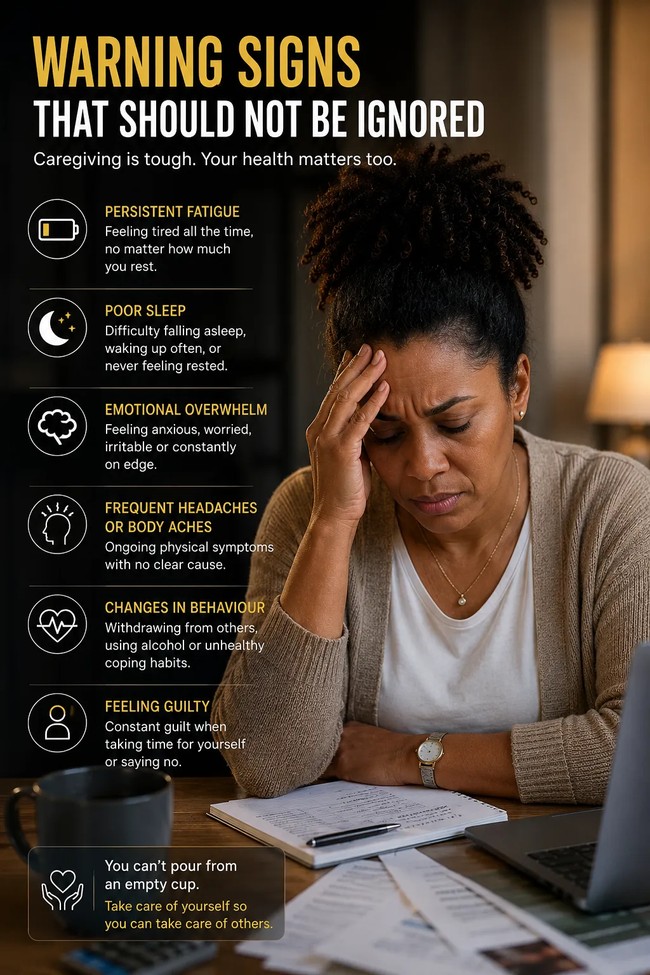
Warning Signs That Should Not Be Ignored
For many caregivers, stress becomes so normal that they stop recognising when it is affecting their health. Persistent exhaustion, poor sleep, irritability, headaches, digestive problems, and a constant sense of emotional overwhelm can all be signs that someone is carrying too much. Blumeris says behavioural changes can also signal trouble.
"People should also pay attention to changes in their behaviour, such as withdrawing socially, relying more heavily on alcohol or unhealthy coping mechanisms, or feeling constantly guilty whenever they try to take time for themselves." Perhaps one of the most damaging aspects of caregiver burnout is the guilt many people experience when they try to prioritise themselves. The belief that self-care is selfish often prevents people from seeking help until they are already struggling.
Why Looking After Yourself Matters
For members of the sandwich generation, self-care is often viewed as an indulgence rather than a necessity. Yet healthcare experts argue the opposite is true. "The first step is recognising that self-care is not selfish; it is essential," says Blumeris. "If your health deteriorates, your ability to support the people who depend on you is also compromised."
The good news is that protecting your health does not necessarily require dramatic lifestyle changes. Small actions such as attending regular health screenings, getting enough sleep, staying physically active and creating moments of personal downtime can have a meaningful impact. Technology is also helping to ease some of the burden. Digital healthcare platforms are making it easier for families to access medical advice, schedule consultations, and manage healthcare needs without spending hours travelling or waiting in queues.
More importantly, experts say caregivers need to stop believing they must carry everything alone. "Whether it is involving siblings, extended family members, community networks or healthcare professionals, sharing the load is often one of the healthiest decisions a caregiver can make."
A Challenge South Africa Can No Longer Ignore
As South Africans live longer and economic pressures continue to mount, the number of people caught between caring for children and ageing parents is expected to grow. Yet despite their critical role in keeping families functioning, the sandwich generation often receives little recognition or support. Blumeris believes both employers and the healthcare sector need to start paying closer attention.
"I believe this is a growing challenge that remains significantly under-recognised. The sandwich generation is quietly carrying an enormous amount of responsibility, yet very little public discussion focuses on the practical realities they face every day." Flexible workplaces, better access to preventative healthcare, affordable medical services, and stronger mental health support could all help reduce the strain.
"The sandwich generation has become the backbone of many families," he says. "It is time we started supporting them with the same commitment they show to everyone else."
For now, however, many South Africans remain caught in the middle; acting as healthcare manager, financial planner and emotional support system for multiple generations at once. The challenge is that while they are looking after everyone else, nobody is looking after them.
Post a Comment for "Women and money: The financial pressure on South Africa's sandwich generation"