
Young TikTok and Instagram Users Lag by Six Months by GCSEs, Study Finds
New Study Reveals Link Between Early Social Media Use and Academic Performance
A recent study has highlighted a concerning link between early social media use and academic performance among children. The research suggests that children who start using social media at a younger age, such as 11 or 12 years old, may be up to six months behind their peers in certain subjects by the time they reach 15 or 16. This finding has sparked discussions about the potential impact of social media on learning and the need for policies to protect young users.
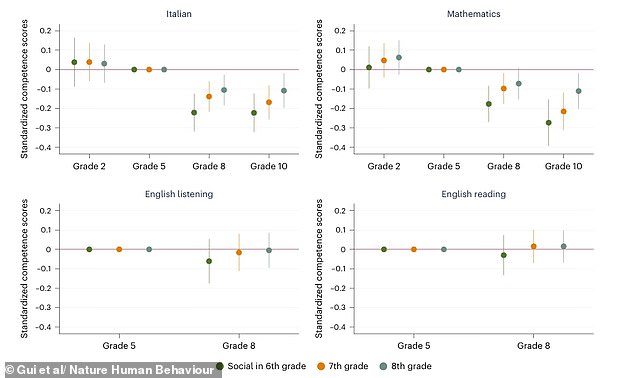
The study, conducted by researchers from the University of Milano-Bicocca, analyzed data from over 5,227 Italian students. They compared the timing of when students first opened social media accounts with their test scores in subjects like Italian, English, and mathematics. The results showed that those who started using platforms like TikTok and Instagram at a younger age scored significantly lower in Italian and maths by the time they were 15 or 16.
The difference in test scores was equivalent to six months of schooling, according to the researchers. They concluded that early engagement with social media could have a negative impact on academic performance during the lower-secondary school years.
However, the study found no significant effect on English scores. Researchers suggested this might be due to the abundance of English language content online, which could provide informal learning opportunities for students.
Global Trends in Social Media Regulation for Children
Several countries around the world are taking steps to regulate social media use among children. These measures vary in scope and implementation:
- Australia: The first country to introduce a nationwide under-16 social media ban, which came into force on December 10.
- Brazil: New rules require under-16s to link social media accounts to a legal guardian and have restricted features.
- Indonesia: Introduced a social media ban for under-16s in March.
- France: Moving towards an under-15 social media ban.
- Austria: Has announced plans to prohibit social media use for children under 14.
- UK: Under-16s will be banned from accessing popular platforms like Instagram, YouTube, TikTok, Snapchat, Facebook, and X from spring next year.
Additional Considerations and Expert Opinions
While the study highlights a correlation between early social media use and lower academic performance, it is important to note that the research is observational. This means it cannot definitively prove that social media causes the decline in test scores. Other factors, such as family circumstances, parental support, socio-economic background, or personality traits, could also play a role.
Dennis Ougrin, Professor of Child and Adolescent Psychiatry at Queen Mary University of London, commented on the findings, stating that the study adds to growing evidence that the age at which young people first engage with social media may affect their educational development. However, he emphasized that the findings do not prove that social media alone causes poorer academic performance.
Lucas Gortázar, a researcher specializing in educational policies and reforms in Spain, said that while further studies are needed, the evidence is consistent in showing that the earlier a social media account is opened, the greater the effect. He stressed the importance of delaying the age at which teenagers start using social media to, at the earliest, 15 or 16 years of age.
UK Measures Targeting Older Teenagers
In addition to the under-16 social media ban, the UK government has also introduced measures targeting 16 and 17-year-olds. These include curfews that block access to social media platforms from midnight to 6am every night. Features designed to keep teens scrolling for longer, such as automatically playing videos and personalized content feeds, will also be disabled by default for older teenagers.
Technology Secretary Liz Kendall stated that these measures aim to help young people get the sleep they need, focus on school and college, and spend more quality time with family and friends. She emphasized the importance of balancing the benefits of technology with the need to protect young users from harmful online features.
Post a Comment for "Young TikTok and Instagram Users Lag by Six Months by GCSEs, Study Finds"