
China curbs H200 for domestic AI chip growth
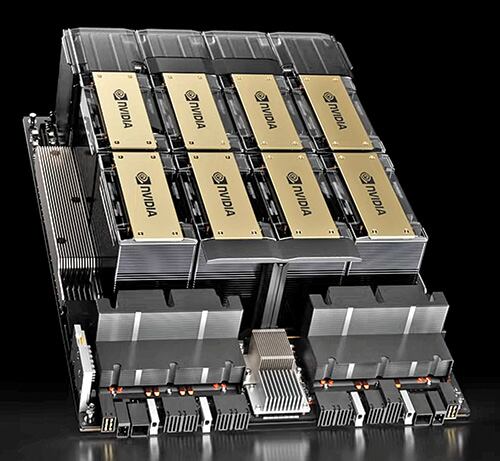
The U.S. has allowed the export of Nvidia’s AI chip ‘H200’ to China, but the Chinese government is reportedly discussing measures to restrict domestic companies’ access to the H200. This is interpreted as an effort to regulate the use of the H200 to avoid undermining the growth of China’s domestic AI chip ecosystem.
The Financial Times (FT), citing sources on the 9th (local time), reported that Chinese regulators are considering a plan to permit only limited access to the H200. The FT added, “Companies seeking to purchase the H200 would need to submit a request explaining why they cannot use domestically produced chips and undergo an approval process.” A potential ban on government public institutions purchasing the H200 is also under discussion. However, the FT noted that no final decision has been made.
Earlier, on the 8th, U.S. President Donald Trump stated, “I informed Chinese President Xi Jinping about allowing the supply of the H200 to China,” adding, “President Xi responded positively.” While the H200 is not based on Nvidia’s latest Blackwell architecture, it outperforms the H20, which is currently being exported to China.
China’s current measures are seen as permitting the introduction of the H200 only to the extent that it does not hinder the development of its domestic chip industry. As U.S. AI chip restrictions continued, Beijing encouraged local companies to mass-produce their own chips. Chinese semiconductor firms such as Huawei and Cambricon have begun developing their own AI chips. To support these efforts, the Chinese government announced plans to tighten customs inspections on Nvidia chips or provide subsidies to data centers that exclusively use domestically produced chips. Some progress has been made. Bloomberg reported that the U.S. allowed the export of the H200 to China because Huawei had already developed an AI system with performance comparable to Nvidia’s, reducing perceived security risks.
Analysts remain uncertain whether China’s restrictions on H200 usage will be effective. While major Chinese tech firms like Alibaba, ByteDance, and Tencent use domestic chips for AI inference, they prefer Nvidia chips for training processes that require high computational power. This is due to Nvidia’s superior performance and power efficiency.
Moreover, China is facing a severe AI chip shortage. The government has intervened in the distribution of chips produced by SMIC, the country’s largest semiconductor foundry. This could exacerbate the semiconductor shortage for Chinese tech companies that urgently need AI chips.
Post a Comment for "China curbs H200 for domestic AI chip growth"