
UAE: Saudi Arabia's AI Export Leap
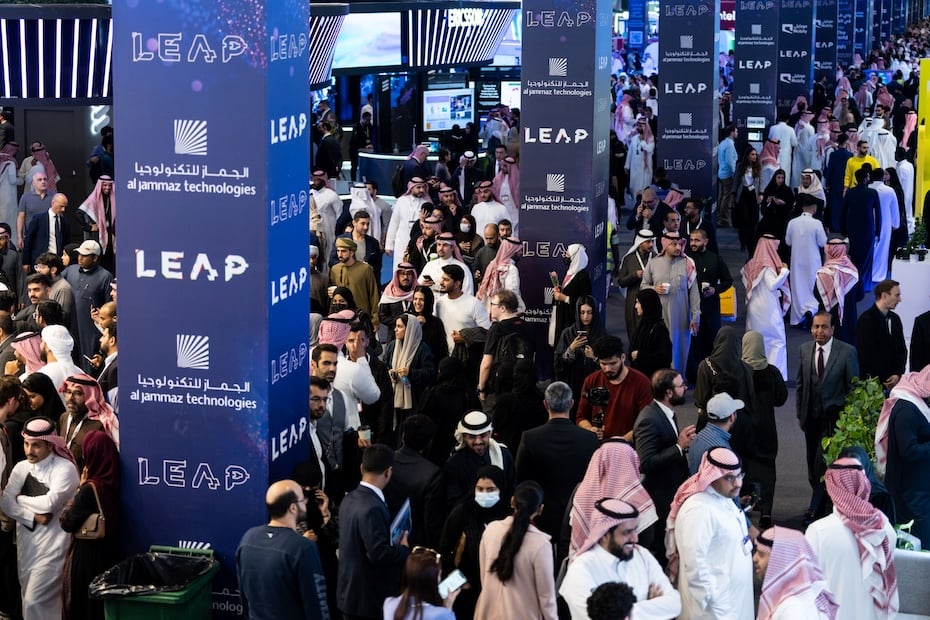
Saudi Arabia Charts a New Course in Global Technology Leadership
The Kingdom of Saudi Arabia is experiencing a profound technological metamorphosis, driven by its ambitious Vision 2030 national transformation plan. This era marks a significant departure from past trends, with the region now not merely adopting global advancements but actively charting its own course and emerging as a leader in the technological revolution.
Naim Yazbeck, President of Microsoft for the Middle East and Africa, articulated this paradigm shift, stating that the region is at the vanguard of a historic turning point, unprecedented in the last century. This transformation is underpinned by the development of sovereign cloud infrastructure, the strategic integration of artificial intelligence (AI), and the cultivation of robust national innovation capabilities.
The driving force behind Saudi Arabia's accelerated progress is a clear and unwavering political will. The government's approach transcends mere infrastructure modernization; AI is recognized as a strategic pillar, holding a significance comparable to the historical dominance of oil. While oil fuelled the Kingdom's economy for decades, AI is now positioned as the new frontier, upon which Saudi Arabia is staking its economic future.
This strategic reorientation was underscored by the recent visit of Crown Prince and Prime Minister Mohammed bin Salman to the United States. Discussions during this high-profile visit prominently featured AI and advanced technologies, signalling the Kingdom's resolute intent to foster a globally influential knowledge-based economy. This marks a new chapter where Saudi Arabia transitions from being a consumer of imported AI technologies to a developer of indigenous capabilities and a producer of exportable knowledge, thereby bolstering its technological sovereignty and establishing a foundation for an economy driven by innovation.
A Distinctive and Ambitious Tech Market
The regional technology landscape, with Saudi Arabia at its epicentre, is witnessing an unprecedented surge of activity. Gulf nations are not just implementing AI solutions; they are actively involved in developing and exporting them. The Kingdom is investing heavily in advanced infrastructure, designed to support the operation of large-scale AI models and provide immense computing power. This positions Saudi Arabia, for the first time, as a key player in global innovation rather than simply a recipient of technological imports.
During recent engagements across Riyadh's ministries, regulatory bodies, national institutions, and international corporations, Yazbeck observed a prevailing sentiment: "Everyone wants to be ahead of AI, not behind it." This collective ambition has been swiftly translated into concrete actions, evident in revised budgets, elevated targets, and accelerated project timelines.
Furthermore, Saudi institutions are increasingly demanding the highest standards of data sovereignty, particularly within critical sectors such as finance, healthcare, and education. The regulatory environment is adapting with remarkable speed. Saudi Arabia has modernized its frameworks for cybersecurity, data governance, cloud computing, and AI at a pace that surpasses many nations globally, effectively leveraging regulatory agility as a competitive advantage.
The success of these initiatives, Yazbeck emphasized, is not measured by the sheer volume of AI projects undertaken. Instead, the focus is on their direct alignment with national priorities, their contribution to productivity, enhancements in healthcare and education, and strengthening cybersecurity. This approach steers clear of superficial or publicity-driven endeavours, concentrating instead on tangible impact.
The ‘Return on Investment’ Equation in the AI Era
Building an AI-driven economy, according to Yazbeck, necessitates more than just state-of-the-art data centres. It requires meticulous long-term planning, particularly concerning energy production and the expansion of connectivity networks. The substantial computational demands of advanced AI models necessitate significant and stable electrical capacity. The Kingdom is proactively addressing this through strategic investments in renewable energy sources and telecommunications infrastructure.
The concept of ‘return on investment’ (ROI) is paramount. Nationally, ROI is evaluated through metrics such as economic growth, job creation, increased productivity, fostered innovation, and an enhanced global standing. At the institutional level, tangible benefits are already being realized. The integration of tools like Copilot is enabling employees to work with greater speed and higher quality, freeing them from routine tasks and allowing them to dedicate more time to innovation. The next phase promises to unlock novel business models, elevate customer experiences, streamline operations, and drive greater efficiency across all sectors.
Sovereignty and Security: Pillars of Trust
Digital sovereignty has become an indispensable component of national strategy. Saudi Arabia mandates that cloud providers meet stringent accreditation standards for hosting sensitive national systems – criteria that Microsoft is diligently working to fulfil ahead of its upcoming cloud region launches in Dammam. These new regions will be integral to the Kingdom's sovereign infrastructure, demanding the highest levels of protection.
Microsoft invests billions annually in cybersecurity and has successfully repelled numerous sophisticated cyberattacks, a testament to the evolving threats faced by national infrastructure. The company offers a comprehensive suite of sovereign cloud solutions, advanced data classification tools, and flexible hybrid options that facilitate seamless operation and expansion. Yazbeck highlighted that sovereignty is not a monolithic concept but rather a spectrum, encompassing data protection, regulatory control, and local hosting as critical, interconnected elements.
Data: The Next Frontier of Competitive Advantage
Data has been identified as the decisive factor in achieving success with AI. Yazbeck cautioned that AI models trained on compromised or unclean data are prone to generating inaccuracies, often referred to as 'hallucinations'. Consequently, the Kingdom's national AI strategy begins with a thorough assessment of the readiness and quality of its data landscape.
In collaboration with the Saudi Data & Artificial Intelligence Authority (SDAIA), the Ministry of Communications, and various national companies, Saudi Arabia is actively constructing a vast and high-quality data ecosystem. This initiative is laying the crucial groundwork for the development of competitive Arabic language AI models.
Furthermore, Yazbeck called for the establishment of a robust framework for responsible AI development and deployment. He stressed that speed alone is insufficient; safety and trustworthiness must be embedded from the outset. Microsoft is actively partnering with national bodies to formulate policies that prevent misuse, safeguard data, and ensure fairness and transparency in AI applications.
Skills Development: A National Imperative
Human capability is the true engine of national power, Yazbeck underscored. Advanced infrastructure, he noted, holds limited value without the skilled talent required to operate and advance it. The youth of Saudi Arabia represent the Kingdom's most significant competitive advantage.
Over the past two years, Microsoft has provided training to more than one million Saudis through collaborative programs with SDAIA, the Ministry of Communications, the Ministry of Education, and the MISK Foundation. Its joint AI Academy has successfully graduated thousands of students from over 40 universities. Additionally, the company has launched extensive initiatives to equip teachers with the knowledge and skills to effectively integrate AI tools into the educational landscape.
Post a Comment for "UAE: Saudi Arabia's AI Export Leap"