
The Future of Play: CES 2026 Showcases a Revolution in Tech Toys
The Consumer Electronics Show (CES) in Las Vegas is once again proving to be a playground for innovation, particularly in the realm of children's toys. From familiar classics reimagined with cutting-edge technology to entirely new concepts designed to engage and educate, the show floor is abuzz with devices that hint at the future of how kids (and even adults) will play. These advancements come at a crucial time, as global discussions around screen time and the societal impact of social media on younger generations intensify. CES 2026 offers a glimpse into how technology might be shaping the next era of childhood engagement, balancing digital interaction with the enduring appeal of physical play.
Here's a look at some of the most captivating and forward-thinking tech toys that have captured attention at this year's event:
1. The Rubik’s WOWCube: A 50-Year-Old Icon Gets a Digital Upgrade
The legendary Rubik's Cube, a staple of puzzle-solving for half a century, has been given a sophisticated technological overhaul. The new Rubik’s WOWCube is not just a colourful puzzle; it's a dynamic digital entertainment device.
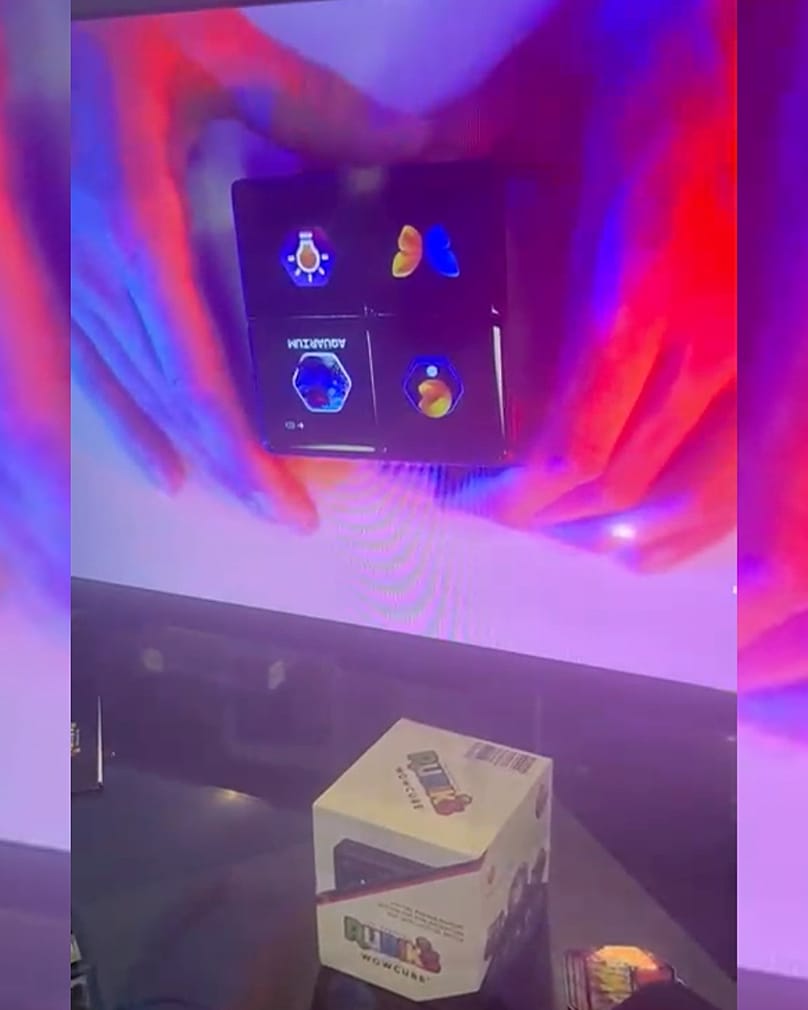
This innovative cube boasts an impressive 24 integrated screens, transforming the traditional twisting and turning into a gateway for a variety of interactive games. Imagine solving puzzles where you need to align the faces of historical figures, with each completed challenge unlocking engaging history lessons. Beyond pre-programmed games, the WOWCube empowers users to unleash their creativity by designing and programming their own unique games directly onto the 2x2 cube. This blend of nostalgic gameplay with modern digital capabilities positions the WOWCube as a compelling educational and entertainment tool. It's available for purchase at $299 (approximately €257).
2. LEGO Smart Brick: Bringing Intelligence to Building Blocks
LEGO, a brand synonymous with tactile creativity, is pushing the boundaries of physical play with its new Smart Brick. This innovation was a significant talking point at CES 2026, promising a more dynamic and responsive building experience.
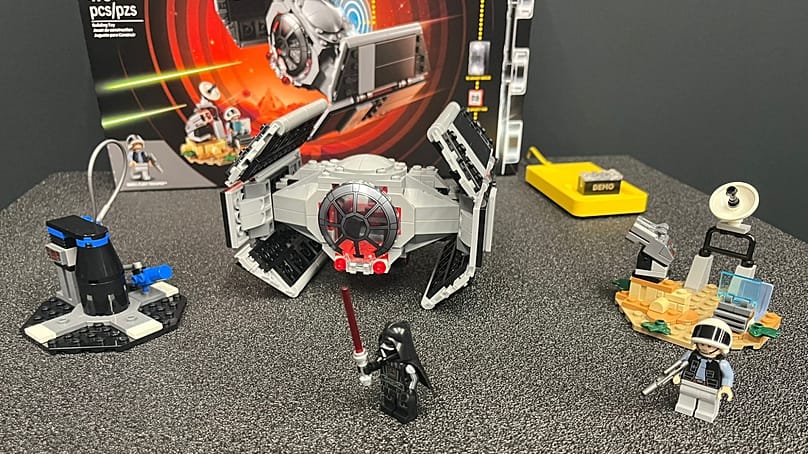
The LEGO Smart Brick is designed to go beyond static construction. It can illuminate, emit sounds, and crucially, interact with other Smart Bricks. This interconnectivity allows for the creation of more complex and engaging play scenarios, where the bricks themselves become active participants in the storytelling and gameplay. Tom Donaldson, senior vice president at the LEGO Group, highlighted the intrinsic value of physical play, stating, "I think physical play has a tremendous number of benefits, and even if it's not benefits, it's fun in different ways. It’s building, hiding behind sofas, even if it's getting hit by a dart, and it's slightly hurting. These are all things that are additional aspects to play, and they've sometimes been a little hard to access in a more advanced way.” He expressed a strong hope that "more broadly imaginative play gets ever and ever stronger in all the different forms, whether it's digital or here, in the more physical side.”
3. Sweekar: The Tamagotchi Meets Artificial Intelligence
The beloved digital pet phenomenon of the 1990s, Tamagotchi, has received a futuristic AI makeover. Takway AI, a Chinese company, has unveiled Sweekar, which they claim is the world's first emotionally intelligent, physically growing artificial intelligence (AI) pet.
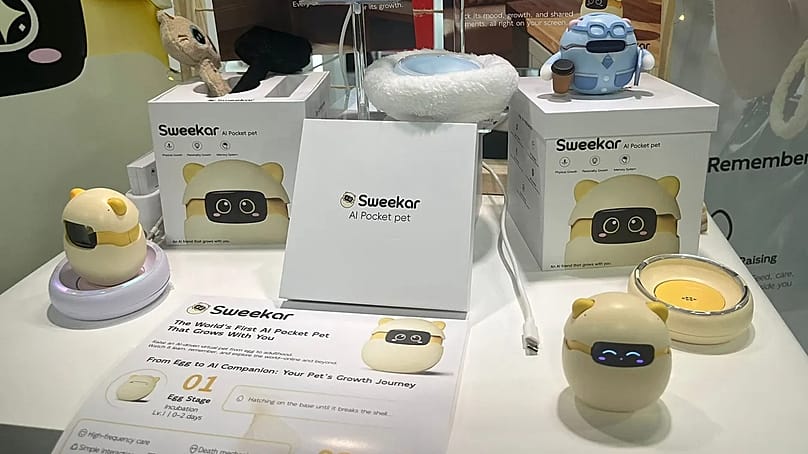
Echoing the nurturing gameplay of its 90s predecessor, Sweekar begins as an "egg" and progresses through distinct life stages: eggy, baby, teen, and adult. However, Sweekar aims to offer a deeper, more immersive experience. The company asserts it is a "touchable and evolving AI lifeform" capable of simulating body warmth and gentle breathing, providing a more lifelike companion. Sweekar is designed to learn from its environment and can even recount its "day" to its owner upon their return home. Irving Gao, founder and CEO of Takway AI, explained the vision behind the product: "Inspired by classic nurturing games and reimagined through modern AI and robotics, Sweekar transforms pet-raising into a physical and emotional experience.” He further elaborated, "Through growth, care, and interaction, it is designed to foster a long-term, meaningful bond between humans and AI." Sweekar is not yet available on the market but is slated for a launch on a crowdfunding platform soon.
4. Poketomo: A Pocket-Sized AI Companion for Young Adults
Sharp, the Japanese electronics giant, has introduced Poketomo, a compact and endearing AI companion designed to resemble a meerkat. While seemingly a toy, Poketomo's primary target audience is not children, but rather young adults seeking to combat loneliness.

The company positions Poketomo as a constant companion, ready to engage in conversation and offer support during the everyday moments of life. Currently available in Japan for approximately €300, Poketomo is not yet accessible for purchase in Europe or North America. Interestingly, Sharp has noted that while the product was initially marketed towards young women, it has also garnered significant interest from older adults, suggesting a broader appeal for AI-driven companionship.
Navigating the Landscape: Physical Play vs. AI-Enhanced Toys
The emergence of sophisticated AI-driven toys at CES 2026 raises pertinent questions about the evolving nature of play. While many of these advanced robots might appear to be child-focused, a notable trend is their targeting towards adults. Exhibitors often cite increased scrutiny and potential criticism as reasons for this strategic approach when it comes to products for children.
However, Daniela Braga, founder and CEO of Defined.ai, a company specializing in ethically sourced training data, observes that "AI-enabled products targeting younger and younger children" are still appearing. Braga expressed a cautionary stance: “I believe exposure to AI should be delayed for children as much as possible, with the clear exception of accessibility and assistive technologies.” She further warned, “Introducing AI too early in a child’s development risks changing how we, as humans, learn, interact, and build foundational skills.” This highlights an ongoing debate about the appropriate age for AI integration in children's lives, balancing the allure of new technology with concerns for foundational developmental processes.


No comments:
Post a Comment