
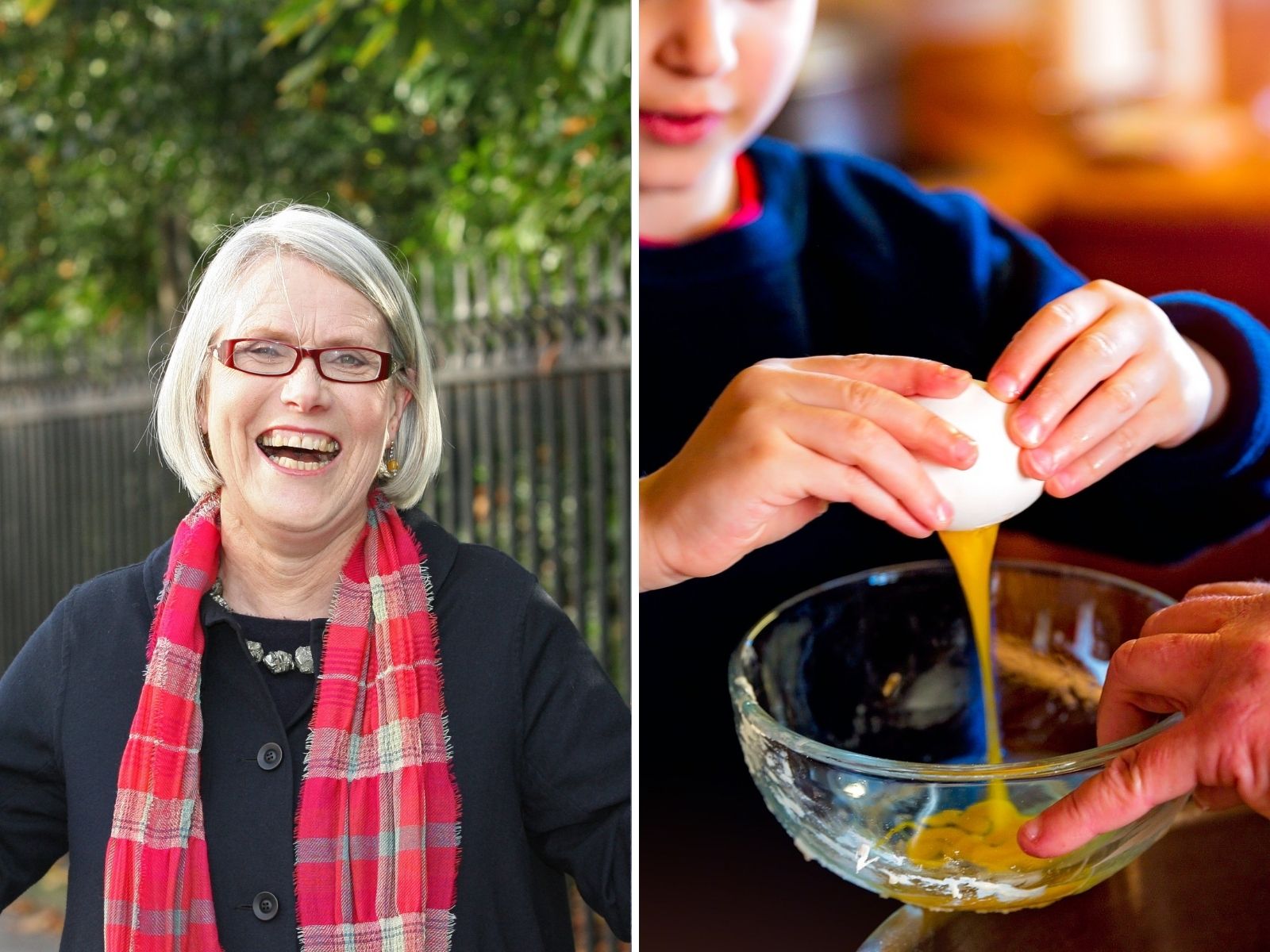
Leading chef Darina Allen has compared some hot meals provided to children in schools to “airline food”.
The owner of Ballymaloe Cookery School also told the Oireachtas education committee that the nutritional value of the meals needs to be improved.
Ms Allen said the meals provided to some schools lack nutritious, high quality and “genuinely delicious food”, telling TDs and senators that “ultra-processed foods” dominate many meals.
“The current model is based on high volume, low cost, with very little transparency on how the meals are produced,” she said. She added that an “industrial approach akin to airline food might be acceptable occasionally, but certainly not five days a week for most of the school year”.
Ms Allen said it can be difficult to obtain information on traceability from some of the larger companies providing hot meals to schools. She pointed to an example of one chicken curry meal containing up to 80 ingredients.
While the hot meals scheme has been welcomed and has provided support to families who may be struggling, further work is needed to improve and expand the scheme due to varying quality between schools, the committee heard.
“Just filling a belly with something isn’t good enough,” Social Democrats TD Jen Cummins said.
She showed the committee a series of photos of meals, including a vegetable “in a gloopy thing” and a meal that looked “a bit overcooked”, which she described as “not acceptable”.
Experts raised concerns in relation to the amount of time children have to eat their lunch, the nutritional value of the food, the level of highly processed food and portion sizes.
Denis Carrigan, a representative from the Association of Teachers of Home Economics, said some young children receive the same portion as students in sixth year.
Mr Carrigan said it is a great scheme, but there is work to be done to bring it to “gold standard”, as there is too much focus on distribution rather than nutrition.
“Is it necessary that food is travelling vast distances to schools? Is it necessary to have ultra-processed meals served to students, comparable to airline food?” he said.
He recommended that sourced produce, better nutritional education and age-appropriate portions should be introduced.
“It’s not good enough that a junior infant has been served the same portion as a sixth-class student,” he added.
Asked whether current suppliers are providing adequate value for money, Children’s Alliance policy director Dr Naomi Feely said further research is needed, including into why some schools are unable to comply with nutritional guidelines.
Louise Bayliss, the Society of Saint Vincent de Paul’s head of social justice and policy, said it is “essential” that the programme is rolled out to second-level children due to the support it provides to families who may be struggling financially.
“There's a massive increase in lack of school completion at that age group – and it has gone up exponentially since Covid,” she said.
“[A hot school meal] would be a way of getting children into school, because some of our members talk about families who are not sending their children to school because they don’t have the lunch and they don’t have the bus fare.
“If there was a nutritious meal for that child to get there, that would encourage school completion.”
Barnardos’ national policy manager Stephen Moffatt said food is a “constant stress” for many families, with the hot meals programme “significantly” improving children’s nutrition and taking financial pressure off parents.
“The financial benefit for families is not insignificant. Families we support who have three children in school are getting 15 good meals a week for their children,” he said.
“That saving can be spent on other essentials the family would otherwise go without or have to cut back on.”
National Parent’s Council chief executive Áine Lynch said parents and children have reported meals are “often bland, soggy, over-processed, and lacking in nutritional value”.
According to a survey, almost 50pc of parents whose child receives a hot meal in school rated their overall satisfaction with the service between a seven and 10 on a 10-point scale.
“They recognise benefits such as, saving time, saving money and improving their child’s eating habits. However, both parents and children raised significant concerns about the current implementation,” Ms Lynch said.
Get ahead of the day with the morning headlines at 7.30am and Fionnán Sheahan's exclusive take on the day's news every afternoon, with our free daily newsletter.


No comments:
Post a Comment