
First 'V-levels' revealed as government vows to 'end snobbery' in education with vocational courses
The first new V-level courses have been revealed, as the government vows to 'end snobbery' in education and broaden options after GCSEs.
Qualifications in education, finance and digital will be offered from next year to students from the age of 16, as a more vocational alternative to A-levels.
Keir Starmer set a new target to see two-thirds of young people in higher education, technical or vocational training, or pursuing a 'gold standard' apprenticeship, by the age of 25.
A V-level will be equivalent to an A-level, and students will be able to study a combination of the two. They also sit alongside T-levels, which are two-year courses equivalent to three A-levels or V-levels.
Students currently in year nine will be the first group able to take V-levels.
Ms Philipson said: 'Our bold reforms will end the snobbery in post-16 education, supporting young people with real choice and real opportunity to build secure, future‑proof careers.'
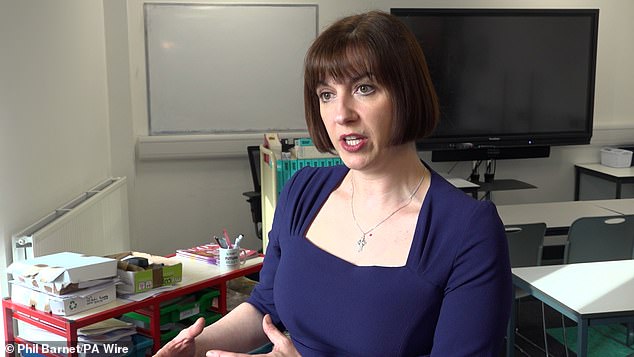
While visiting Nottingham College, Education Secretary Bridget Phillipson said the new qualification will make accessing vocational and technical education less complicated for young people and parents.
'For example, if you're studying a V-level in finance, you might also want to study A-level maths if you're thinking about a career as an accountant,' she said.
'The good thing about V-levels is they will allow young people to pursue really high-quality technical and vocational routes, but they don't have to specialise if they're not completely sure exactly where they want to head to.'
From September 2028, further V-levels could be rolled out in business, care services, construction, engineering, health, legal, sales, sports, fitness, and exercise science - though these are subject to confirmation from the Department for Education (DfE). A full rollout plan will be published by June 2026.
T-levels, which focus more on technical training for a specific sector, will also be expanded to include more subjects such as sport, fitness and exercise science, and care services.
The Government is also introducing new qualifications for students who have lower attainment and are not yet ready to progress beyond GCSE-equivalent learning.
There will be two pathways. For students who want to progress on to A, V or T-levels, there will be one-year Foundation Certificate qualifications available in education and early years, and digital.
For those who are hoping to progress to an apprenticeship or into the workplace, there will be two-year Occupational Certificate qualifications from next year in catering and hospitality, and education and early years.
The Government has also launched a consultation on stepping stone qualifications at level one for pupils who are preparing to resit English and maths GCSEs.
Pupils who fail to achieve level 4 in these core subjects are forced to keep retaking them until the age of 18 - but only one in five resitters page.
Under new plans announced last autumn, pupils’ chances of passing would be boosted by first taking an intermediary qualification before attempting to resit.
This qualification would focus on more real-world skills in English and maths, it is understood.
Having passed this, students would then work up to resitting their GCSEs the following year, rather than doing so before they are ready.
The plans, published in October, would ‘support white working class pupils in particular’, according to the DfE.
Separately, in a survey for the department, one in four parents of 14 to 18-year-olds in England said they were not confident their child understood the options available after GCSEs.
Half said their biggest concern was their child finding stable and secure employment.
The most recent figures from the Office for National Statistics show the number of young people not in education, employment or training (Neet) hit 957,000 in the three months from October to December, up from 946,000.
Ms Phillipson said: 'It's really important that young people and parents have got access to really high-quality advice, know what's out there, and know where to come for help.
'Often speaking to their local college or provider is a really good way to do that, but also the changes that we're making here around the qualifications that are on offer will make it easier.'
She also said the department is keen to work with businesses to get more young people starting apprenticeships and doing placements as part of T-levels.
'Anything more businesses can do to support young people, particularly given the numbers of young people we see who are not in education, employment or training, it's really important,' she said.
From 2027, legacy qualifications including BTecs will be defunded in subjects that are covered by T or V-levels.
Nottingham College chief executive and principal Janet Smith said reforms to the post-16 system will help improve accessibility to qualifications and provide students clear pathways to their next steps towards employment or further study.
Bill Watkin, chief executive of the Sixth Form Colleges Association, welcomed the decision to retain BTecs while V-levels are phased in.
He said: 'By 2028, the Government will have made further refinements to T-levels and delivery of V-levels will have started.
'Retaining most BTec diplomas and extended diplomas until then will avoid the sharp decline in student outcomes that would have accompanied their hasty withdrawal.'
Read more
Post a Comment for "First 'V-levels' revealed as government vows to 'end snobbery' in education with vocational courses"