
How Iran has effectively closed the Strait of Hormuz
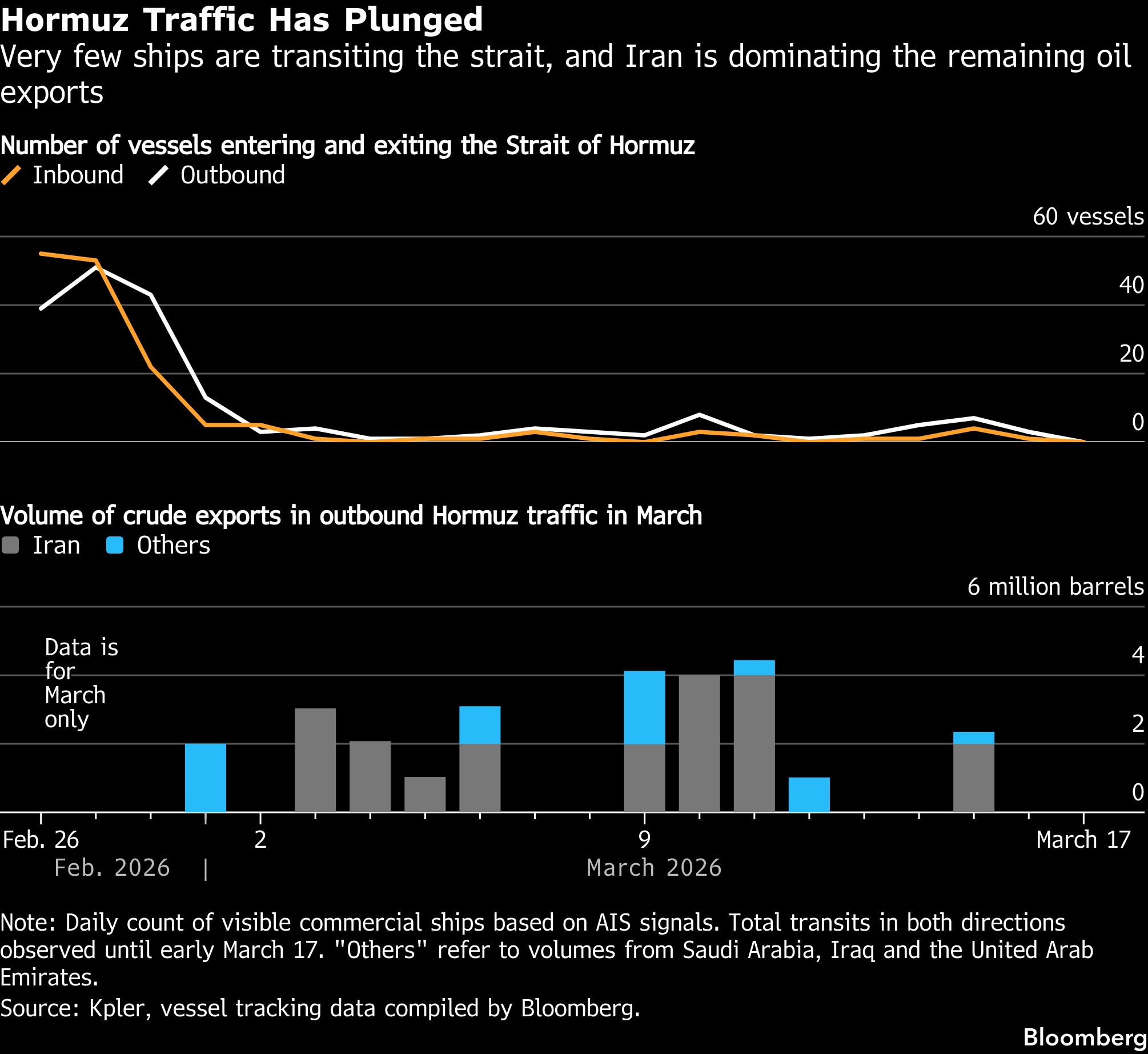
(Bloomberg) -- Maritime traffic through the Strait of Hormuz — a vital route for exports of oil, natural gas and other commodities from the Persian Gulf — remains at a near-standstill weeks after the US and Israel launched strikes against Iran.
Iran sits above the strategic waterway and has effectively closed it to all but approved vessels. Oil and gas prices have surged amid the collapse in Hormuz transits, attacks on Middle Eastern energy infrastructure, and cuts to Gulf crude production as storage tanks fill up.
US President Donald Trump issued a 48-hour ultimatum to Iran to reopen the strait, threatening to bomb the country’s power plants otherwise. Ahead of that deadline expiring on March 23, he postponed the potential strikes for five days, saying that the two sides have engaged in “productive conversations” about ending the war.
What’s the significance of the Strait of Hormuz?
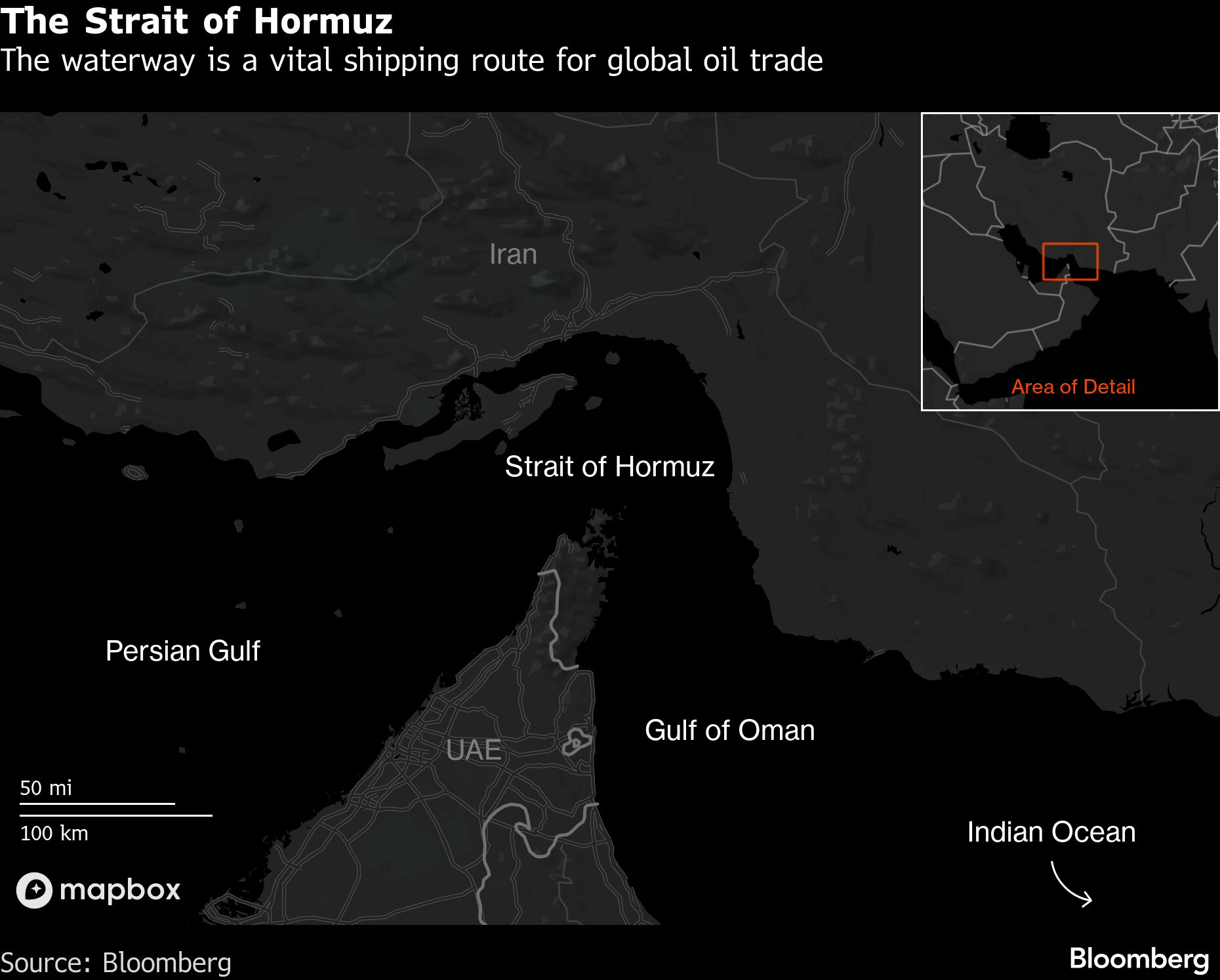
Situated between Iran to its north and the United Arab Emirates and Oman to its south, the Strait of Hormuz connects the Persian Gulf to the Indian Ocean. It’s around 100 miles (161 kilometers) long and 24 miles wide at its narrowest point. The shipping lanes in each direction are just two miles wide.
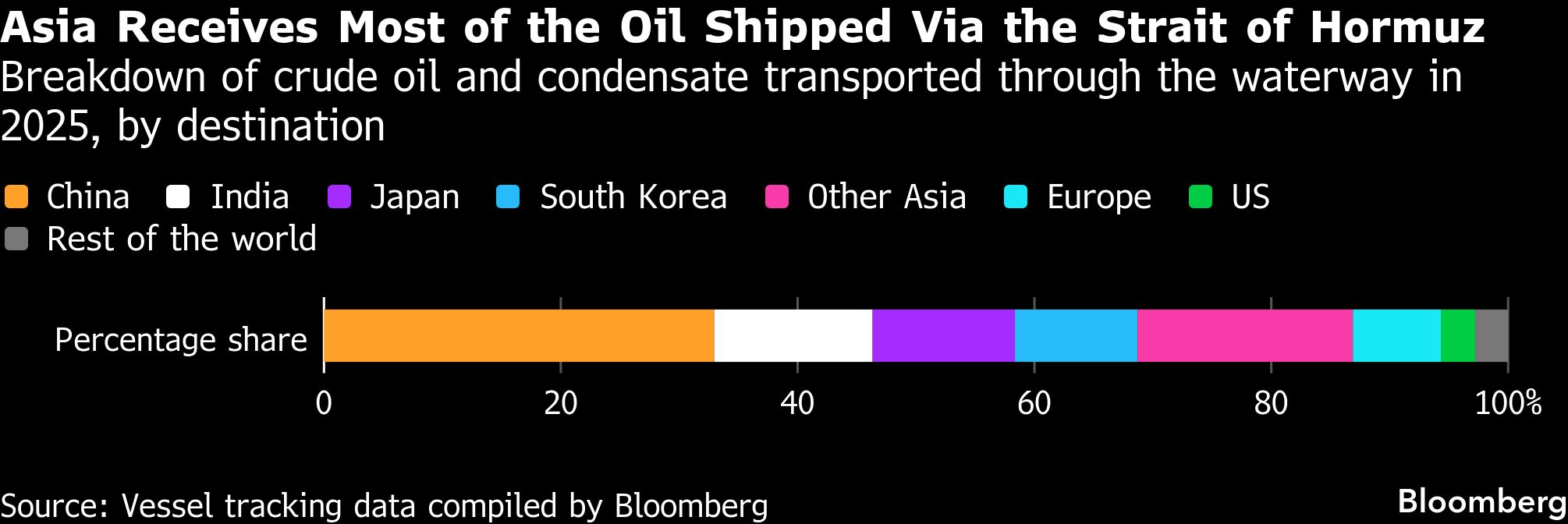
The strait is an essential passage for the oil market, handling about a quarter of the world’s seaborne oil trade. Saudi Arabia, Iraq, Iran, Kuwait, Bahrain, Qatar and the UAE all ship crude through Hormuz and the majority of their cargoes go to Asia. Gulf countries are also home to refineries that produce large volumes of diesel, naphtha — used to make plastics and gasoline — and other petroleum products that are exported globally via the strait.
The waterway is crucial for the liquefied natural gas market, too. Around a fifth of the world’s LNG supply — mostly from Qatar — passed through this channel last year. Asian countries buy most of the super-chilled fuel shipped from the Middle East.
Beyond energy, the Strait of Hormuz is a choke point for products including aluminum, fertilizer, and even helium, which is used in the production of semiconductors.
| Explainer: How the Iran War Is Disrupting Global Oil and Gas Supply |
| Iran War Premium Pushes Some Oil Products to Over $200 a Barrel |
| Hormuz Strait Closure Forcing Trump, Importers to Seek Solution |
| The Saudi Oil Pipeline the World Didn’t Know It Needed |
What’s been happening in the Strait of Hormuz?
Iran has sporadically attacked ships in and around the Persian Gulf. While insurance is available for vessels traversing the Strait of Hormuz — albeit at a much higher cost than before the war — most shipowners are unwilling to risk the loss of life, cargo and vessels.
A few ships have traveled through the strait by hugging the Iranian coast, suggesting Tehran is allowing certain crossings to proceed on its terms. Some governments have been able to negotiate safe passage for cargoes.
Navigation has been compromised by the jamming of global positioning system signals. This tactic is used to disrupt shipping, but it’s also a defense strategy to make it more difficult for drones and missiles to find their targets. More than 1,000 ships in the Persian Gulf have been affected by signal jamming, according to maritime intelligence firm Windward.
Iran has continued to move its own oil through the Strait of Hormuz. Its shipments had only dropped slightly from pre-war levels as of mid-March, according to data from intelligence firm Kpler Ltd., while cargoes from other exporters in the region had slumped by more than 95%.
How much can Gulf oil producers bypass the Strait of Hormuz?
Kuwait, Qatar and Bahrain have no other sea route for their exports.
Saudi Arabia, which ships the most oil through Hormuz, is rerouting crude through a pipeline that runs to the Red Sea port of Yanbu. Producer Saudi Aramco aims to use the pipeline’s full 7-million-barrel-a-day capacity, although Yanbu can only handle around 5 million barrels a day of shipments — below the kingdom’s usual export levels. This route isn’t without risk as Iran has already targeted a refinery in Yanbu, while the Iran-backed Houthi militants in Yemen have threatened to resume attacks on vessels in the Red Sea.
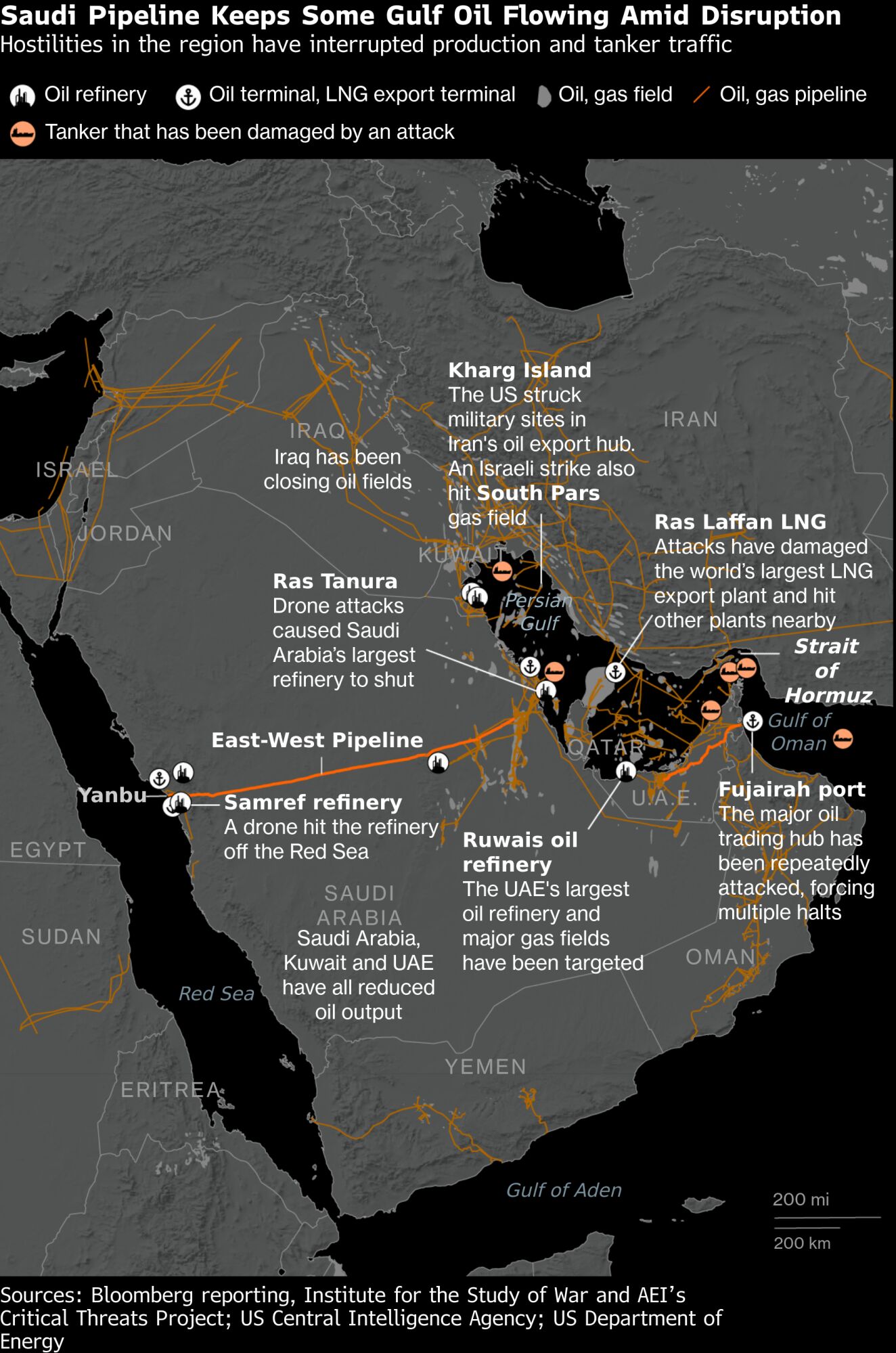
The UAE can likewise bypass Hormuz to a certain degree. But the port of Fujairah, which sits at the end of a pipeline that connects the UAE’s oil fields to the Gulf of Oman, has been disrupted by drone attacks. And while Iraq is resuming flows through the pipeline that links its semi-autonomous Kurdistan region to Turkey’s Mediterranean port of Ceyhan, this route can only carry a fraction of what the country normally exports through the Persian Gulf.
How realistic is the prospect of naval escorts through the Strait of Hormuz?
Trump has tried to recruit partners in Europe and Asia for naval escorts to help restore commercial shipping activity. The responses have ranged from caution to ambivalence, if not outright rejection. Officials in those countries have questioned whether the combination of their warships and the US navy would be enough to meaningfully restore traffic.
Military analysts largely agree that escorts would be risky without a ceasefire. The narrow width of the Strait of Hormuz leaves convoys vulnerable to attack, and limits the number of vessels that can be escorted at one time.
“Until we’ve neutralized Iran’s layered, asymmetric capabilities — mines, fast attack craft, submarines and drones — we won’t want to put commercial or even escort ships through,” said Bob McNally, president of consultancy Rapidan Energy Group and a White House adviser during the administration of President George W. Bush.
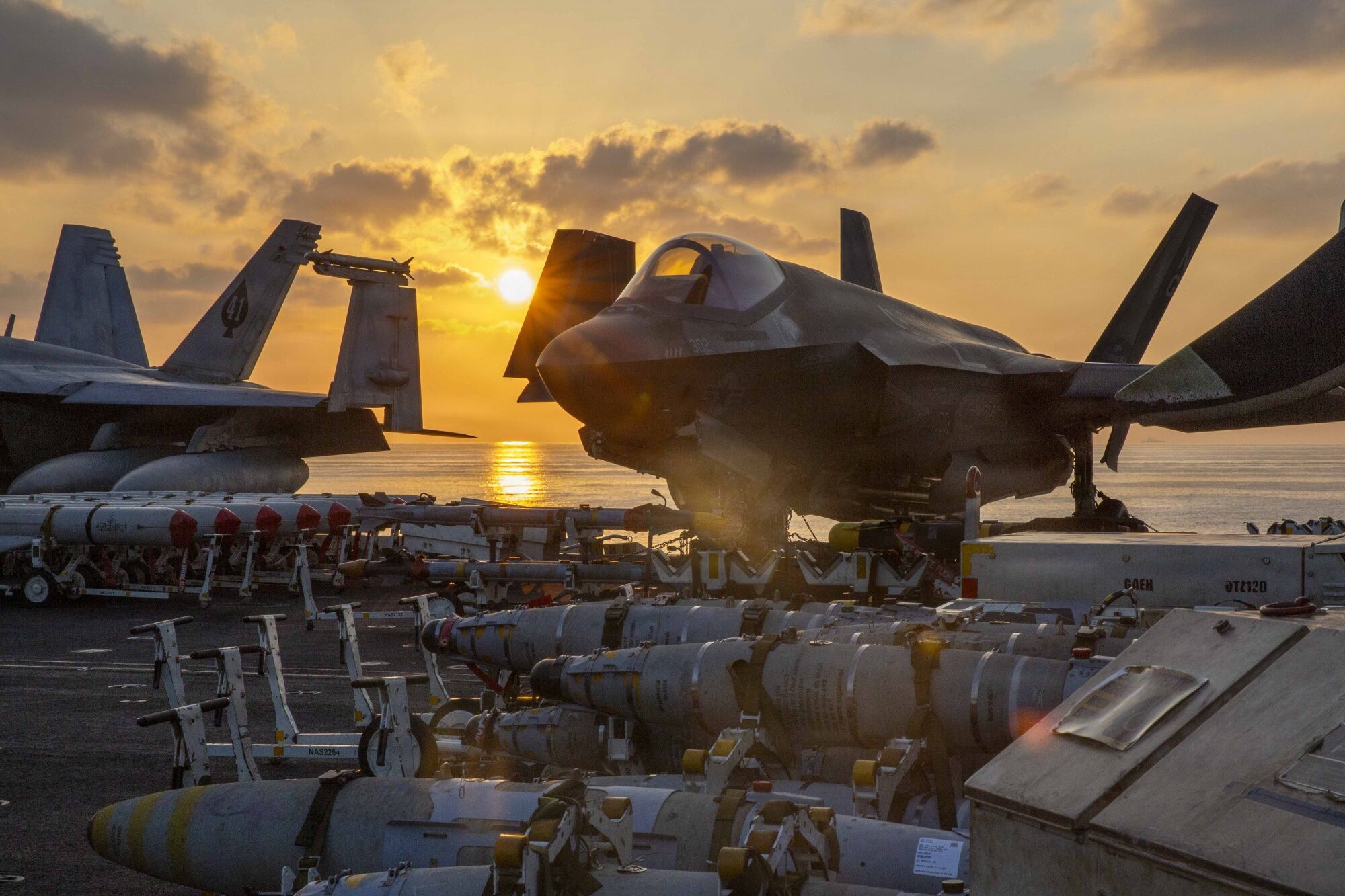
Iran “may have started” to lay sea mines in the strait, according to UK Defense Secretary John Healey. The US said it has destroyed or damaged more than 30 Iranian mine-laying vessels, and dropped bunker-busting bombs on Iranian missile sites near the waterway.
Should naval escorts be provided and give shippers the confidence to make the journey, it could still take weeks to clear the backlog on either side of the strait. Even then, exports from the Gulf may take a while to recover from the damage inflicted on energy infrastructure by missile and drone attacks.
--With assistance from Weilun Soon and Grant Smith.
More stories like this are available on bloomberg.com
©2026 Bloomberg L.P.
Post a Comment for "How Iran has effectively closed the Strait of Hormuz"