
People in Los Angeles are wearing cameras while doing housework - and getting paid for it
The New Gig Economy: Filming Chores to Train AI and Robots in Los Angeles
In the bustling heart of Los Angeles, a novel gig economy has emerged, offering residents an unconventional way to earn extra cash: by performing everyday household chores while being filmed. This isn't about reality TV; it's about feeding the insatiable appetite of artificial intelligence and robotics for data on human movement. From Santa Monica to Los Feliz, hundreds are strapping cameras onto their heads and hands, meticulously documenting how they brew coffee, scrub toilets, water plants, and wash dishes.
At a popular downtown cafe, a discreet operation is underway. A woman, acting as a manager for San Francisco-based recruitment firm Instawork, is seen handing out headbands equipped with phone mounts. These devices are the key to capturing the intricate details of human actions, which will then be transformed into valuable data for training robots.
One such gig worker, Salvador Arciga, a veteran of various odd jobs across the city – from delivering food to handing out hats at sporting events and washing dishes at theme parks – finds this new role surprisingly straightforward. He was handed a head mount and instructed to go home and film himself cleaning his kitchen and doing the dishes. The prospect of earning US$80 for two hours of footage, especially when he'd be doing these chores anyway, is a compelling proposition. "I need to do chores anyway," he remarks. "Now I get a chance to get paid to do it."
The Quest for Physical AI Data
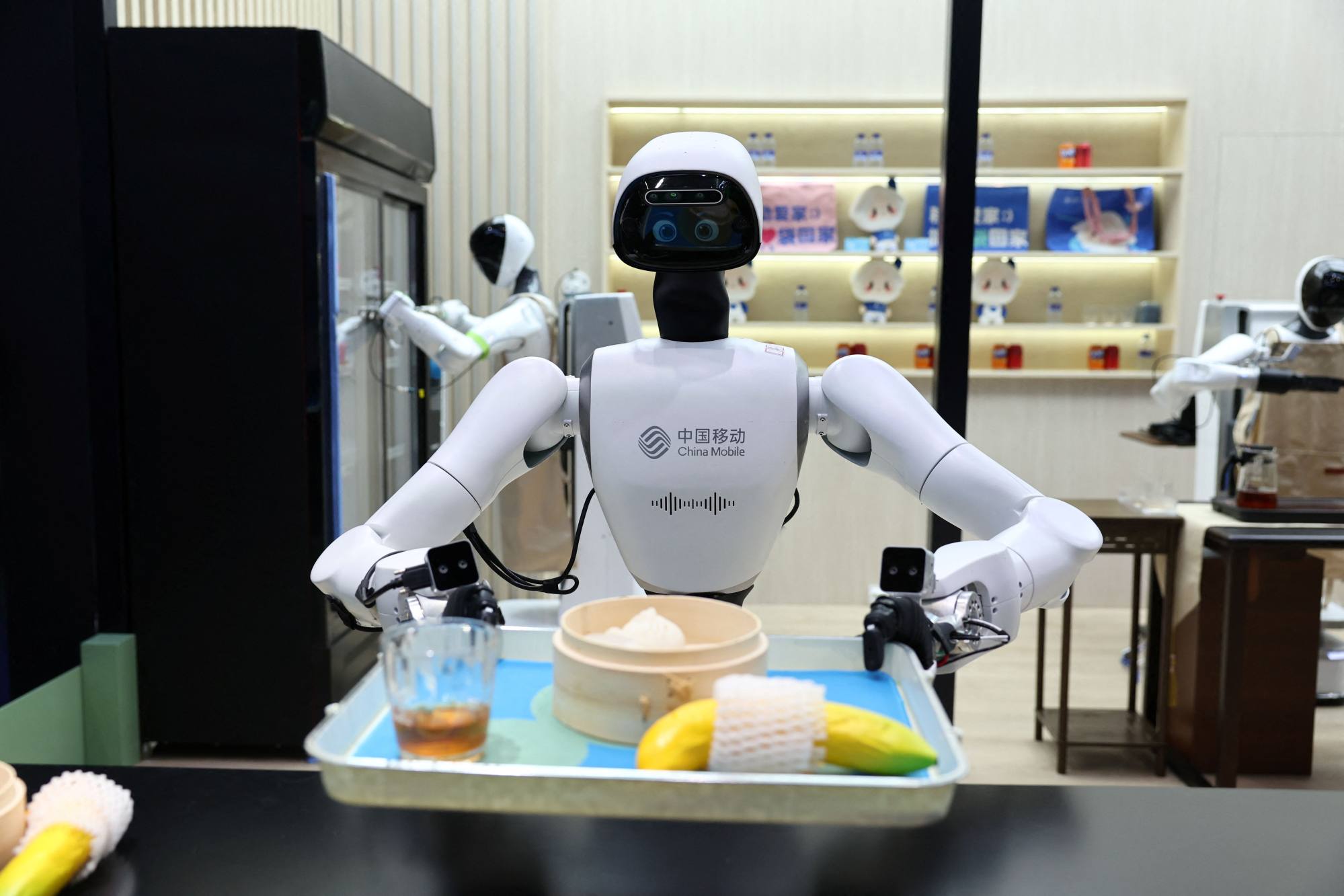
While AI chatbots like ChatGPT have learned to master communication, music composition, image generation, and coding by processing vast amounts of internet data, the development of "physical AI" systems, such as humanoid robots, requires a different kind of information. These advanced AI models need to understand and replicate real-world human movements, a domain where readily available online data is scarce.
This data gap has spurred the creation of a micro-economy focused on capturing firsthand footage of human actions. As Jason Saltzman, head of insights at market intelligence firm CB Insights, explains, "Humans are supplying ground truth, judgment, or structured feedback that models can't reliably produce on their own yet."
Globally, this phenomenon has led to the establishment of "arm farms" – dedicated facilities where numerous individuals record themselves performing tasks like opening doors or folding laundry. China, in particular, boasts over 40 state-owned training centres where humans, often operating robots remotely via virtual reality headsets, contribute to AI development.
A Growing Opportunity in the US
In the United States, with rising inflation and increasing unemployment rates, these data-capture gigs are becoming a vital source of income for many. Salvador Arciga's story is not unique; entire families are reportedly signing up to record video, speech, and images to supplement their earnings.
Shahbaz Magsi, co-founder of Sunain, a startup specialising in human data capture, views this as a significant emerging sector. "It's one of the biggest gig economies that is going to exist in the whole world," he states.
Instawork, historically known as an employment agency for temporary staff in sectors like hospitality and entertainment, has expanded its services to include human movement data capture, leveraging its existing workforce to support robotics training.
Innovative Technology for Nuanced Data
The demand for detailed human movement data has also spurred innovation in custom hardware development. New startups are designing specialised cameras and bodysuits to meticulously capture nuances such as muscle movement, pressure sensitivity, depth of touch, and precise human pose reconstruction.
Azzam and Samra Ahmed, an Egyptian immigrant couple residing in Pasadena, are augmenting their savings by participating in this burgeoning field. Equipped with wrist and head cameras, they document their process of preparing dinner. The wrist cameras, in particular, are crucial for capturing the subtle muscle movements involved in chopping vegetables, seasoning chicken, and rolling shawarmas – details essential for training robotic models to replicate exact hand dexterity.

Sunain, the human data capture startup, distributes these custom wrist cameras to its network of vetted contributors. The Los Angeles region, with its diverse population and varied living environments, has become a prime location for such data collection, boasting over 1,400 contributors from Culver City to Pasadena. Magsi highlights the region's advantage: "The region offers unmatched diversity of homes, lifestyles and people."
Unlike Instawork, which often provides scripted tasks, Sunain encourages its gig workers to record natural, spontaneous human behaviour. This includes capturing how people naturally switch between tasks, such as pausing cooking to address a running tap. This contextual awareness is vital for robots that are expected to operate seamlessly in real-world environments. "These robots need to understand the context switching that humans do," Magsi emphasizes.
The Human Element in an Automated Future
While some of Arciga's friends have expressed concerns about training AI to potentially replace human capabilities, he remains optimistic. He believes that new technologies, while often met with apprehension, also pave the way for new job opportunities, like the one he currently holds. Furthermore, he asserts that the fundamental human need for connection will endure. "People will still need people," he concludes.
Post a Comment for "People in Los Angeles are wearing cameras while doing housework - and getting paid for it"