
This indoor gardening project is ready to harvest in just 2 weeks
Grow your own microgreens, with tips from Alabama farmer Jacqueline Jackson.
Key Takeaways
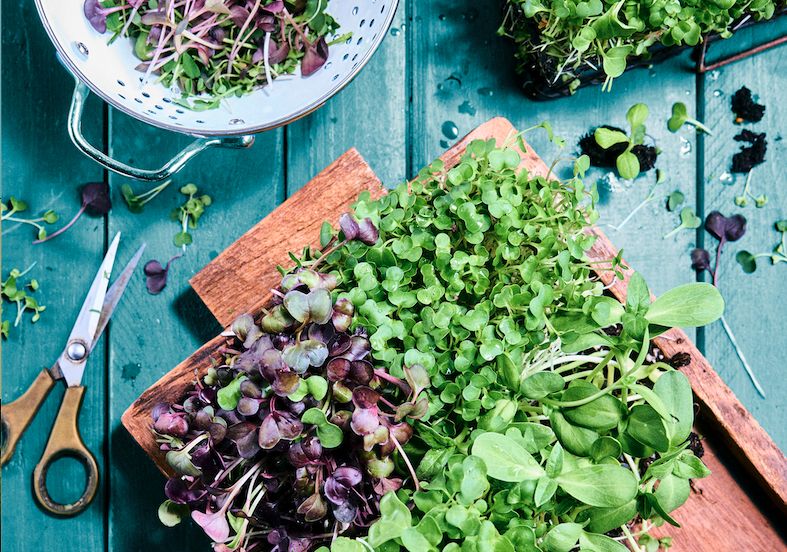
- Microgreens are similar to sprouts, but they are harvested a bit later, when they are 3 or 4 inches tall. Varieties include radish, sunflower, and kale.
- They are easy to grow at home, even for beginning gardeners, and can be harvested in about 10 to 15 days.
- Birmingham, Alabama farmer Jacqueline Jackson of Mattie’s Garden shares her best tips for growing microgreens.
If you came to my grandmother’s house, there were two things you were going to find: discipline and food,” recalls Jacqueline Jackson, the owner and operator of Mattie’s Garden, an urban farm in Birmingham, Alabama that’s named after her beloved matriarch. On Saturdays, Jackson brings her harvest—lush bundles ranging from arugula and bok choy to her coveted microgreens—to Birdsong Farmers Market. Each crop is a reflection of her joy and the lessons of generosity passed down from the women before her. “I’m a vibrant person with a vibrant personality, so I like my produce to look bright, friendly, and colorful,” she says.
Betting Big On Microgreens
The idea for Mattie’s Garden sprouted years ago while Jackson was working as a banker and searching for her next path. Monday through Friday, she thrived in her career, but during the weekend, she was in the garden, planting seeds for the future she envisioned. “I fell in love with it,” Jackson says. “I did not want to put it down on Monday morning.” She and her husband saved up so she could leave her old job behind. Seven years later, she hasn’t looked back. “I’m not one to give up on things, and that’s something I also saw in my grandmother,” she says.
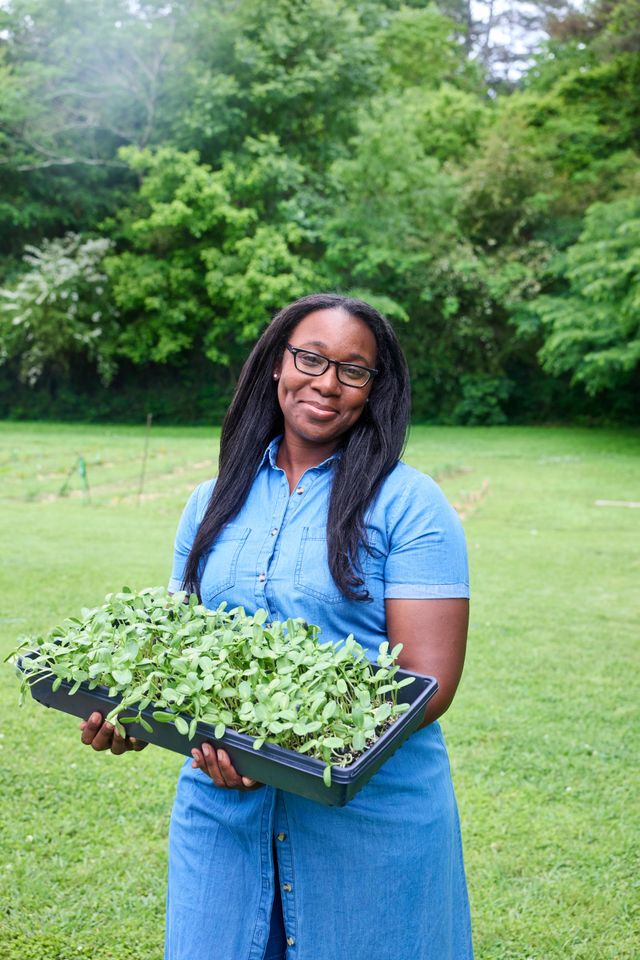
Mattie’s Garden began to flourish, especially the microgreens. “They are like cousins to sprouts. You harvest them at a later stage, when they’re no more than about 3 or 4 inches tall, and it’s like you’re eating a small plant,” Jackson explains. Although the ingredient is typically thought of as a fancy garnish favored by chefs, she encourages customers to try adding some to sandwiches and salads. “What I love about microgreens is you can bring them to the everyday person,” she says. “That’s why I offer them at the farmers’ market, for people who aren’t buying it to garnish a $50 steak.”
The sprouts she grows include sunflower, radish, and kale. They’re surprisingly versatile to use and to grow at home (learn more below). As she continues to expand the crops on her 2-acre property, Jackson hopes that even more of her community can share in the fruits of her labor. “I tell people there’s a difference between a dream and a vision,” she says. “A dream is grandeur, and a vision comes with a plan.”
How To Grow Your Own Microgreens
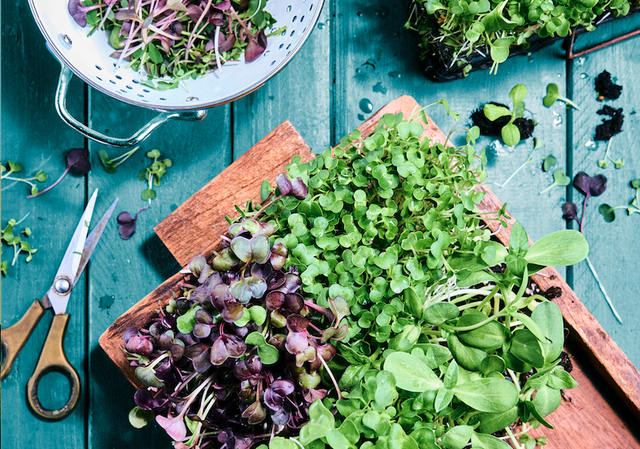
Jackson shares her best tips for this low-maintenance, high-reward gardening project that's easy enough for first-time gardeners.
Choose the Perfect Spot
“I know the kitchen is a go-to, but the temperature tends to fluctuate in there. You want a more controlled environment, if possible,” she explains. Instead, try a windowsill with indirect sunlight, a spare room with good airflow, or a basement with regulated temperatures to ensure optimal growing conditions. Jackson recommends a consistent range of 60 to 70 degrees.
Plant The Seeds
Fill your container with soil, spread the seeds, mist with water daily, and keep them in a sunny spot or under grow lights. Both coir (fiber from the outside of coconuts) and potting soil work well as long as you use them properly. “If you choose coconut coir, let it dry out a little before planting,” she says. “You don’t want it too soggy, or it could lead to mold. Indoor soil tends to be more balanced and holds less moisture.”
Enjoy Your Harvest
“Our basic microgreen mixes [such as those with arugula, kale, and sunflower shoots] mature within 10 to 15 days,” she notes. “We harvest them about 1 to 1 ½ inches above the soil surface.” To do this in your own indoor garden, simply use clean scissors to cut just above the soil line. Store them, unwashed, in a sealed container in the refrigerator, and rinse the greens before eating them.
Read the original article on Southern Living
Post a Comment for "This indoor gardening project is ready to harvest in just 2 weeks"