
Why the oil and gas price shock from the Iran war won’t just fade away
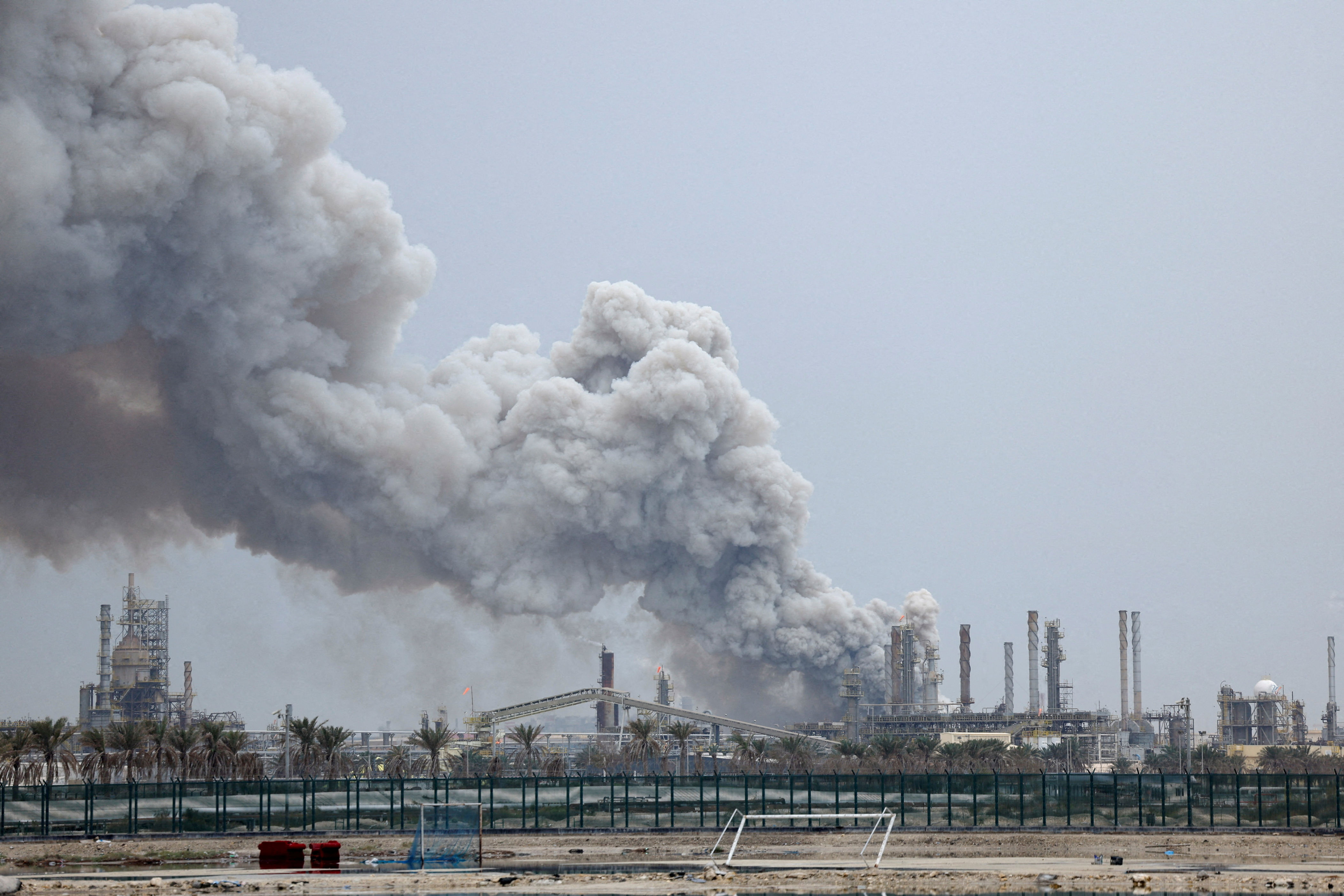 The ongoing conflict involving the United States and Israel against Iran is poised to trigger a seismic shift in global energy markets. Already, benchmark Brent crude oil prices have surged dramatically, approaching $120 per barrel. This level is alarmingly close to the record high of $147 per barrel observed in July 2008, underscoring the severity of the current market instability.
The situation bears a resemblance to the energy shock experienced in 2022 following Russia's invasion of Ukraine. At that time, Brent crude also saw a significant spike, reaching $139 per barrel in March before eventually stabilizing to pre-war levels the following year. Natural gas prices similarly peaked in 2022 and have once again experienced a sharp increase this month, directly attributable to the hostilities in Iran and the consequential closure of the Strait of Hormuz.
While some might draw parallels to the Russia-Ukraine energy crisis, predicting a similar pattern of a temporary shock followed by market normalization, such an outcome appears increasingly unlikely. While oil and gas prices will undoubtedly stabilize eventually, the economic repercussions for both the affected region and the global community will be substantially more severe.
A Critical Chokepoint with No Easy Alternatives
The energy shock of 2022 was primarily a consequence of sanctions and price caps imposed by European nations and the United States on Russia. This strategic move rerouted substantial volumes of oil through alternative trade channels and effectively severed most of Russia's pipeline gas supply to Europe. The result was a complex global reordering of energy flows, coupled with a coordinated release of strategic oil reserves to cushion the impact of price volatility.
Crucially, the 2022 conflict and subsequent sanctions did not fundamentally alter Russia's standing as a major global oil and gas producer. The nation continued to export its energy commodities internationally, including to European countries, albeit often through indirect intermediaries.
In stark contrast, the current US-Israeli conflict with Iran has created a physical chokepoint, effectively shutting down a significant portion of oil and gas supply due to the closure of the Strait of Hormuz. Disruptions to tanker traffic have compelled Gulf producers to scale back their output, as they have exhausted their available storage capacity.
Furthermore, Iranian strikes targeting gas and oil infrastructure have inflicted damage and necessitated the precautionary shutdown of numerous facilities. These attacks on critical infrastructure have amplified market uncertainty, driving up risk premiums and removing a considerable amount of production capacity from the global supply.
The International Energy Agency (IEA) has assessed this current episode as the most significant supply disruption in the history of the global oil market. Flows through the Strait of Hormuz, which normally handle approximately 20 million barrels per day, have dwindled to a mere trickle. Concurrently, production cuts by Gulf nations are estimated to be at least 10 million barrels per day.
In 2022, the release of 180 million barrels of oil from strategic reserves proved instrumental in managing the energy price shock by alleviating fears of widespread shortages. However, the IEA's decision this month to release an additional 400 million barrels is unlikely to achieve the same level of effectiveness. This is because the release does not address the fundamental issue: the physical disruption of supply.
Logistical Hurdles Hamper Reserve Release Effectiveness
The efficacy of releasing strategic oil reserves is further complicated by significant logistical challenges. Strategic petroleum reserves are primarily located in the United States, Europe, Japan, and South Korea, often housed in inland facilities. Transporting this oil to regions most affected by shortages, particularly Asian import markets and, to a lesser extent, Europe, is a time-consuming process that requires substantial shipping capacity and secure maritime routes. In the current environment, with limited tanker availability, simply releasing oil from storage does not guarantee its prompt delivery to end-users.
Rerouting supply is also not a viable solution. Alternative pipeline networks that circumvent the Strait of Hormuz, such as those in Saudi Arabia and Iraq, possess only a limited spare capacity of approximately 3.5–5.5 million barrels per day.
The Natural Gas Market Faces a Similar Crisis
The natural gas market is confronting a comparable crisis. On an annual basis, the Strait of Hormuz is a critical transit point for approximately 112 billion cubic meters (bcm) of liquefied natural gas (LNG), representing about 20 percent of global LNG trade. This vital flow has now been completely severed.
Available alternatives are severely restricted. The Dolphin pipeline, which transports gas from Qatar through the United Arab Emirates to Oman, has a capacity of 20-22 bcm per year. However, the pipeline itself has limited additional capacity to accommodate increased volumes. Furthermore, Oman's LNG terminals, responsible for liquefying the gas, are also unable to handle a greater flow.
The global LNG market is even more constrained than the oil market, and there is a distinct lack of spare production capacity to meet global demand. Most existing LNG facilities are already operating at high utilization rates, leaving limited scope for short-term supply adjustments. Expanding LNG production capabilities is a lengthy process and cannot adequately compensate for immediate shortages.
Long-Term Implications: A Fundamental Vulnerability Exposed
The 2022 Russia-Ukraine war highlighted the global energy system's resilience, demonstrating its capacity to absorb price shocks through rerouting, substitution, and policy interventions. In contrast, the 2026 US-Israeli conflict with Iran has unveiled a fundamental vulnerability: the physical concentration of hydrocarbon flows through critical chokepoints. When these chokepoints are compromised, there is no readily available substitute capacity to compensate for the loss.
Unlike disruptions caused by sanctions, a sustained blockage of the Strait of Hormuz not only impedes trade routes but also directly hinders the ability of producers to export. This pushes markets beyond their adjustment mechanisms, leading to forced demand destruction and a structural reconfiguration of the energy landscape.
In essence, the longer the conflict persists and the longer the unimpeded transit through the strait remains disrupted, the more prolonged the period of elevated oil and gas prices will be. The tools employed in 2022, such as diversification and rerouting, will prove ineffective in stabilizing these markets.
Persistent High Prices Will Force Consumption Cuts
Sustained high energy prices will inevitably compel consumers and industries to curtail their consumption. Energy-intensive sectors, including petrochemicals, fertilizers, aluminum, steel, and cement, are likely to experience the most immediate pressure due to sharply rising raw material and fuel costs.
The transportation sector will also be significantly impacted, albeit with different dynamics. Higher oil prices translate directly into increased fuel expenses for aviation, shipping, and road transport, leading to higher freight rates and airfares.
While demand in these sectors is relatively inelastic in the short term, prolonged periods of high prices will ultimately reduce mobility, alter consumption patterns, and accelerate the adoption of efficiency measures. At the household level, increased energy costs will diminish disposable income, resulting in a broader contraction of consumer spending across the economy.
For the Gulf Cooperation Council (GCC) states, this conflict represents more than just a market shock; it poses an existential challenge to their role as dependable energy suppliers. Export disruptions, infrastructure vulnerabilities, and escalating security costs are undermining both the volume of their exports and their global credibility.
For the rest of the world, the ramifications will include significantly slower economic growth. The only viable path to averting severe economic consequences lies in the swift de-escalation and resolution of the conflict.
Post a Comment for "Why the oil and gas price shock from the Iran war won’t just fade away"