
Faith Leaders, Volunteers Stand with Immigrants This Holy Week
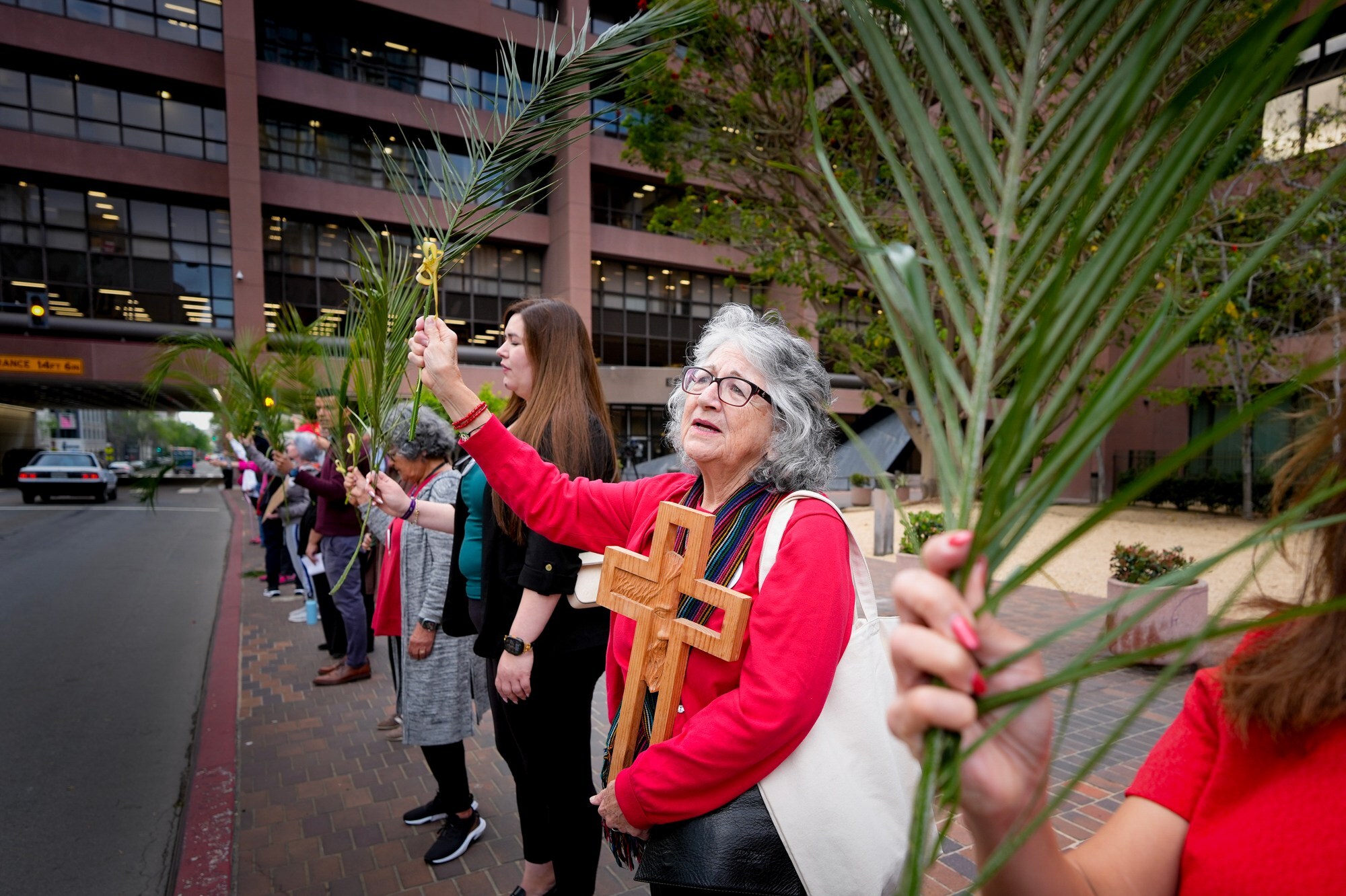 On a recent Wednesday, a group of volunteers and religious leaders gathered outside the Edward J. Schwartz Federal Building in downtown San Diego. Amidst the flow of vehicles and pedestrians, they stood with palm branches, a symbol often associated with religious observances, particularly during Holy Week leading up to Easter. This demonstration was not just a symbolic gesture; it represented a deeper commitment to supporting immigrants navigating the complex U.S. immigration system.
For many involved, accompanying immigrants to court hearings or check-ins with Immigration and Customs Enforcement (ICE) has become a regular practice. However, this particular Wednesday saw a larger contingent, their palm branches a visible sign of solidarity and a message of hope as Easter approached.
"We chose this Wednesday of Holy Week as a way of saying that we also placed palms on the sidewalk here, to really show honor and respect for immigrants who come here... to let them know they’re not alone," explained Rev. Scott Santarosa of Our Lady of Guadalupe Church in Logan Heights. This sentiment underscores the core mission of the volunteers: to offer a tangible presence of support and to assure immigrants that they are not isolated in their struggles.
The FAITH Program: A Constant Presence
Since last August, the Faithful Accompaniment in Trust and Hope, or FAITH, program has maintained a consistent weekday presence inside the federal building. This initiative was established in response to reports of immigrants being detained immediately following their hearings or scheduled check-ins. The program aims to provide a supportive network for individuals facing the daunting prospect of deportation or complex legal proceedings.
However, the volunteers themselves have recently faced challenges. In late February, on two consecutive days, some individuals who regularly offered prayer or observed the building's hallways were issued citations. These citations alleged violations such as failing to comply with posted signage or directions from security personnel, specifically citing prohibitions against loitering. This situation prompted a moment of reflection among the volunteers, with some questioning the sustainability of their efforts amidst these restrictions.
"But after a meeting attended by several members, it became clear that there was still strong commitment to the effort," Santarosa noted, indicating that the challenges, while significant, did not deter their resolve.
Reaffirming Commitment Amidst Obstacles
Bishop Michael Pham of the Roman Catholic Diocese of San Diego publicly reaffirmed the program's unwavering commitment. "Despite these challenges, we are here today to publicly proclaim that we are not going away," Bishop Pham stated. "We are not afraid, we will be intimidated to stop doing what we do. We will stand, we will pray, we will not loiter, instead we bear witness to the dignity of our sisters and brothers." His words conveyed a powerful message of resilience and a steadfast dedication to upholding the inherent dignity of every individual.
Rev. Santarosa confirmed that volunteers have continued their presence at the building and reported no new citations since the incidents in late February. This suggests that while the initial citations caused concern, the program's operations have largely proceeded without further direct interference.
Navigating Federal Regulations
In early March, a spokesperson for the Federal Protective Service clarified the context surrounding the citations. They stated that the regulations in question were not new and had been in place since November. The spokesperson emphasized the legal implications of obstructing access to federal buildings, noting that such actions are against federal law and include prohibitions against obstructing the use, enjoyment, or access to federal property, such as foyers, lobbies, and corridors. Furthermore, they highlighted that noncompliance with lawful commands from federal law enforcement is also a criminal offense.
The volunteers, however, have disputed the assertion that their actions constituted obstruction within the hallways. They maintain that their presence was intended to offer support and a silent witness, not to impede access or cause disruption.
The Collaborative Effort Behind FAITH
The FAITH program is a collaborative initiative, managed by several key organizations:
- The Roman Catholic Diocese of San Diego
- The Our Lady of Guadalupe Parish
- The San Diego Organizing Project, a network of faith-based organizations
In addition to the FAITH program, volunteers from the Detention Resistance collective also regularly provide accompaniment to immigrants at the federal building, further strengthening the support network available.
Since its launch last summer, the FAITH program has trained over 700 volunteers, demonstrating a significant grassroots commitment to supporting vulnerable immigrant populations.
Personal Stories of Impact
The impact of the FAITH program is often felt through individual interactions. Francina Vivier, a member of the Sister Servants of the Blessed Sacrament congregation, has been a consistent presence at the federal building since the program's inception. She recounted a recent experience where she offered to accompany an elderly immigrant woman, who was using a walker, to her court hearing.
Although Vivier was not permitted to enter the courtroom with the woman and was directed to a waiting room, she assured the woman she would pray for her during the proceedings. Shortly after, the woman's granddaughter approached Vivier in the waiting room.
Vivier, visibly moved, shared that the granddaughter conveyed her grandmother's gratitude. The woman, who had been given a new court date, had sent her granddaughter specifically to thank Vivier. This small act of kindness, though simple, highlighted the profound emotional support the volunteers provide.
Hearing this anecdote, Bishop Pham, who is himself a refugee, emphasized its significance. "That’s who we are about," he stated. "We need to treat one another with dignity, values and respect." His words encapsulated the program's guiding principles and the human-centered approach that drives their continued efforts.
Post a Comment for "Faith Leaders, Volunteers Stand with Immigrants This Holy Week"