
Some passengers have been unable to use any e-payment options in Hong Kong taxis, with drivers blaming faulty machines or battery problems, but customers view these as excuses because the "cash is king" mentality persists.
Experts said many taxi drivers still held a deep-seated fear of having a traceable income record, which could lead to taxation or the loss of eligibility for public housing.
Lawmaker Mark Chong Ho-fung told the South China Morning Post that many passengers had complained to him since the law mandating electronic payment options took effect on April 1, saying they had encountered a slew of excuses from drivers claiming they could not offer the service.
Do you have questions about the biggest topics and trends from around the world? Get the answers with SCMP Knowledge, our new platform of curated content with explainers, FAQs, analyses and infographics brought to you by our award-winning team.
"I noticed some drivers have e-payment machines in their bags, but they keep them hidden away, only bringing them out when asked, at which point they use excuses like no battery, not knowing how to use them, or saying the machine is broken, et cetera, to turn customers away," Chong said on Tuesday.
All 47,000 drivers of the city's 18,000 taxis must offer at least a QR code option and an alternative e-payment method to cater to different passenger needs. Those who fail to comply face a HK$5,000 (US$640) fine and up to six months' imprisonment.
Lai Chin-pang, 43, who works at an advertising agency, said his experience of using e-payments for taxi rides was "mostly pleasant" in the past two weeks, despite being asked to pay in cash a few times.
"When I rejected cash payment because I did not have enough cash on me, some cabbies claimed to be struggling to operate the mobile or payment devices," said Lai, who commutes across the city for work at least eight times a week.
"I also met two drivers who told me their e-payment devices were out of order or without battery when I arrived at the destination. That was essentially breaking the law."
The SCMP contacted the Transport Department and police for figures on non-compliance since April 1. Neither could provide statistics, saying only that they would attend to suspected misdemeanours accordingly.
The department said passengers could report incidents of suspected breaches, noting that such cases would be referred to police.
The force said it would continue to flexibly deploy resources to combat taxi drivers' misconduct based on intelligence and operational priorities.
Yuen Sai-bing, a 74-year-old who has driven a taxi for more than three decades, started providing Octopus and AlipayHK and said he was getting used to the payment tools on his phone despite the difficulties and his preference for cash.
"I cannot even handle my bank account without going to tellers, so it's hard to learn how to transfer money digitally in a short time. My son helps me a lot, but I still prefer cash from passengers as I need it to refuel my car and settle the rent," Yuen said.
While long-standing habits might pose challenges for drivers, especially older ones, Chong noted that current e-payment systems offered same-day settlements with no transaction fees, and he did not rule out some cabbies exploiting "grey areas" to disguise their income.
"Drivers who are used to receiving cash may be afraid of being pursued for back taxes. There are also drivers working on the side as part-timers, such as civil servants, who are terrified that e-payments will leave a trail, which could lead to disciplinary action or even the loss of their primary job," Chong said.
"Once they switch entirely to e-payments, their income becomes more transparent. They could end up having to pay double rent, lose their public housing flat or their children's grants. These are major livelihood crises for them."
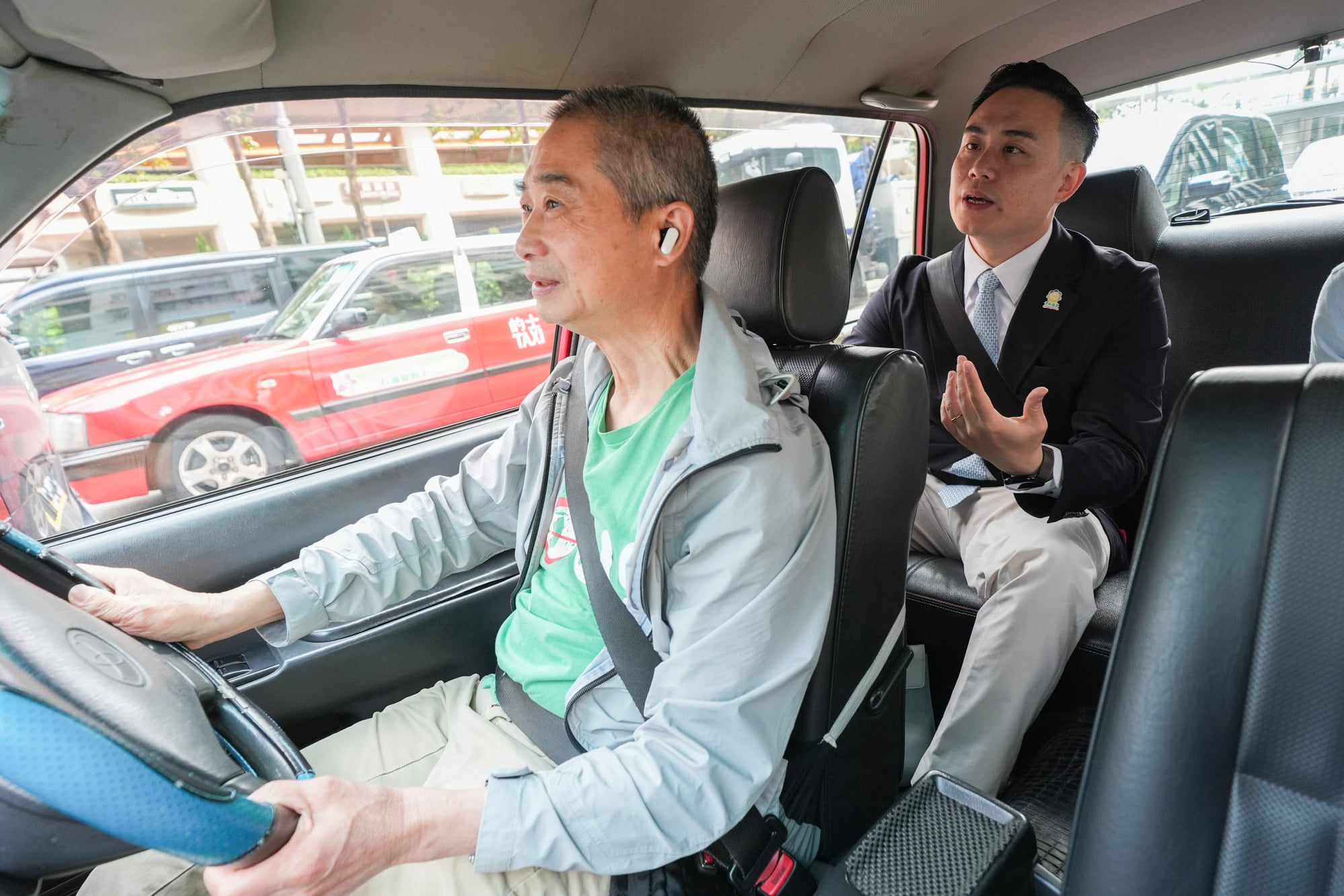
A licensed taxi owner, speaking to the SCMP on condition of anonymity, noted that ways to evade taxes still existed, with some doing so to be eligible for public housing.
"Cash is king because it is not traceable. Many drivers are currently on the waiting list for public housing and fear that documented income will exceed strict eligibility limits, thereby jeopardising their applications," he said.
He also noted that while owners had to register their business and pay profits tax, the situation for self-employed drivers was far more complex.
"Accurately calculating a driver's net income remains difficult because expenses like tunnel tolls and fuel costs are hard to track with precision. This hurdle often discourages drivers from proactively reporting their earnings to authorities," he said.
Gary Zhang Xinyu, a member of the standards committee and transport professions convenor for New Prospect for Hong Kong, stressed that all residents with a legal income, including those in the taxi industry, had a statutory obligation to report their earnings to the Inland Revenue Department.
"I believe these individuals represent only a minority, as the vast majority of frontline taxi drivers are law-abiding. Whether it is tax evasion or failing to provide e-payment methods as required by law, these are all clear illegal acts," he said.
Chong said authorities should take immediate enforcement action and keep a record of "black sheep" who failed to offer e-payments.
"If a specific driver or vehicle claims their e-payment machines do not work with suspicious frequency, they should be investigated. This approach is necessary to prevent a minority from exploiting grey areas," he said.
More Articles from SCMP
Closed? Open? Closed? Why is Iran changing course on the Strait of Hormuz?
Cathay/HSBC Hong Kong Sevens: Hong Kong coach sees ‘positive’ side of women’s close escape
Hong Kong woman loses HK$4.9 million to bogus online ‘investment experts’
Russia’s Lavrov says balance of power shifting to emerging economies
This article originally appeared on the South China Morning Post (www.scmp.com), the leading news media reporting on China and Asia.
Copyright (c) 2026. South China Morning Post Publishers Ltd. All rights reserved.


No comments:
Post a Comment