
A bionic brain implant could replace traditional hearing aids
A New Frontier in Hearing Technology
Hearing loss is a growing concern, affecting millions of people worldwide. In the United States alone, over one in seven individuals—approximately 50 million people—are living with some degree of hearing impairment. Nearly 30 million of these individuals could benefit from traditional hearing aids. However, these numbers are expected to rise significantly, with projections suggesting that by 2060, 73 million people may be affected.
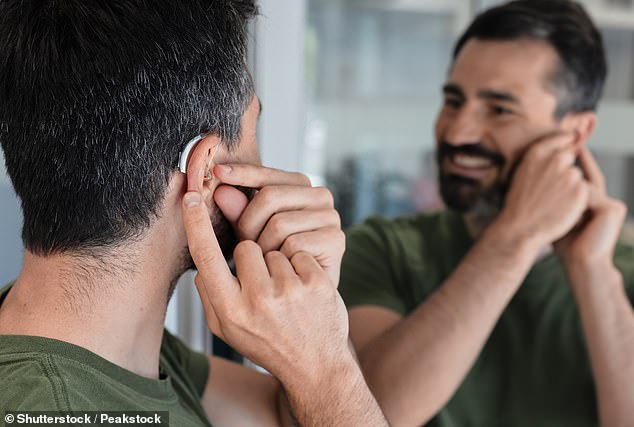
Traditional hearing aids work by amplifying sound and reducing background noise, but they often struggle to distinguish between multiple sounds. This limitation can make it challenging for users to focus on specific conversations in noisy environments, such as a crowded party or a busy restaurant.
Now, researchers at Columbia University have developed a groundbreaking approach using a brain-controlled implant that could revolutionize how hearing loss is treated. The technology involves small electrodes implanted in the brain, which monitor brain activity as patients focus on one of two overlapping conversations. The device then automatically detects which conversation the patient is paying attention to and adjusts the volume accordingly, enhancing the desired sound while reducing the other.
This innovation allows participants to concentrate on specific speakers in complex auditory environments, mimicking the natural ability of someone with normal hearing. The study, published in Nature Neuroscience, highlights the potential for this technology to evolve into more advanced hearing devices.
“We have developed a system that acts as a neural extension of the user, leveraging the brain’s natural ability to filter through all the sounds in a complex environment to dynamically isolate the specific conversation they wish to hear,” said Dr. Nima Mesgarani, senior study author and principal investigator at Columbia's Zuckerman Institute. “This science empowers us to think beyond traditional hearing aids, which simply amplify sound, toward a future where technology can restore the sophisticated, selective hearing of the human brain.”
The research builds upon a 2012 discovery by Mesgarani and Dr. Eddie Chang, a neurosurgeon at the University of California, San Francisco. They found that brain waves in the auditory cortex are responsible for selecting one voice in a crowd and amplifying it while filtering out others. This insight provided the foundation for the current study.
To further explore this concept, the Columbia team worked with four individuals undergoing treatment for epilepsy. These patients, who had typical hearing, were chosen because they already had electrodes in their brains as part of their treatment, allowing the researchers to monitor signals from their auditory cortex.
In the experiment, two loudspeakers played different conversations in front of each patient. The device adjusted the volume based on the patients’ brain waves and correctly identified which conversation they wanted to hear up to 90 percent of the time.
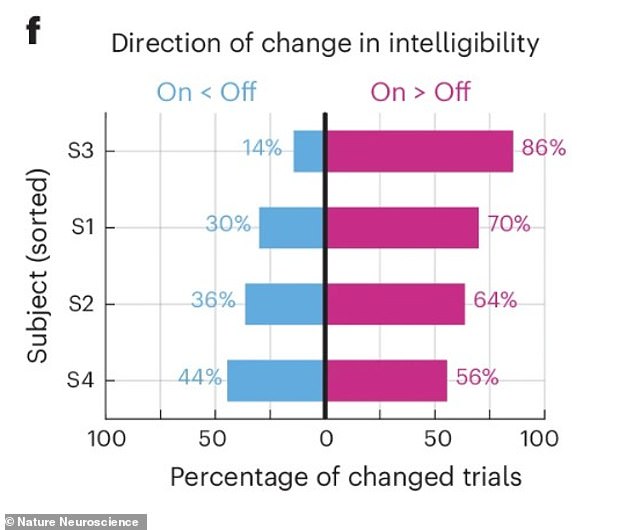
“This moves brain-controlled hearing from theory toward practical application,” said Vishal Choudhari, the paper's first author. “For the first time, we have shown that such a system that reads brain signals to selectively enhance conversations can provide a clear real-time benefit.”
While the accuracy of the system may decrease when applied to individuals with hearing loss, the researchers believe that further exploration is warranted. Even the most advanced hearing aids cannot focus on specific voices, making this technology a promising avenue for future development.
“The results mark an important step toward a new generation of brain-controlled hearing technologies that align with the listener’s intent, potentially transforming how people navigate noisy, multi-talker environments,” Choudhari added.
Post a Comment for "A bionic brain implant could replace traditional hearing aids"