
Aid agencies facing "nightmare scenario" over Strait of Hormuz and Iran war
The glitzy coastal city of Dubai is known for several things, not least its spacious malls and the luxurious lifestyle enjoyed by expats flocking toward the glamor of the Emirati tax haven.
But it’s gained another reputation. Dubai, a hub for global commercial travel, also boasts a “humanitarian city” housing the world’s largest logistics center for aid agencies, including the International Federation of Red Cross and Red Crescent Societies.
The nearly 200 national aid groups under this banner coordinate food, medicine and other supplies across the Middle East, Africa and beyond from Dubai, the heavily transited city an ideal gateway for aid flows toward some of the most deprived or conflict-ridden spots in the world, like Iran, Somalia and Sudan.
But the Red Cross and Red Crescent Societies, and other influential aid groups, say that since the start of the Iran war on February 28, they’ve struggled to deliver vital supplies because of Iranian and U.S. blockades on the key Strait of Hormuz shipping route.
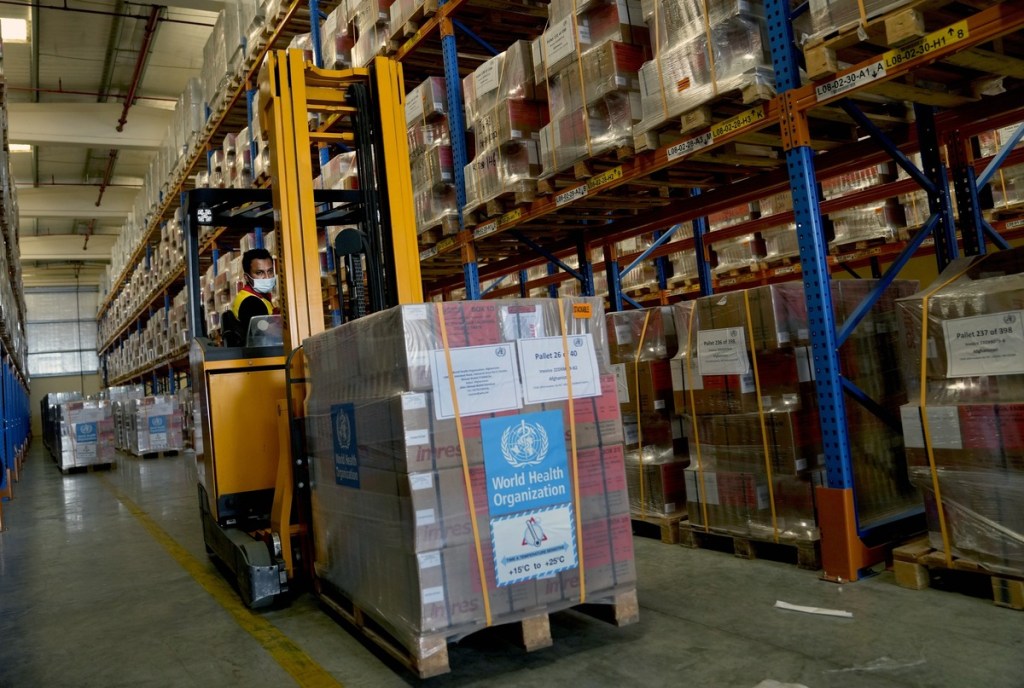
The spike in oil prices caused by the blockage of the international waterway has also sent up the costs of overland deliveries on truck convoys. Only limited amounts of aid can be dispatched by air, in smaller quantities and at higher prices.
Delays mean medicine isn’t making it to thousands of people who need it in Sudan, while millions more could go hungry, particularly in the Horn of Africa and the Sahel, as fertilizer shipments fail to arrive in time for crops to be planted.
International agencies had already been hit by the withdrawal of U.S. humanitarian aid funding last year and other major donors dropping out.
While U.S. President Donald Trump this week said Iran was close to making a deal that would end the war and re-open the strait, the closure of the critical waterway for more than eight weeks has been immense. Maritime traffic in the strait is still a fraction of what it used to be, less than 90 percent of what typically passed through the area daily.
And as the weeks have drawn on, aid organizations have rung alarm bells with increasing fervor about the mounting humanitarian toll of the closure, in the Middle East and further afield.
“We are in that nightmare situation where budgets are shrinking, prices are rising,” said the Red Cross and Red Crescent Societies’ spokesperson, Tommaso Della Longa. “In the middle, we have to take decisions on how to best use the scarce resources we have.”
Lifesaving Aid Being Held on Shelves
This time last year, the Red Cross and Red Crescent Societies had delivered more than 21 shipments of critical aid from Dubai in the two months between March and April.
But for almost the same period this year, while the strait has been shut, they’ve managed just a seventh of this number. Deliveries have had to get out via road—a far longer, more expensive journey, according to the humanitarian network.
Another aid group, the International Rescue Committee, also uses Dubai as a base to coordinate its deliveries. But $130,000 of medical supplies for war-torn Sudan, set to help 20,000 people, were tied up in the city for two months, representative Ciarán Donnelly said. The shipment eventually arrived in the Port of Sudan in late April on a flight out of Dubai, incurring a painful bill.
Another of the International Rescue Committee’s shipments, this time of ready-to-use therapeutic food (RUTF)—a paste packed with nutrients to treat life-threatening malnutrition in small children—had been bound for Somalia to treat 1,000 children but was delayed by more than a month because of ports becoming overcrowded.
The charity, Save The Children, operates 90 clinics in Sudan. But a $500,000 medical shipment headed for the north African country languished in Dubai for weeks on end, said Willem Zuidema, who oversees supply chains for the charity.
Soaring Delivery Costs
It’s not just the time that works against the aid organizations—it’s the economics.
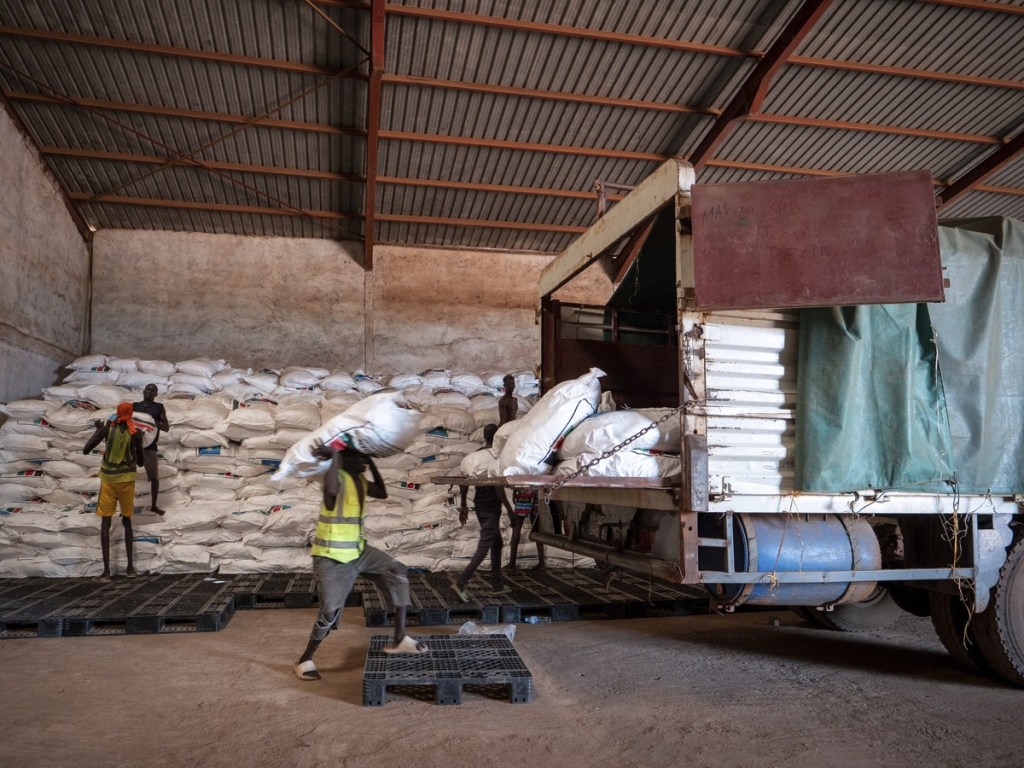
The Red Cross and Red Crescent Societies said in March that the price of sending goods via sea had tripled on some routes, while delivering aid on aircraft has surged 70 percent in some cases, driven up by demand and rising jet fuel costs. It’s a similar story with land journeys, petrol and diesel bills mounting as truck convoys clog up highways and checkpoints.
It costs 65 percent more per container to transport aid over land to the western Saudi port of Jeddah and then across to Port Sudan, compared with shipping the same aid to the Sudanese city by sea, Zuidema said.
In Somalia and Kenya, relief teams reported a 30 percent cost increase in aid delivery missions, said Donnelly, from the International Rescue Committee.
This rises to around 50 percent in northeastern Nigeria, where the International Rescue Committee’s workers need portable medical facilities to treat isolated communities in violence-stricken areas caught between government forces and Islamist militant group Boko Haram.
The International Rescue Committee says it has to reduce how often its teams will visit these villages. But for children struck down by diarrhea, even waiting one or two days more for urgent care can be the difference between living and dying, Donnelly said.
Dubai Humanitarian, which runs the city’s aid hub, strikes a different tone. It says 155 humanitarian shipments made it out of the logistics center in March and April this year—just 15 fewer than in the same period of 2025.
Sea shipments were particularly affected in the early phase of the war, according to Dubai Humanitarian, but new routes quickly sprang up.
They say that ultimately, the number of shipments leaving the warehouses hasn’t significantly dropped, but they have been bogged down by delays and soaring costs.
Fertilizer Blockage Causing Hunger
Around one-third of the world’s seaborne fertilizer stocks had transited through the Strait of Hormuz, much from Middle East producers. The blockades have threatened these exports, which means less food can be produced by farmers reliant on fertilizer for harvests.
U.N. experts warn that the shortfall could hit developing countries, particularly in sub-Saharan Africa, the hardest. Most fertilizer shipments had been intended for the neediest parts of the continent, Donnelly said.
Farmers in these areas are already making decisions about how they plant their crops, meaning the amount of food that will become available later in the year is already being determined, he said.
Millions more people will now not have enough food to eat in the coming months, he predicted, on top of the estimated 39 million people classified as facing “emergency levels” of hunger last year. The figure, published by global experts last month, has almost tripled from a decade ago.
The knock-on effects will be felt long after any peace deal is reached, Donnelly said. Hunger often drives higher levels of prostitution as women turn to sex work to feed their families, kids leaving school to enter the workplace, and parents going hungry to provide for their children.
“This impact can be mitigated through action now, but it can’t be reversed,” he said.
Slashed Aid Budgets
Before the Strait of Hormuz blockades, humanitarian agencies were already under strain after the U.S., U.K. and Germany reduced their aid budgets to increase spending on defense and weapons.
The U.S. Agency for International Development (USAID), which was shut down last year by the Trump administration, had been the biggest funding agency for humanitarian and development aid across the world.
The slashing of USAID could cause more than 14 million more deaths by 2030, a study in the Lancet journal warned shortly after the closure. Nearly one-third of the “staggering number of avoidable deaths” could be children under 5 years old, the authors said.
In separate analysis, Oxfam America said the loss of USAID could result in more than 3 million preventable deaths each year.
“The humanitarian budget has been heavily, heavily, heavily impacted across the board,” Della Longa said.
“There are no buffers in the system anymore,” Zuidema added.
Related Articles
- Donald Trump Compares Length of 'Iran Excursion' To US Wars
- The Morbid Reason Hantavirus Is Unlikely to Be Next Pandemic
- China Speaks Up for Iran’s Nuclear Rights in Key Meeting
Start your unlimited trial
Post a Comment for "Aid agencies facing "nightmare scenario" over Strait of Hormuz and Iran war"