
Can LCS Serve as a Minesweeper?
The Strategic Vulnerability of the US Navy in the Strait of Hormuz
The recent crisis in the Strait of Hormuz has highlighted a critical weakness in the United States Navy: the lack of dedicated minesweepers. This issue stems from a long-term shift away from specialized mine warfare ships, leaving the US vulnerable to threats like those posed by Iran's extensive mine-laying operations in the region.
The Asymmetric Advantages of Mine Laying
Iran has deployed an estimated 6,000 naval mines in the Strait of Hormuz using fast boats operated by the Islamic Revolutionary Guard Corps (IRGC). The strait, which is only about 35 miles wide at its narrowest point, allows for a relatively small number of mines to effectively block maritime traffic. These mines offer Iran a significant asymmetric advantage due to their low cost—each mine can be as cheap as $2,000—and their potential to disrupt global trade. A single mine can sink a cargo ship worth hundreds of millions of dollars, creating widespread economic instability and fear among shippers.
Naval mines have a long history of use in armed conflicts, but they are particularly dangerous because they remain active long after hostilities end. It is uncertain whether Iran will be able to recover the mines if a peace settlement is reached, which could lead to prolonged disruptions in shipping through the strait as large-scale minesweeping efforts take place.
The Decline of Dedicated Minesweepers
For many years, the United States relied on purpose-built minesweepers like the Avenger class. These ships were uniquely designed with laminated oak hulls and fiberglass wrapping instead of traditional steel, reducing the risk of triggering magnetic mines. The Avenger-class ships were built to physically enter minefields and conduct sweeping and hunting operations. However, these vessels were slow, outdated, and lacked modern self-defense capabilities and aviation support.
In 2025, the Navy retired four Avenger-class ships based in Bahrain, leaving only four remaining in the entire fleet, all stationed in Sasebo, Japan. This means that the US currently has no dedicated minesweeping capabilities in the Strait of Hormuz, exacerbating the strategic vulnerability.
The Role of the Littoral Combat Ship in Mine Countermeasures
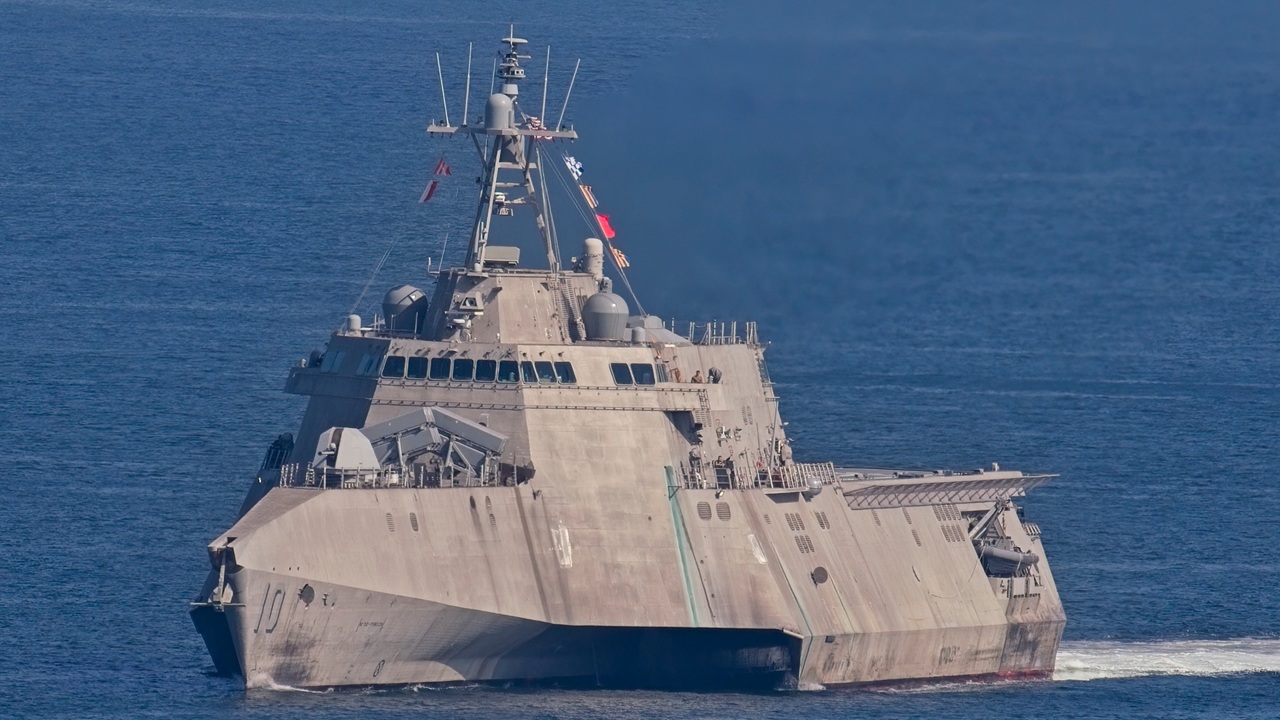
To replace the Avenger-class ships, the Navy has turned to the Littoral Combat Ship (LCS), a modular platform that can be adapted for various missions, including mine warfare. Several LCSes, such as the USS Canberra, USS Santa Barbara, USS Tulsa, and USS Kansas City, have been equipped with the Mine Countermeasures Mission Package (MCM MP). This package includes helicopters, drones, sonar systems, and unmanned vehicles designed to detect and neutralize mines.
One key system in the LCS' minesweeping process is the AN/AQS-20 sonar, which is towed by unmanned surface vessels and used to detect both bottom and moored mines. The sonar can also mimic a ship’s acoustic and magnetic signature to detonate mines remotely. Additional systems include the Knifefish UUV, an underwater drone that detects buried mines, and the MH-60S helicopter, which uses laser mine detection systems to identify mines from the air.
Despite these capabilities, the LCS itself remains a significant drawback. Its aluminum hull is highly magnetic, making it vulnerable to certain types of mines. As a result, the LCS must operate outside of minefields and launch its operations remotely, unlike the Avenger-class ships, which could physically enter mined waters. The effectiveness of drones and sonar in the murky and cluttered waters of the Hormuz is also questionable, raising concerns about operational reliability.
Strategic Consequences of the Mine Sweeping Gap
The lack of dedicated minesweepers has serious strategic consequences. Clearing even small minefields can take months, leading to extended disruptions in shipping and economic losses. The US is now relying on the United Kingdom and France, as well as allied efforts, to clear minefields, which puts the country in an awkward position. Adversaries like Iran recognize this operational gap and may exploit it by increasing mine production to hamper the world’s most powerful navy at a low cost.
About the Author
Harrison Kass is a writer and attorney focused on national security, technology, and political culture. His work has appeared in City Journal, The Hill, Quillette, The Spectator, and The Cipher Brief. He holds a JD from the University of Oregon and a master’s in Global & Joint Program Studies from NYU. More information can be found at harrisonkass.com.
Post a Comment for "Can LCS Serve as a Minesweeper?"