
EU's Fertiliser Plan Aims to Quell Farm Protests
The European Commission's Fertiliser Plan: A Response to Rising Costs and Rural Unrest
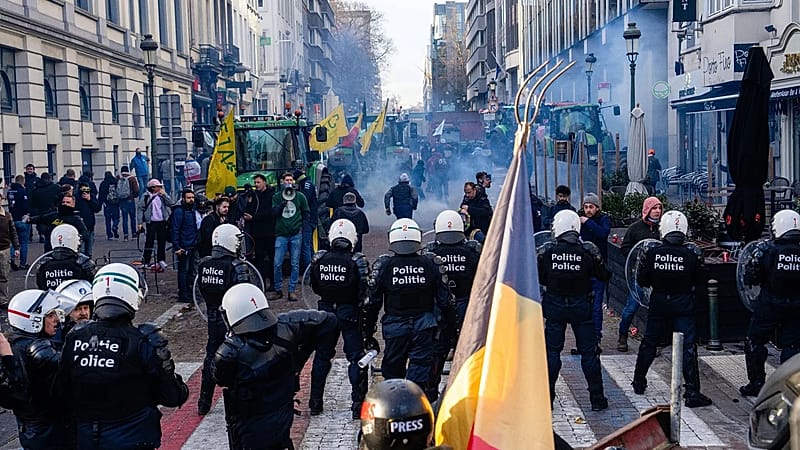
The European Commission is set to unveil a new fertiliser plan aimed at preventing another wave of rural unrest, especially as the ongoing conflict in the Middle East continues to drive up fertiliser prices. This initiative comes ahead of critical negotiations on the EU’s agricultural budget, with Brussels increasingly concerned about the potential backlash against its climate policies.
Over the past two years, rural unrest has spread across several EU countries, including Belgium, France, and Germany. The Commission now fears that rising energy and fertiliser costs could reignite this discontent, particularly in rural areas where far-right and populist parties are gaining ground. High fertiliser prices could lead to lower crop yields and reduced food production, further deepening public resentment towards green policies.
Key Components of the Fertiliser Plan
In the draft fertiliser plan obtained by Euronews, farmers are expected to benefit from emergency EU agriculture funds and advance payments. However, these benefits come with conditions. Farmers will be required to adopt more sustainable practices, such as reducing synthetic fertiliser use and embracing bio-based alternatives.
While no new funds for farmers are anticipated in the Commission’s plan, it outlines short-term actions to "improve access" to affordable fertilisers. This includes a reallocation of EU agricultural funds under the Common Agricultural Policy (CAP).
Christophe Hansen, the European Commissioner for Agriculture, recently mentioned that €200 million remains in the CAP’s crisis reserve. He expressed intentions to "at least double this amount" to support farmers. A senior Commission official also highlighted plans for targeted "exceptional support" for the most affected farmers and increased funding for agricultural research, although the exact figures are still under discussion.
Environmental Concerns and Criticisms
Environmental groups have criticized the EU’s CAP proposal for the 2027-2034 budget, calling it "highly problematic." They argue that the plan fails to adequately fund efforts to protect and restore nature and agroecosystems. A joint statement from four Brussels-based environmental NGOs questioned how real change can be achieved without dedicated funding for these crucial areas.
The EU has an annual agricultural crisis reserve of at least €450 million to assist farmers during market disturbances, animal diseases, and extreme weather events. Currently, the CAP fund is divided into two parts: one for active farmers and another for rural villages. However, the Commission proposed dismantling the traditional farming budget and merging it into a single, larger fund worth €6.3 billion over seven years. This proposal has faced resistance from farmers.
Copa Cogeca, an industry group, called the Commission’s CAP funding proposal "unacceptable," urging for alternatives that preserve the CAP as a "stand-alone policy with two pillars, a secure and independent budget and inflation-proof funding."
Deadline and Urgency
EU leaders have set a strict deadline of late 2026 to finalize the exact total amount of cash available under the CAP for the seven-year budget. This timeline adds urgency to the discussions.
The Commission’s plan also emphasizes boosting domestic fertiliser production, which remains 10-15% below pre-Ukraine invasion levels. During the 2022 energy crisis, several fertiliser plants scaled back or shut down due to unprofitable conditions. With global markets now facing disruption due to the closure of the Strait of Hormuz, the Commission noted that domestic EU production has been "highly impacted," particularly for nitrogen fertilisers, where prices are now 70% above the 2024 average.
Commissioner Hansen acknowledged the current limitations in domestic fertiliser production, stating that some farmers have to pay to get rid of their farm litter due to restrictions on nitrate and nitrogen use. He suggested that if the crisis continues, the limits in place may need to be reviewed.
Bio-Based Fertilisers and Global Competition
Nicoló Giacomuzzi-Moore, executive director at the Commission-backed Circular Bio-Base Europe Joint Undertaking, highlighted the potential of bio-based fertilisers to replace a significant share of synthetic nutrients. Studies indicate that substituting just 20-40% of synthetic fertiliser use could reduce costs during price spikes while offering environmental benefits.
However, even with growing interest in bio-based solutions, they remain more expensive than traditional fertilisers. Giacomuzzi-Moore warned that Europe is not alone in this race, as third countries are investing heavily to compete and bring prices down.
"We are certainly among the best in research and innovation," he said. "Now we must become the best at ensuring a reliable path to market and we have to do it urgently."
Post a Comment for "EU's Fertiliser Plan Aims to Quell Farm Protests"