
Google Aims to Revolutionize Your TV Remote with Gemini and Pointer Controls
Google is expanding its efforts to dominate the living room, and this time, it's not only focused on what you watch — it's also about how you engage with your television. AtGoogle I/O 2026, the company announced a new set of updates forGoogle TVand Android TV developers, all focused on a single concept: televisions are no longer just passive displays in the corner of your home. With over 300 million monthly active devices on Google TV and Android TV, Google clearly views the television as its next big AI frontier. And Gemini is now at the heart of this plan.
The company states that Gemini is already assisting users in finding content through natural voice interactions. However, Google aims to make the experience more lively and conversational, similar to browsing the web — but from your living room. Rather than just showing static results, Gemini on Google TV can now provide a mix of visuals, videos, and text snippets to address questions. Therefore, if someone asks for a thriller featuring a powerful female character or a documentary on space exploration, Gemini retrieves relevant suggestions directly from streaming services and their metadata.
For streaming services, this represents a significant change. Finding content on televisions has traditionally been complicated, scattered, and largely reliant on the first app you launched. Google appears to be presenting Gemini as the layer that exists above everything else, functioning as a smart content navigator instead of just a simple search function.
Your television remote is changing
Interestingly, Google's more significant announcement might not be Gemini itself. It could be the remote control. The company states that upcoming Google TV devices will increasingly support "pointer remotes," which introduce motion and cursor-based navigation to televisions. Imagine it as a middle ground between a conventional TV remote and a computer mouse. This might seem like a small detail, but it alters how TV applications need to function.
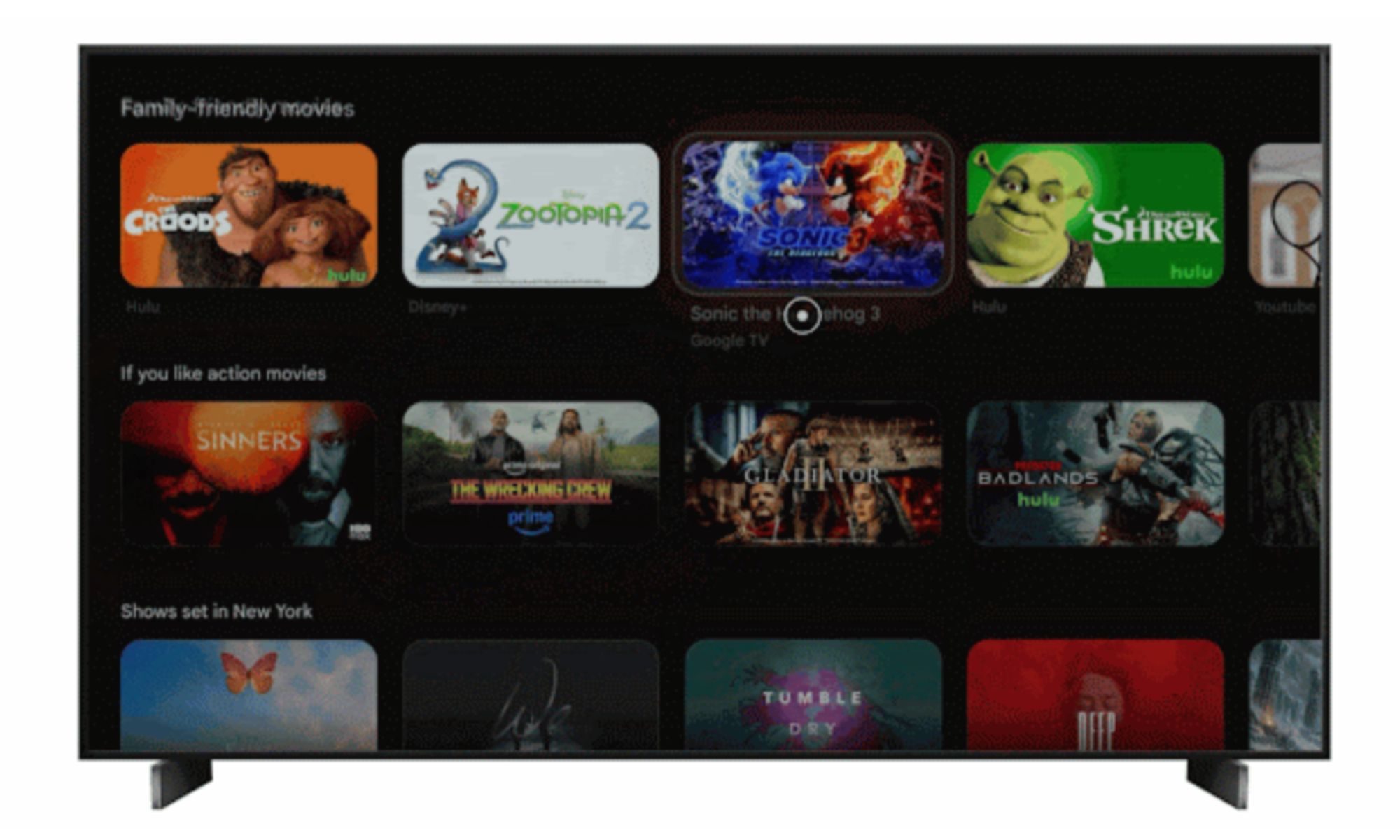
Most television interfaces currently rely on fixed D-pad navigation — up, down, left, right, and select. Pointer controls bring features like hovering, unrestricted movement, touchpad scrolling, and cursor clicks. As a result, TV applications now need to function more similarly to desktop or tablet interfaces. Google is now urging developers to begin getting their apps ready for this shift. This involves incorporating hover states for buttons and user interface components, enabling smoother scrolling experiences, and making sure apps can effectively handle cursor-based clicks rather than just directional focus controls.
To be honest, this seems long overdue. Television interfaces have remained surprisingly difficult to use for many years, particularly when compared to the smooth experience of smartphones and tablets. Streaming applications often seem sluggish, limiting, and hard to navigate when you're exploring large content collections. Using a pointer could greatly enhance the experience — provided developers properly optimize their apps.
Google is encouraging developers to get ready now
To assist developers in adjusting, Google states that apps developed with Jetpack Compose already have a smoother transition since many modern interaction models are supported by default. The company is also urging developers to experiment with these new interactions now by using regular Bluetooth or wired mice with Google TV devices. This will help them gain a better understanding of how hover effects, scrolling, and cursor inputs function on large-screen displays. However, Google points out that pointer remotes are inherently less accurate than a real mouse because users are usually several feet away from the TV and making broad gestures from the couch. To address this, developers are being recommended to design larger interactive elements and more flexible user interface layouts.
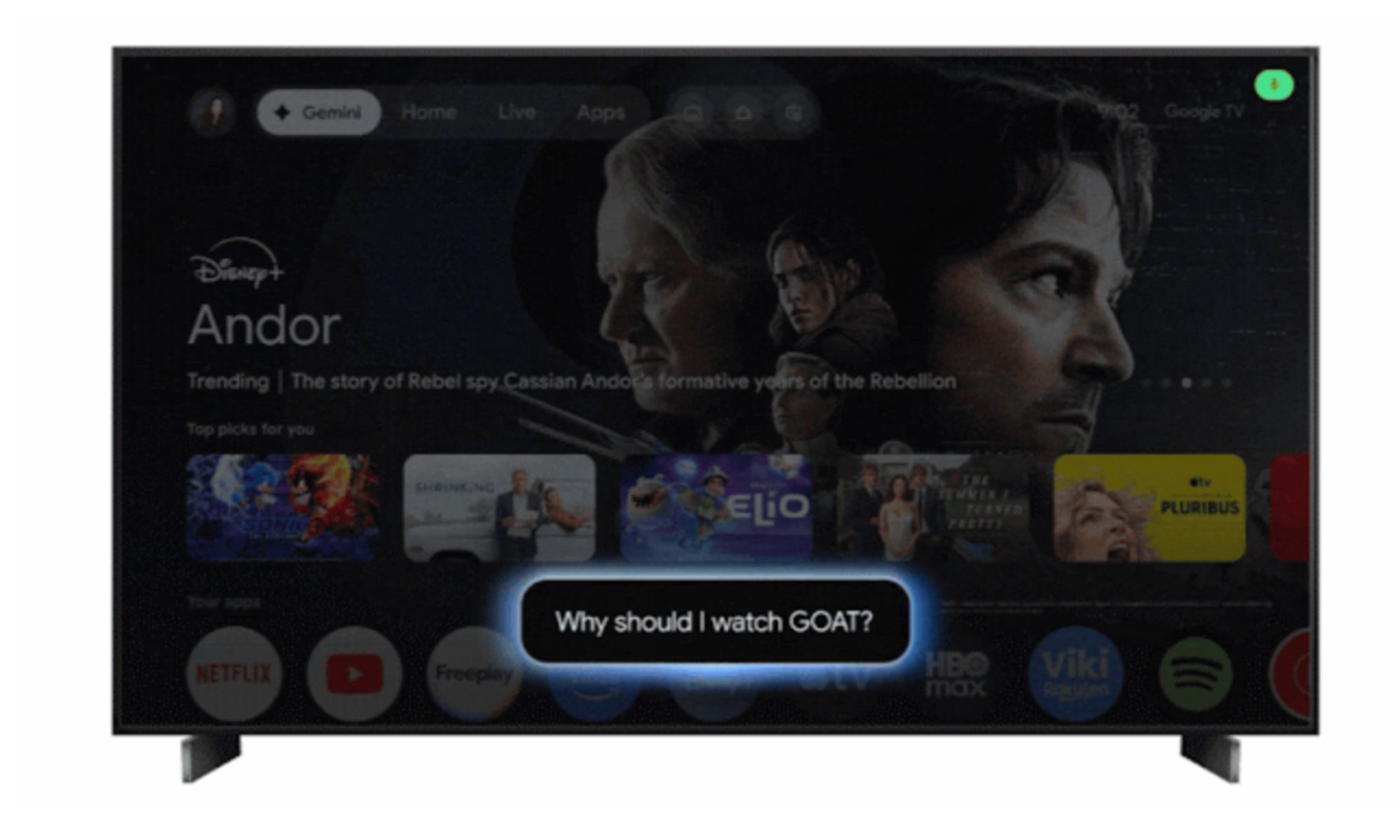
Ultimately, developers can now officially indicate pointer remote support on Google Play, helping users with newer remotes find compatible TV apps more easily. All of this gives a pretty clear indication of where Google TV is headed next. Televisions are gradually evolving into more dynamic, AI-powered computing systems rather than just streaming devices. Gemini manages discovery, pointer remotes enhance navigation, and developers are being encouraged to completely reevaluate the long-standing TV app experience. Whether users will actually adopt waving remotes in their living rooms remains to be seen. However, Google clearly feels that the future of TV interaction should be smarter, quicker, and much less reliant on constantly pressing directional buttons.
Latest Technology News, Sent to Your Email
Post a Comment for "Google Aims to Revolutionize Your TV Remote with Gemini and Pointer Controls"