
Medal of Honor Monday: Sgt. Maj. Thomas P. Payne and the Hawija Firefight
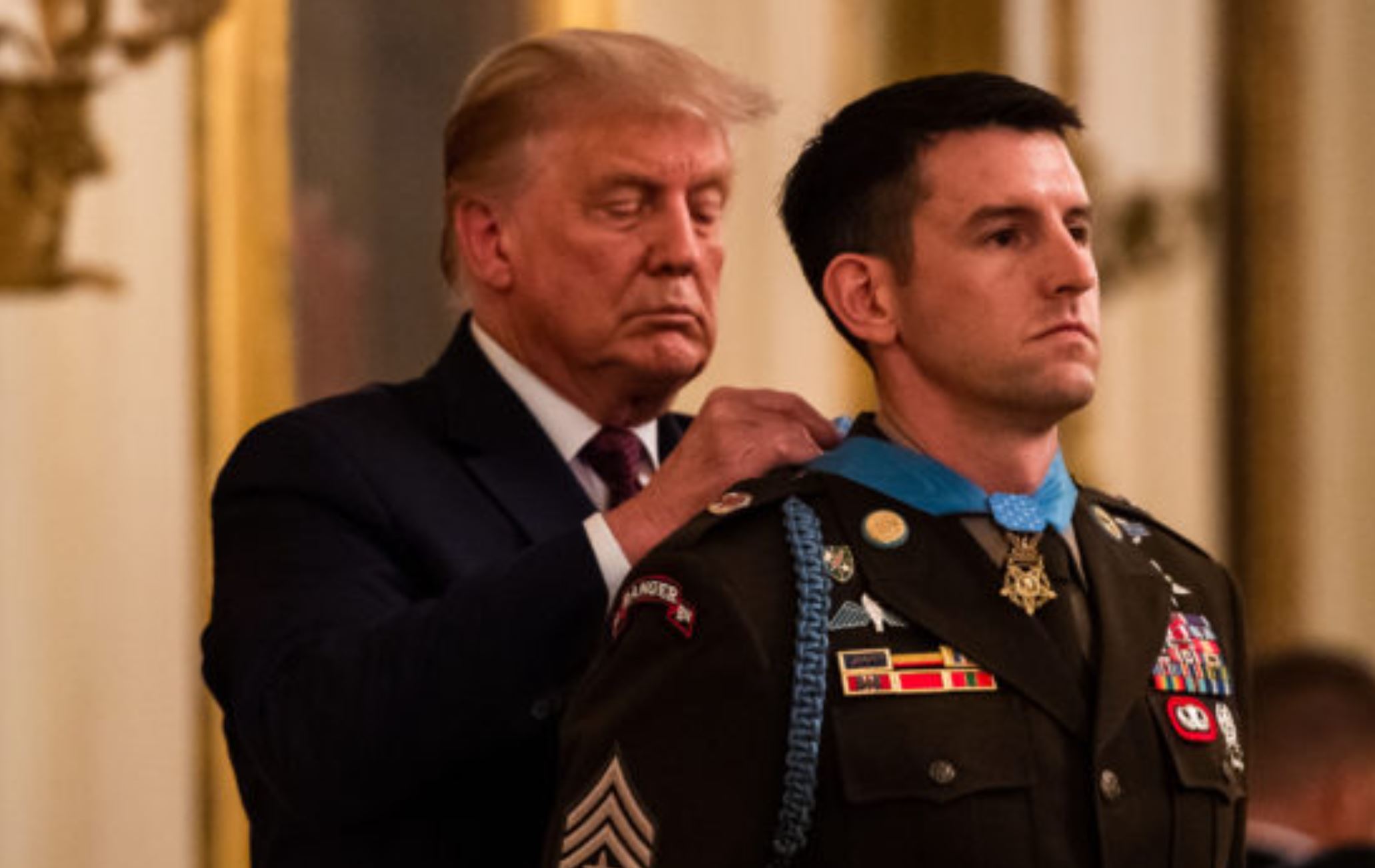
Sergeant Major Thomas "Patrick" Payne received the Medal of Honor during an intense operation at a blazing Islamic State prison in Iraq, where his team faced locked doors, gunfire, smoke, suicide bombers, and collapsing structures while trying to rescue numerous hostages scheduled for execution.
Payne arrived that night as an experienced Army special operations soldier. His background reflects a career that offers little space for formalities or gentle words. Seventeen combat missions. Ranger Regiment. U.S. Army Special Operations Command. Purple Heart. Winner of the Best Ranger Competition. Then, on October 22, 2015, Hawija.
He was raised in Batesburg-Leesville and Lugoff, South Carolina, and graduated from high school in 2002. The events of September 11, 2001, occurred during his final year of high school. Payne joined the Army in July 2002 as an infantry soldier, finished the Basic Airborne Course at Fort Benning, Georgia, and subsequently completed the Ranger Indoctrination Program, which is now referred to as the Ranger Assessment and Selection Program.
His initial active-duty assignment was with A Company, 1st Battalion, 75th Ranger Regiment. He worked there as a rifleman, sniper, and leader of a sniper team until November 2007. The Ranger Regiment is already part of the Army's special operations community, designed for operations such as raids, seizing airfields, conducting special reconnaissance, and carrying out direct-action missions. Payne did not transition from regular military service to Army Special Operations.
He transitioned from one challenging part of that community into an even more exclusive one when Army Special Operations Command chose him for 1st Special Forces Operational Detachment-Delta, commonly referred to as Delta Force.
A Profession Marked by Scars
Payne's journey had already involved bloodshed prior to Hawija. During a 2010 operation in Afghanistan, he was severely injured by a grenade explosion. He made a recovery, regained his strength, and in 2012 triumphed in the Army's Best Ranger Competition alongside a partner.
The top Ranger challenges the body, removes all excuses, and quickly reveals any weaknesses. Payne came back from a severe injury and then defeated elite Ranger teams over approximately 60 hours of continuous activities.
By 2015, Payne had frequently been deployed in support of Operation Enduring Freedom, Operation Iraqi Freedom, Operation New Dawn, Operation Inherent Resolve, and tasks within the U.S. Africa Command's region of responsibility. He had been part of the prolonged conflict since its early days.
On October 22, 2015, that conflict placed him in the northIraqwith a special operations joint task force and the Kurdish Counter-Terrorism Group (CTG). Intelligence suggested that the Islamic State was holding over 70 Iraqi captives in a prison facility close to Hawija, within Kirkuk Province. Newly excavated graves implied the captives had little time remaining.
The Raid into Hawija
Payne acted as an assistant team leader that evening. The attack group boarded the CH-47.ChinookHelicopters were deployed toward the prison complex. The operation had a straightforward objective and harsh circumstances: enter the facility, locate the captives, eliminate or repel the opposing forces, and evacuate all individuals before ISIS executed the prisoners.
The battle began almost instantly after the unit landed, as dust and smoke reduced visibility and enemy gunfire swept through the compound. Payne and his team moved toward the first structure, where ISIS was holding a group of prisoners.
The attack group climbed a wall, advanced toward the target, and searched the building with little opposition. Payne's team discovered a secured prison door. Bolt cutters handled the locks, and 38 captives exited the building safely.
This might have concluded Payne's main involvement in the night's mission, but a radio transmission arrived from the second building. A different team had encountered a significantly tougher confrontation inside a burning building, where ISIS fighters kept shooting and additional hostages were still trapped.
Payne and his group advanced approximately 30 yards within the compound while under attack and reached the roof of the second building, searching for an entry point. The enemy shot from beneath them and from external positions. Payne deployed grenades and firearms against ISIS combatants inside the structure. Soon after, the enemy started setting off suicide vests underneath them, causing the building to tremble and intensifying the already severe conflict.
The access point to the roof was unsuccessful. Payne's team retreated downward and looked for an alternative route. On the ground floor, Payne confronted enemy forces through a hole in the wall on the western side of the structure, then proceeded toward the primary entrance.
The Locked Door
Amidst the smoke and turmoil, Payne spotted the primary prison entrance within the second structure. It featured the same kind of lock he had encountered on the initial target. What appeared straightforward on paper was anything but. The individual tasked with cutting those locks would need to put himself in harm's way, facing gunfire, intense heat, and suffocating smoke while inside a blazing building teeming with enemy combatants and trapped inmates.
Payne took the bolt cutters and entered.
He severed the first lock as enemy fire rained down on him and smoke filled the entrance. The force of the air pushed him back. A Kurdish commando attempted to complete the task but couldn't break through the second lock. Payne re-entered the smoke and flames, exposed himself once more, cut the remaining lock, and kicked the door open.
The attacking group advanced. The building was already starting to deteriorate. A radio message indicated the structure might collapse, and the group was ordered to evacuate. Payne was still with the captives inside.
Payne led the confused prisoners to a secure location. Several captives became paralyzed due to the thick smoke, shooting, and chaos. At one moment, he seized a person and pushed him down the corridor so the group could continue moving. He re-entered the structure three times to retrieve individuals and ensure that no one was left behind. It wasn't until then that he made the "last man" announcement.
Beyond the perimeter, the threat continued to arrive. Coalition troops created a human barrier to protect the captives from enemy gunfire as they navigated the compound. The captives, most of them frightened and confused, halted their movement each time allied forces returned fire. Payne's group refrained from firing at certain moments to ensure the prisoners kept advancing, taking on more risk so the rescue wouldn't fail in the last few steps.
The Price of the Rescue
The task force released 75 captives that evening, marking the operation as one of the most significant hostage rescues in U.S. military history. The helicopters transported all individuals back to Erbil in tight quarters, with Payne’s group remaining standing during the flight as the freed prisoners were given first priority.
The mission also resulted in the loss of Master Sgt. Joshua Wheeler. Wheeler passed away while scaling the compound wall during the initial entry, advancing to assist a Kurdish group trapped by overlapping machine-gun fire. He was the first American combat death in Iraq since 2011. The captives survived because individuals pushed their way into a location where ISIS had every advantage and continued moving until the prisoners were freed.
Payne later named his second son Josh as a tribute to Wheeler.
The Medal
The Army first gave Payne the Distinguished Service Cross for his deeds in Hawija. The honor was eventually upgraded to the Medal of Honor. President Donald J. Trump awarded the medal to Payne at the White House on September 11, 2020, which was nineteen years following the events that led Payne to join the military.
At that time, Payne was a sergeant major. He earned a Bachelor of Science degree in strategic studies and defense analysis from Norwich University in 2017.
This narrative was first released on.
Enjoyed this story? Subscribe to .
Post a Comment for "Medal of Honor Monday: Sgt. Maj. Thomas P. Payne and the Hawija Firefight"