
Netanyahu's Coalition Rushes Judicial Overhaul and Settler Bills Before Elections
Israel's Coalition Advances Controversial Judicial and Settler-Focused Legislation
As the 2026 Israeli elections approach, the coalition led by Prime Minister Benjamin Netanyahu is accelerating a series of contentious bills that have sparked significant debate. These measures, which include changes to the judicial system and policies favoring settlers and ultra-Orthodox communities, are being fast-tracked in the Knesset.
Starting on Sunday and continuing into Tuesday, the Knesset's Constitution, Law and Justice Committee will hold hearings on a bill aimed at redefining the role of the attorney general. The proposal involves splitting the position into two: one for the government's legal adviser and another for the head of the prosecution. The adviser will be appointed by the cabinet based on recommendations from the prime minister and justice minister. This individual’s opinions will not be binding, allowing the government to determine its stance in any legal proceedings it is involved in. Additionally, the government could use private counsel in court.
The head of the prosecution will be selected from a list of candidates compiled by a public committee, which will be controlled by the government. This role will not be bound by the legal opinions of the adviser. If passed, the law will take effect immediately. The bill's sponsor, Simcha Rothman, aims to bring it to at least the first vote so that the next Knesset can expedite its final passage.
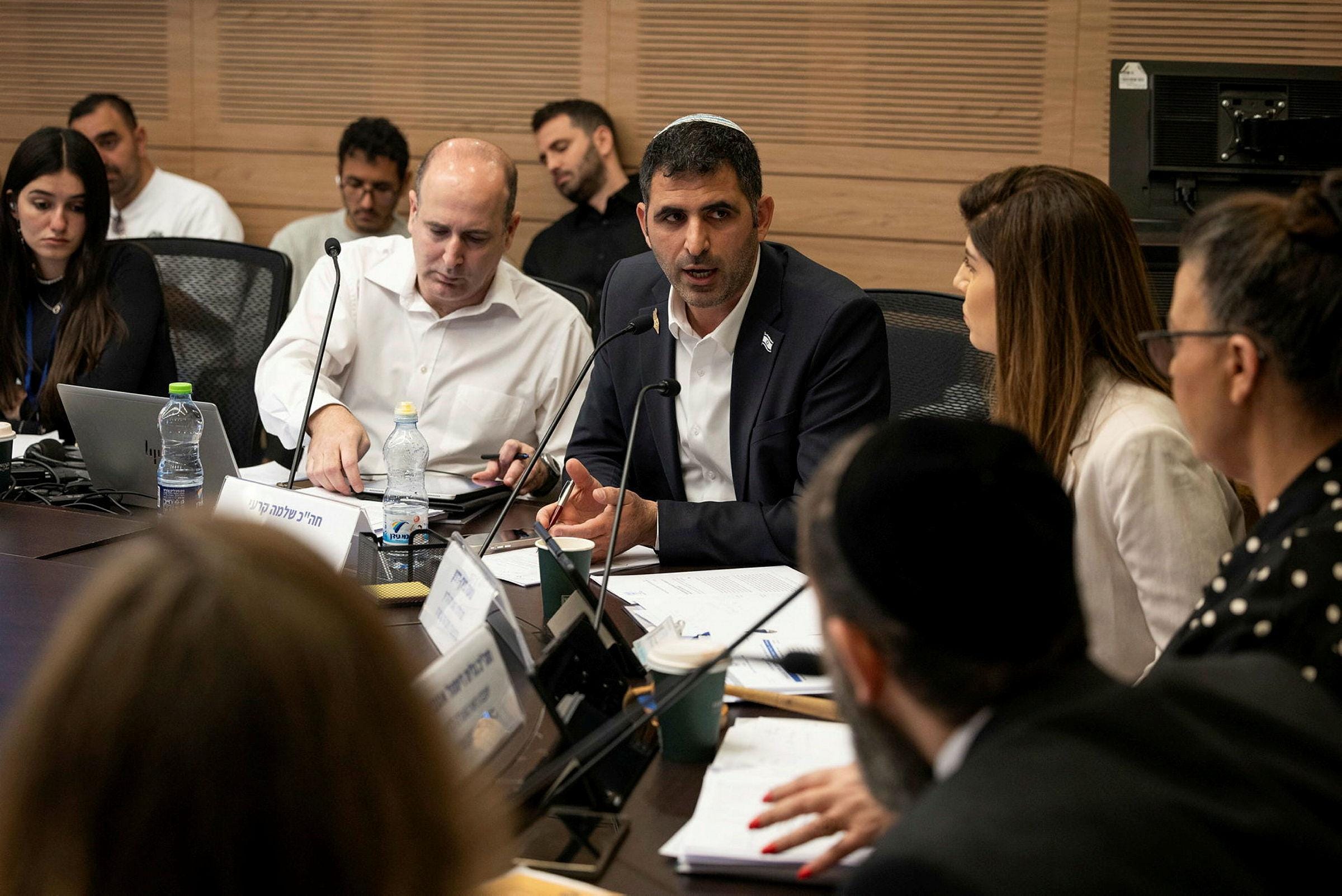
In addition to the judicial reforms, there will be three hearings on Communications Minister Shlomo Karhi's media reform from Sunday to Tuesday. One of the hearings, scheduled for Sunday, will last 12 hours, starting at 10 A.M. and ending at 10 P.M., while the Tuesday session will occur after a plenary session with no set end time.
Opposition leaders have criticized the coalition's legislative schedule, arguing that it exceeds reasonable limits and hinders lawmakers' ability to perform their duties. They described the conduct of the committee chair, MK Galit Distel Atbaryan, as unreasonable and lacking understanding of her role in overseeing complex reforms that affect the entire Israeli media ecosystem.
On Tuesday, the Knesset Finance Committee will hold a hearing on a bill to assume control of the Kan public broadcaster's budget. Under the proposed law, the budget, currently protected from government interference, would be funded through the state budget, with the government controlling and approving it annually. The bill also includes provisions to reduce the budget.
Other controversial bills are also advancing. Last week, Likud's MK Amit Halevi's bill to establish a new heritage authority in the West Bank passed the first vote, with three sessions scheduled this week at the Knesset's education committee. On Tuesday, the Knesset Finance Committee will hold hearings on a bill proposing tax benefits for West Bank settlements ahead of the first vote.
The Knesset National Security Committee will hold a hearing on Monday regarding the police investigation of Channel 14 reporters, focusing on potential harms to freedom of the press and democratic space. This follows a campaign by the television station against the police, claiming it was being investigated.
On Tuesday, the committee will also discuss the attorney general's refusal to represent policemen charged with causing damage while fulfilling their duty, while abandoning them in the process. This comes after the prosecution has failed to respond to a lawsuit filed by two pro-hostage deal protesters who were needlessly detained, with one of them illegally stripped naked.
Last week, opposition MK Merav Ben Ari from Yesh Atid announced that she and MKs from other parties had submitted a request to hold a hearing on violence among teenagers following the murder of Yimano Zelka and Destao Chekol. However, this request was not included on the agenda.
The constitution committee also has a scheduled hearing on Wednesday on a bill to prevent mixed-gender prayers at the Western Wall. Proposed by Avi Maoz from Noam, the bill aims to stop Reform and Conservative Jewish worship there without gender segregation. It passed a preliminary round of voting in February and has not been discussed since then. The hearing is intended to address concerns raised by ultra-Orthodox MKs.
Post a Comment for "Netanyahu's Coalition Rushes Judicial Overhaul and Settler Bills Before Elections"