
Thousands March to Protect Black Voters in Civil Rights Victory
A Rally for Voting Rights in Montgomery
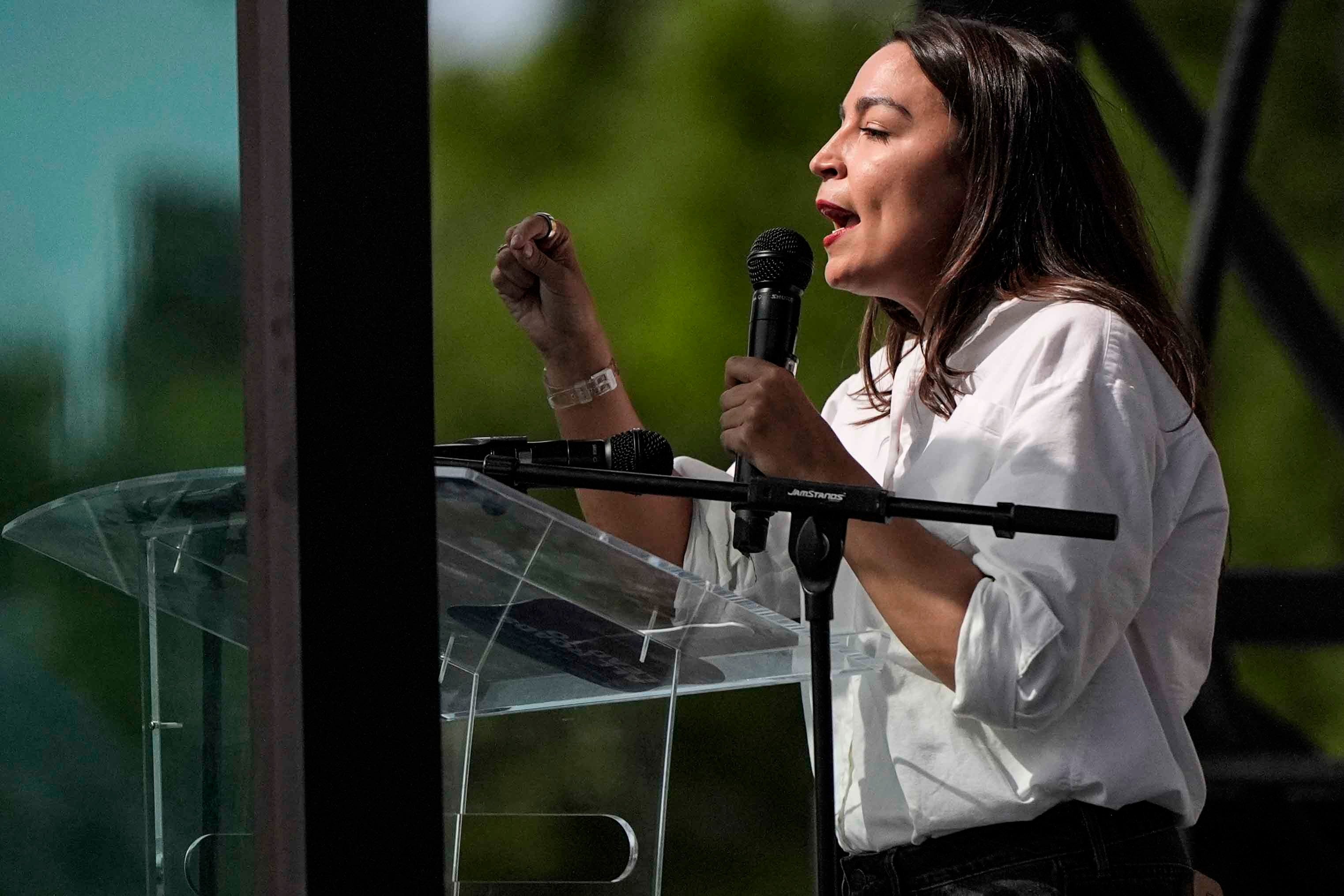
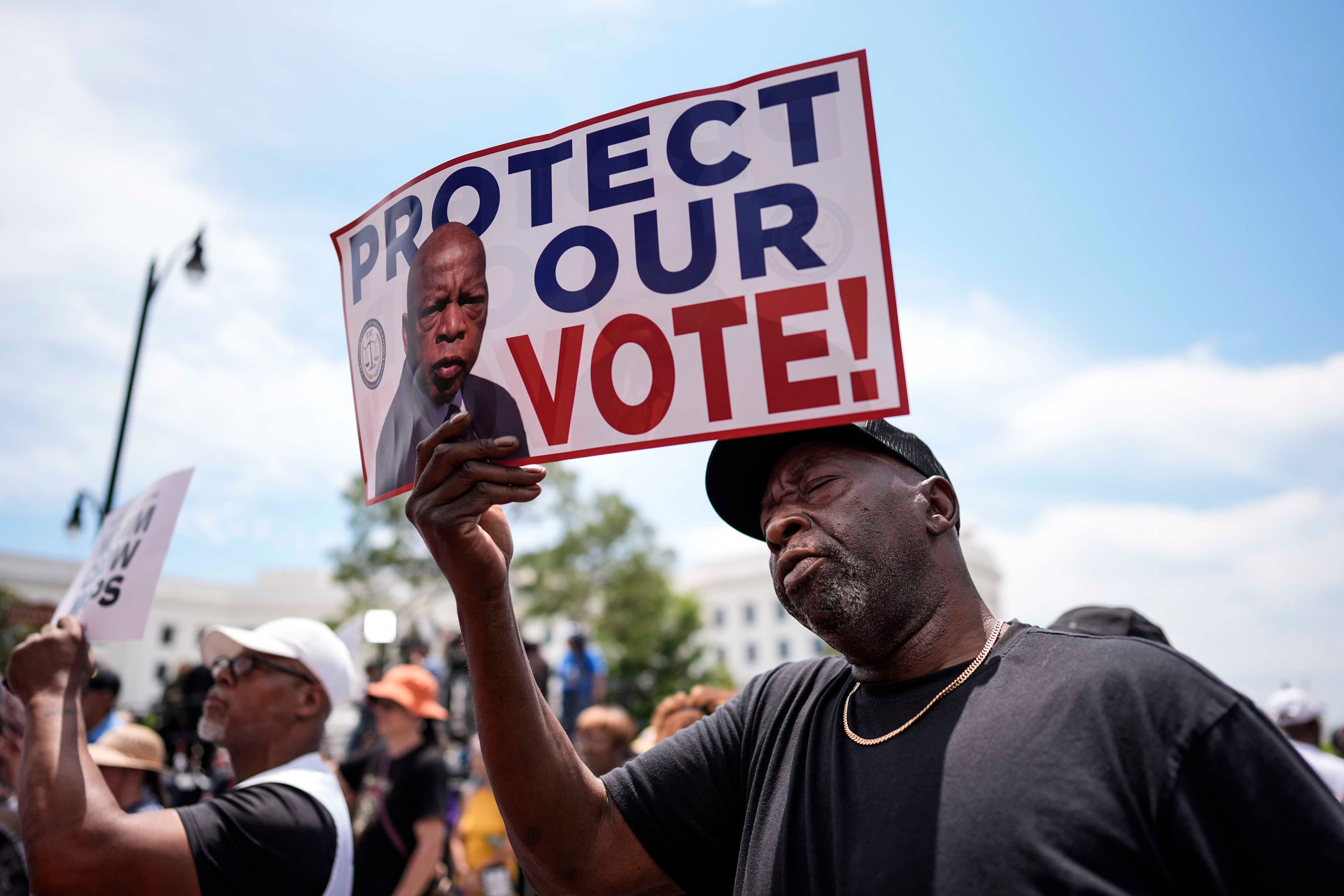
Thousands of people gathered in Montgomery, the birthplace of the modern Civil Rights Movement, to stand up for voting rights as conservative states work to dismantle the congressional districts that have historically helped secure Black political representation. The event took place against a backdrop of growing concerns over the erosion of civil liberties and the resurgence of discriminatory practices.
U.S. Sen. Cory Booker of New Jersey described Montgomery as "sacred soil" in the fight for civil rights. His words echoed through the crowd as they chanted, “We won’t go back” and “We fight.” Shalela Dowdy, a plaintiff in the Alabama redistricting case, emphasized the importance of the movement, stating, “We are not going down without a fight. We are not going down to Jim Crow maps.”
The rally was held in front of the Alabama Capitol, a site steeped in history. It was here that the Confederacy was formed in 1861 and where Rev. Martin Luther King Jr. delivered his famous “How Long, Not Long” speech in 1965. The stage was flanked by statues of Confederate President Jefferson Davis and civil rights icon Rosa Parks, symbolizing the city’s complex past.
Participants noted that the current efforts to redraw district lines feel eerily familiar. Camellia A Hooks, a 70-year-old resident of Montgomery, said, “We lived through the '60s. It takes you back. When you think that Alabama’s moving forward, it takes two steps back.”
The rally began in Selma, the site of the infamous “Bloody Sunday” in 1965, when law enforcement violently clashed with voting rights activists. This event played a crucial role in galvanizing support for the Voting Rights Act. The protest then moved to the state Capitol, where King's speech marked a turning point in the Civil Rights Movement.
A recent Supreme Court ruling involving Louisiana has further weakened voting rights laws that were already under attack. This decision, combined with previous rulings, has paved the way for stricter voter ID laws, registration restrictions, and limits on early voting and polling place changes. These changes are particularly concerning in states that once required federal preclearance before altering voting laws due to their history of discrimination against Black voters.
Veterans of the Civil Rights Movement are alarmed by the speed at which these protections are being rolled back. Kirk Carrington, who was a teenager during the 1965 events, recalled the violence he witnessed. “It’s really just appalling to me and all the young people that marched during the ’60s,” he said. “It’s sad that it’s continuing after 60-plus years that we are still fighting for the same thing we fought for back then.”
Montgomery is home to one of the congressional districts that is currently under scrutiny. In 2023, a federal court redrew Alabama’s 2nd Congressional District, ruling that the state had intentionally diluted the voting power of Black residents. The court mandated a district where Black people would be a majority or near-majority, ensuring they could elect their candidate of choice.
However, the Supreme Court has cleared the way for a different map that could allow the GOP to reclaim the seat. While the matter remains under litigation, the state plans special primaries on August 11 under the new map.
Democratic Rep. Shomari Figures, who won the district in 2024, emphasized that the dispute is about more than just him. “When Republicans are literally turning back the clock on what representation looks like, it resonates with people in a different way,” he said.
Alabama House Speaker Nathaniel Ledbetter, a Republican, argued that the Louisiana ruling provided an opportunity to revisit a map that was imposed by the federal court. “People tend to forget what happened,” he said. “There’s been a push through the courts to try to overtake some of these red state seats.”
Evan Milligan, the lead plaintiff in the Alabama redistricting case, expressed grief over the weakening of the Voting Rights Act but stressed the need to recommit to the fight. “We have to accept that this is the new reality,” he said. “We don’t have to accept that this will be the reality for the next 10 years or forever.”
The Independent stands for many things, often uniquely so. It stands independent of political party allegiance and makes its own mind up on the issues of the day. The Independent has always been committed to challenge and debate. It launched in 1986 to create a new voice and in that time has run campaigns for issues ranging from the legalisation of marijuana to the Final Say Brexit petition.
Post a Comment for "Thousands March to Protect Black Voters in Civil Rights Victory"