
Trump's Beijing Visit: Doubts on Taiwan's $14B Arms Deal and a Greek History Lesson
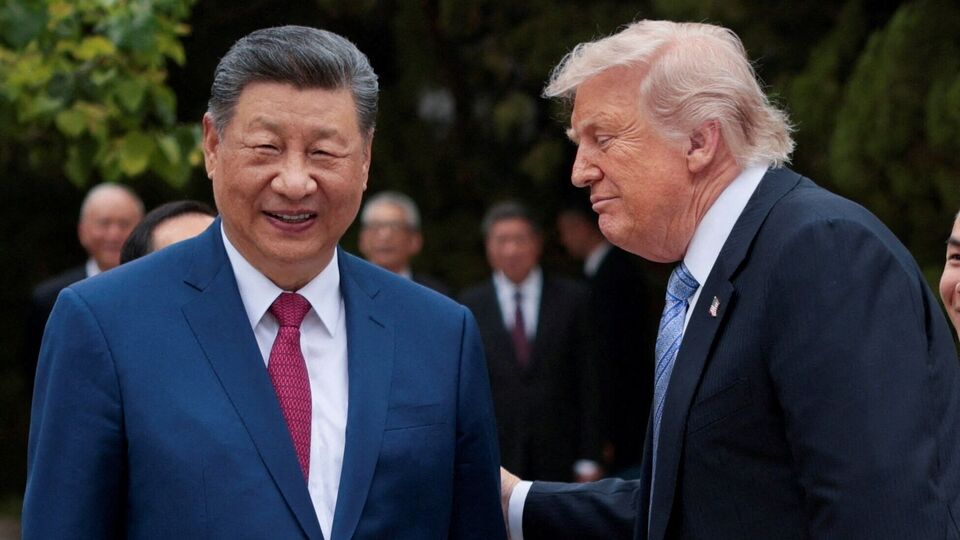
US President Trump's Uncertain Stance on Taiwan Arms Deal
US President Donald Trump returned from a high-stakes meeting in Beijing, where he appeared to consider withholding a $14 billion weapons package for Taiwan. This decision came after extensive discussions with Chinese President Xi Jinping, highlighting one of the most delicate issues in global geopolitics.
The summit in Beijing did not result in any immediate conflict, but it left Taiwan and its American allies in Asia feeling uneasy. Trump's willingness to discuss arms sales directly with Beijing raised concerns, as did his apparent reluctance to risk a conflict over an island he described as a distant priority.
A Delayed Arms Package and Strategic Uncertainty
Speaking to reporters aboard Air Force One during the return to Washington, Trump expressed uncertainty about approving the long-delayed arms package. This deal includes missiles and air defense interceptors and has been stalled by his administration for months.
"The last thing we need right now is a war that's 9,500 miles away," Trump stated, emphasizing his focus on avoiding conflict.
The $14 billion Taiwan Arms Deal is part of a larger $25 billion appropriation that Taiwan's parliament only finalized recently. A previous $11 billion deal had already been approved by Trump late last year, which reportedly led Xi to warn against further arms deliveries to Taiwan in a February telephone call.
Dismissing Historical Commitments
Trump's decision to engage in discussions about arms sales with Beijing drew immediate scrutiny. The US has traditionally adhered to the 1982 "six assurances" policy, which commits the US not to consult China on weapons transfers to Taiwan. However, Trump appeared to set this commitment aside.
"What am I going to do, say I don't want to talk to you about it because I have an agreement wrote in 1982? No, we discussed arms sales," Trump said. He emphasized his priority of avoiding war, even if it meant re-evaluating past commitments.
Despite this, Secretary of State Marco Rubio sought to reassure allies that official US policy on Taiwan remained unchanged.
Philosophical Overtones and Strategic Warnings
Before addressing the issue of Taiwan, Xi opened his summit speech with a reference to the Peloponnesian War, a conflict between Athens and Sparta that began in 431BC. This unexpected philosophical tone aimed to set the stage for a broader discussion on the relationship between the two global powers.
Xi posed a critical question: "Can China and the United States transcend the so-called 'Thucydides Trap' and forge a new paradigm for major-power relations?" This concept, drawn from the writings of the ancient Greek historian Thucydides, highlights the inevitability of conflict when a rising power threatens an established one.
A Direct Warning from Xi
Following the philosophical overture, Xi delivered a direct warning to Trump. He emphasized that the Taiwan issue was the most important in China-US relations, stating that mishandling it could lead to catastrophic consequences.
"The Taiwan question is the most important issue in China-US relations," Xi said. "If mishandled, the two nations could collide or even come into conflict, pushing the entire China-US relationship into a highly perilous situation."
At a state banquet later that evening, Xi adopted a more conciliatory tone, suggesting that Chinese national renewal and American resurgence were not incompatible. "Achieving the great rejuvenation of the Chinese nation and making America great again can totally go hand in hand and advance the wellbeing of the whole world," he remarked.
Regional Concerns and Diplomatic Shifts
The implications of the Beijing summit extended beyond the negotiating table. Japanese Prime Minister Sanae Takaichi, who has taken a strong stance on Taiwan, found her position increasingly at odds with US policy. Trump called her from Air Force One to provide a detailed briefing on his talks with Xi.
Taiwan's government in Taipei had entered the summit fearing that Trump might agree to alter official US policy on the island. While this did not happen, Trump reinforced the perception that Taiwan occupies a higher priority in Xi's concerns than in his own.
Navigating the Thucydides Trap
Trump addressed Xi's suggestion that the US might be in decline, rejecting the characterization with force on social media. "Two years ago, we were, in fact, a Nation in decline," Trump posted. "Now, the United States is the hottest Nation anywhere in the world, and hopefully our relationship with China will be stronger and better than ever before."
Whether Trump's reluctance to arm Taiwan represents a pragmatic effort to avoid superpower collision or a concession that emboldens Beijing remains a critical question for the future of the most consequential bilateral relationship of the 21st century.
Post a Comment for "Trump's Beijing Visit: Doubts on Taiwan's $14B Arms Deal and a Greek History Lesson"