
A New Focus on the White House: Trump’s Ambitious Upgrades
Donald Trump is not typically known for his commitment to conservation or environmental causes. However, a new plan currently under discussion has revealed that the President is increasingly focused on upgrading the White House, even amidst a complex web of international and domestic challenges.
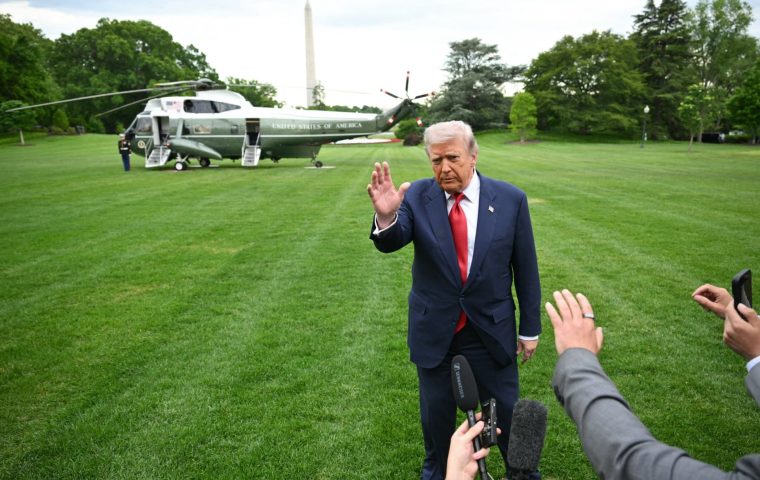
Amidst a stalemate with Iran, a growing tension with NATO over the withdrawal of U.S. forces from Poland, and a public concerned about the rising cost of living during a midterm election year, Trump is turning his attention to the next phase of White House improvements. One of the proposed changes is the installation of a new helipad at the White House. The rationale given is to prevent presidential helicopters from damaging the South Lawn’s grass.
This innovation might have some practical benefits. The Marine One helicopters used to transport the President are powerful Sikorsky/Lockheed machines that can occasionally scorch the pristine lawns in front of the White House. A helipad would allow lighter crafts to land, potentially reducing damage to the landscape.
However, creating a discreet helipad is no easy task. Since Trump first announced his presidential run in 2015 by descending in a gilded escalator at Trump Tower, he has consistently leaned into an opulent and grandiose style. The helipad would be part of a larger, costly renovation of the presidential offices and residence, as well as the broader Washington D.C. landscape.
It is possible that Trump was inspired by the example of the German Chancellor's residence, which will feature a rooftop helipad starting next year. This move has been criticized as an unnecessary extravagance in Berlin.
Trump, whose aesthetic often reflects his love for luxury and grandeur, doesn’t need much encouragement to make significant changes to existing features. His Mar-a-Lago complex is filled with grandiose touches, statues, and swimming pools, showcasing his penchant for bling.
The U.S. President has a strong desire to leave his mark on everything he touches. From paving Eleanor Roosevelt’s Rose Garden to create an outdoor patio space for stiletto-heeled guests, to what is called the “East Wing modernisation project,” which is essentially the construction of a $400 million ballroom funded by billionaire supporters and companies hoping to gain favor, Trump is investing significant time and resources into reshaping the White House in his own image.
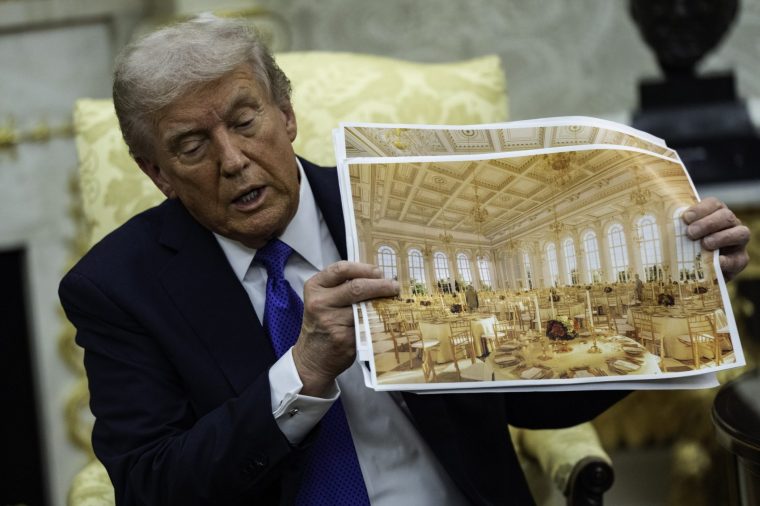
When Trump replaced an art deco bathroom with a black-and-white marble one featuring glinting fittings, he posted on social media that it would have found favor with Abraham Lincoln, because marble was more aligned with the designs of "1850 and civil wars and all of the problems."
Underlying this flurry of domestic improvements by a second-term President is a clear indication of where Trumpian priorities lie. These efforts often seem like distractions from more pressing global issues.
The official excuse, as stated by a White House spokesman, is that the renovations "benefit future presidents and Americans." After the recent White House correspondents’ dinner, when Trump was rushed offstage after a gunman tried to get in, he claimed that had his ballroom already existed, "this never would have happened."
But the President’s attention is being consumed by such details at a critical moment in recent U.S. foreign policy. The decision to attack Iran, with its inconclusive fallout and economic repercussions in oil and gas prices, would typically occupy any other leader's focus. However, the Trump administration operates differently, with the President setting his own iconoclastic priorities regardless of other developments.
Trump is now oscillating between war room meetings with significant implications for the global economy and sessions on the minutiae of the ballroom complex, as well as decisions over the helipad and whether granite features should be black or grey.
As one former member of his personal staff told me, Trump has "a phenomenal attention to detail – even down to the lettering on a building or a door handle – when it is a passion project, and none at all if it isn’t."
Whether to resume attacks on Iran is the big decision the President needs to take soon. He cannot afford to keep threatening without taking action. The alternative route is to bring together Gulf allies like Qatar, UAE, and Saudi Arabia in the hope of orchestrating a backdown from Tehran using their influence and economic channels.
Trump is expected to hold a meeting with his national security advisors shortly to discuss further military or off-ramp options. John Bolton, a former national security advisor who fell out with the President during his first term, told me last week: “It’s clear to the regime in Iran that he wants out, but he also knows if he makes a bad deal, he’s going to be harmed by it politically. So, he’s trapped and he doesn’t know what to do.”
These are the decisions and deliberations that shape historic presidential actions—high risk, high reward. Not many occupants of the West Wing would combine them with near-daily attention to what is happening on a pet building project—or indeed, whether a reflecting pool renovation ordered to be completed on the National Mall can be hurried along to meet the 250th anniversary of American Independence deadline.
But such is life in the zig-zag attention world of the current U.S. President. All of this leaves even some exhausted Republicans worried that the chief White House resident might be more concerned with the decor than global security—or indeed, that having done all the fixtures and fittings, he may be loathed to leave the place when his term is up.


No comments:
Post a Comment