
AI-Generated Images Are Trending, But Real Design Innovation Lies Elsewhere
The Role of AI in Interior Design: Beyond the Generic
Pictured Above: Jenna Gaidusek, founder of AI for Interior Designers, made this AI-generated rendering of a living space with a custom app, powered by Google's Nano Banana 2.
Spend enough time looking at AI-generated interiors, and you’ll start to notice a pattern. The rooms are beautiful and polished, yes, but these perfectly composed spaces also have a sameness about them and often lack the character that makes a home memorable. But before you start blaming artificial intelligence for this type of uniformity, some designers at the leading edge of technology say it’s less about AI’s limitations and more a reflection of feeding it generic prompts.
“Most people, designers included, are reaching for these tools at the end of the process, to visualize a color swap, to quickly mock up a room,” says Jenna Gaidusek, founder of AI for Interior Designers. “But the real opportunity is at the beginning, before a single image is generated, in the thinking, the brief, the concept itself. That is where AI becomes something genuinely interesting.”
Put simply, ask AI to design a living room and it will likely produce something generic, safe, and broadly appealing. In the hands of a trained designer, though, AI can become a tool for advancing creativity. As Gaidusek notes, designers bring spatial logic, an understanding of scale, an appreciation for the interplay of materials, and a clear sense of the mood a space should convey long before a prompt is written.
That distinction is becoming increasingly important as AI moves from a niche design tool to mainstream influence. According to the National Kitchen & Bath Association’s 2026 Kitchen and Bath Trends Report, 87 percent of designers expect Gen Z to turn to AI for design inspiration, with Millennials not far behind at 69 percent. Half of the designers surveyed say AI is already changing how professionals approach bathroom design, while 38 percent report that homeowners are using it to tackle projects on their own.
As AI becomes more embedded in the design process, sneaking into our kitchens and other spaces, it doesn’t have to flatten interiors into sameness. In the right hands, it can become a tool for pushing creativity further and making homes more imaginative. Here are five ways designers and a real estate pro are using AI to push boundaries.
Creating a Persona for Your Space
 Lesley Myrick, founder of Lesley Myrick Interior Design in Middle Georgia, uses AI to help decode her clients. Before any design work begins, she holds discovery calls and in-home sessions, digging into what’s working, what frustrates them, as well as what they want, but haven’t committed to yet. With their permission, she records those conversations, pulls transcripts, and uses AI to help build richly layered client personas.
Then, instead of feeding platforms like Midjourney or Magnific a room description, she gives them details about what her clients love that often have nothing to do with interiors.
“That persona becomes the foundation of our work together,” Myrick says. “A trip they still talk about. A piece of art that stopped them cold. That jacket they've owned for fifteen years and will never throw away.”
From there, AI-generated flatlays and inspiration images surface what might otherwise stay buried in a transcript—a passing comment, an unfinished thought, or a fleeting instinct.
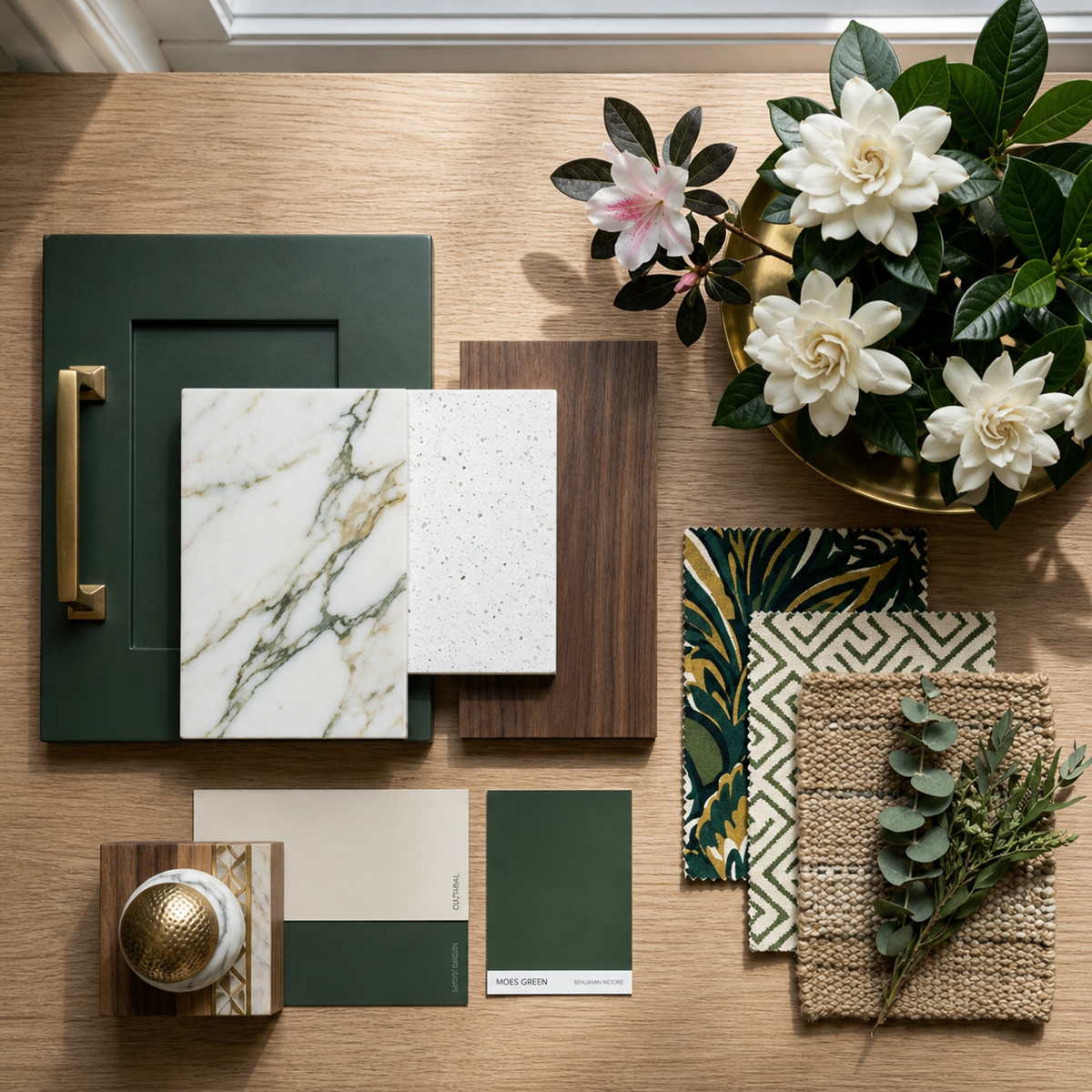
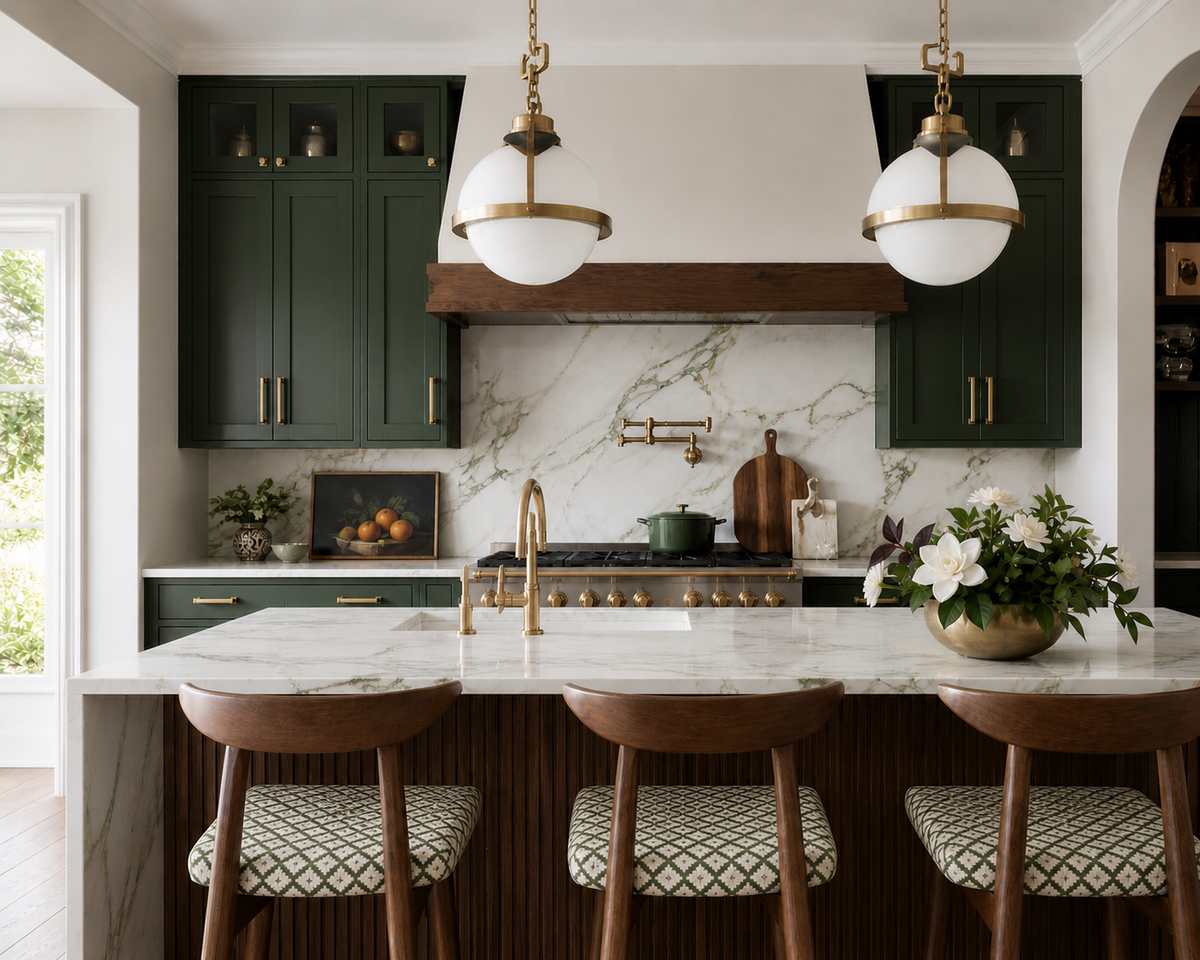 For instance, one current client had lived in and loved her home for nearly 50 years. When Myrick uploaded their conversations into Claude, it picked up on telling details: a passing mention of green cabinets was brought to the forefront; a vintage black, green, and white plate on her kitchen wall that she’d treasured for decades; a yard blooming with mature azaleas and gardenias; English antiques collected piece by piece over a lifetime.
Taken together, those details revealed a woman with deeply confident taste who had spent years underestimating her own boldness. AI helped sharpen that persona. Myrick built the mood board accordingly, layering in rich forest-green cabinetry, warm brass, and creamy quartz. When her client saw it, she instantly loved it.
Showcasing the Design Possibilities During an Open House
 Listing photos you see online may include slight touch-ups, like greener-looking grass or virtual staging. But agents can’t use AI tools to generate MLS images that show, for example, what a home might look like if a wall were removed to create a more open space.
However, real estate broker Kori Sassower, based in Westchester County, New York, says she frequently uses AI during open houses and home showings to help buyers better envision a space—not just with different paint colors or flooring, but with entirely new layouts.
 “It’s really helping younger buyers. Many of them are coming from beautiful apartments where everything is brand new, so it helps them see what an older space can look like,” she says.
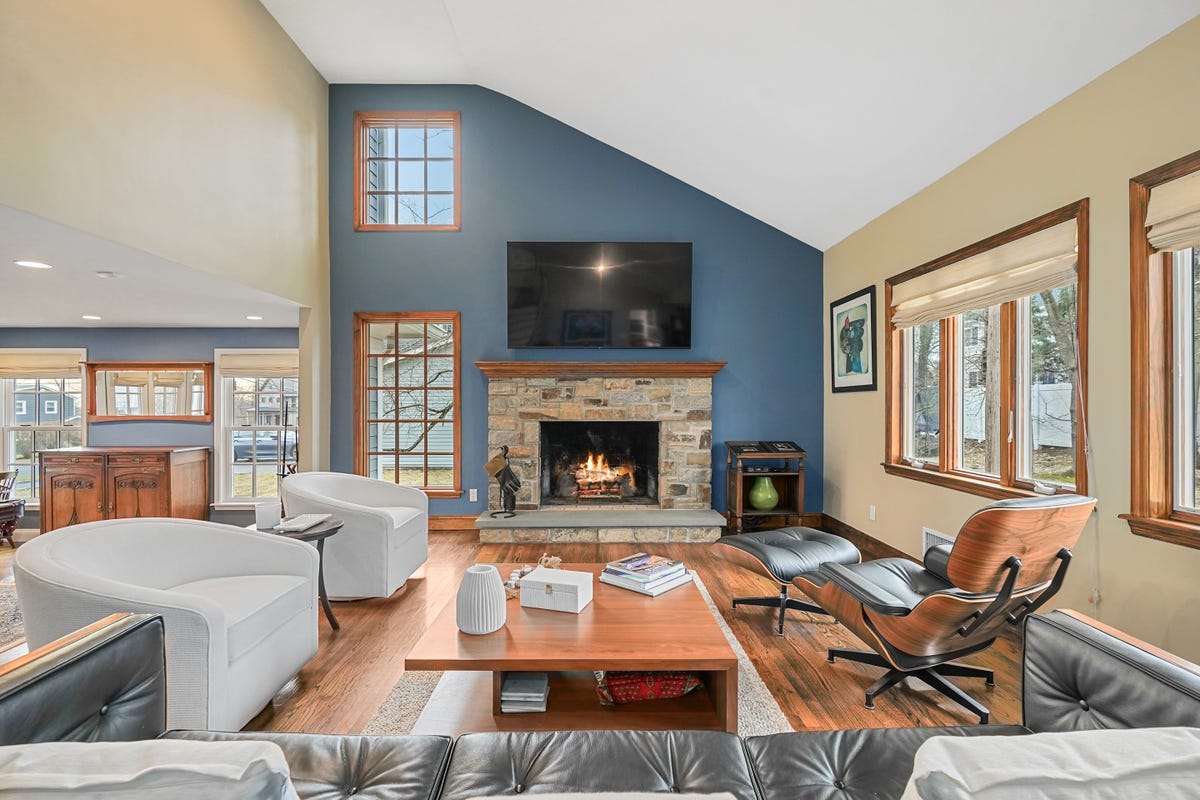
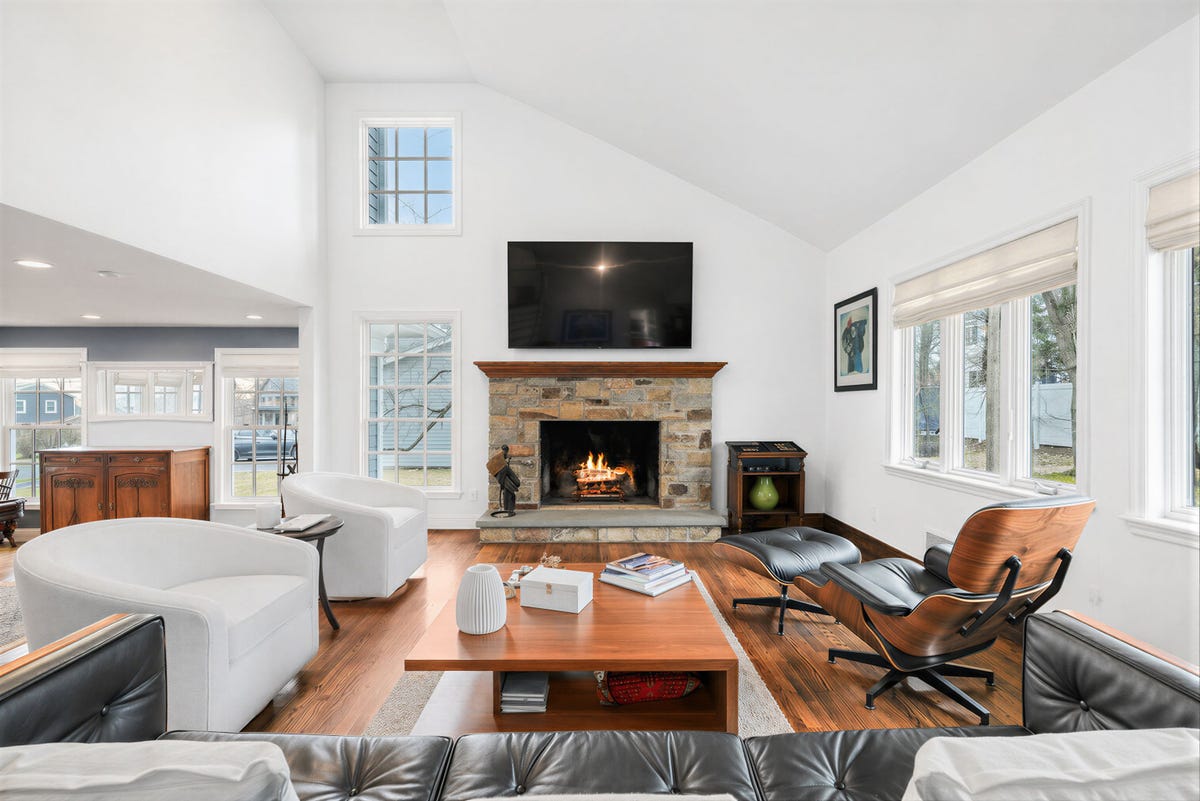
AI also helps her show sellers which projects may be worth tackling before putting a home on the market. She recently sold a home painted entirely blue, which she knew wouldn’t photograph well, so she used AI to show buyers what it would look like painted white.
Using AI as a Translation Tool
Jen Baxter of Baxter Hill Interiors has been experimenting with AI as a translation tool by taking something that isn’t visual and asking how it might become a space. For example, she created a “wine edit” using tasting notes as a starting point for a room.
“Instead of prompting with furniture or styles, I described a wine’s acidity, texture, weight, and aromatic profile, and introduced a few carefully chosen elements to ground the space, asking AI to interpret that as an interior,” she says.
A mineral, high-acid white might translate into chalky plaster walls, cool light, and restraint, Baxter said. Meanwhile, a dense, expressive red might become layered textiles, deeper tones, and a more enveloping atmosphere, she said.
“What surprised me is that AI can hold onto those abstract relationships,” she says. “It doesn’t just change colors, it can construct a mood.”
Floating Ideas Into the Social Media Feed
 For Sarah Robertson, founder of Studio Dearborn, AI has become less of a client presentation tool and more of a way to test creative ideas in a public feed.
Take, for instance, an idea for a kitchen project. Robertson used AI to generate richly toned concepts that pushed beyond the palette clients might typically embrace. But instead of presenting the renderings directly, Robertson shared them on Instagram.
What happened next changed how she thinks about using AI.
“One thing that surprised me is that sharing ideas on my social platform can be a powerful but subtle way of suggesting a direction for projects,” Robertson says. “[Clients] can pull what they want from an image, whereas if they were presented that same image in a formal presentation, they’d likely take it too literally.”
That’s to say that on social media, an AI concept can feel like inspiration rather than instruction, allowing clients to engage with an idea more instinctively.
Now, Robertson often uses AI as a creative sketchpad, generating exploratory concepts, sharing the most compelling ones online, and watching what resonates.
Narrowing Down Construction Estimates
 Anyone who has taken on a renovation knows one of the hardest questions to answer is often: “How much will it actually cost?” Construction estimates can vary wildly depending on labor, materials, subcontractor pricing, and the inevitable surprises that surface once work begins.
For Lauren Lerner, a Scottsdale-based interior designer and founder of Living with Lolo, the biggest surprise has been how much more compelling AI is as an operational tool than as a creative one.
The clearest example is her company’s Construction Estimator. Instead of gut-calling budget ranges from memory, her team built a Construction Estimator system where historical invoice data feeds continuously into an estimator that learns from real project costs, factoring in real jobs and subcontractor fees.
“That feedback loop would have taken a full-time analyst to manage manually, and even then it would have been slower and more subjective,” Lerner says.
Post a Comment for "AI-Generated Images Are Trending, But Real Design Innovation Lies Elsewhere"