
BMW's electric M3 defies V8 legacy with something better
The Evolution of Sound in the Electric M3
The goal for BMW’s electric M3 isn’t to replicate the sounds of a V8, V10, or straight-six engine. Instead, the focus is on providing drivers with the speed and acceleration cues that are typically associated with internal combustion engines. This approach aims to bridge the gap between the silent nature of electric vehicles (EVs) and the auditory feedback that drivers have come to rely on.
BMW emphasizes that the sound of the EV M3 must help drivers judge their speed, not just add dramatic flair. While the car won’t mimic the actual sounds of these traditional engines, the company has studied them to understand what makes them emotionally engaging. By analyzing the acoustic characteristics of iconic M cars, BMW hopes to create a unique sound that evokes similar emotions without relying on real engine noises.
Creating an Emotional Soundtrack
Real e-motor sounds serve as the base for the EV M3’s audio design, but they are enhanced to avoid the flat drone often associated with electric vehicles. This process involves adding layers of sound that simulate the dynamic range of a combustion engine, creating a more immersive experience for the driver.
One of the key challenges with fast electric vehicles is the lack of acoustic feedback. Even though they offer brutal acceleration, drivers may struggle to gauge their speed accurately around a track. BMW is addressing this issue by developing a sound system that provides audible cues, helping drivers feel more connected to the vehicle’s performance.
In a previous video, engineers were seen recording some of BMW’s most iconic M cars. At first, it seemed like they were capturing the sounds for use in the electric M3. However, in a new video, BMW revealed that the actual sounds wouldn’t be used in the production model. Instead, the recordings were part of a broader effort to understand why certain engine notes are so appealing and how to translate that into an artificial sound for the EV.
A Unique Approach to Sound Design
Unlike other manufacturers, such as Hyundai with the Ioniq 5 N or Mercedes-AMG with its fake V-8 and vibrating seats, BMW is taking a different route. The goal isn’t to trick drivers into thinking they’re in a combustion engine car, but to create something entirely new. This approach focuses on understanding what makes combustion engines emotionally compelling and translating that into a sound that simulates those feelings.
The result is a sound that is exciting and aggressive, with hints of a combustion engine, but also distinctively electric. Engineers have worked to ensure that the sound doesn’t fall into the same pitfalls as traditional engines, such as sounding flat or boring at certain RPMs. For example, the V-10 engine note was found to be less than ideal at a constant 6,000 RPM, and BMW aimed to avoid such dead spots in the M3 EV’s sound design.
Simulated Gears and Dynamic Sound
One aspect that remains unclear is how the “gears” will function in the electric M3. While EVs typically have only one forward gear, some automakers have chosen to simulate multiple gear shifts. It seems that BMW may follow this approach to enhance the driving experience, particularly for the quad-motor M3.
At the three-minute mark in the video, an engineer can be seen pulling on the right paddle on the steering wheel while driving on a track. This could indicate an “upshift,” suggesting that the car might feature simulated gear changes. As the car accelerates, the sound will evolve, becoming more intense as speed increases. This dynamic progression aims to create a sense of movement and excitement, making the driving experience more engaging.
Avoiding the Drone and Embracing the Electric Tone
A major concern for engineers is avoiding the drone that some high-performance combustion engines exhibit at certain RPMs. To address this, the sound design incorporates elements of electric motor noise, recorded from the car’s own drive units. These sounds are carefully integrated to create a balance between the mechanical and the electronic, resulting in a more natural and immersive auditory experience.
Testing and Development
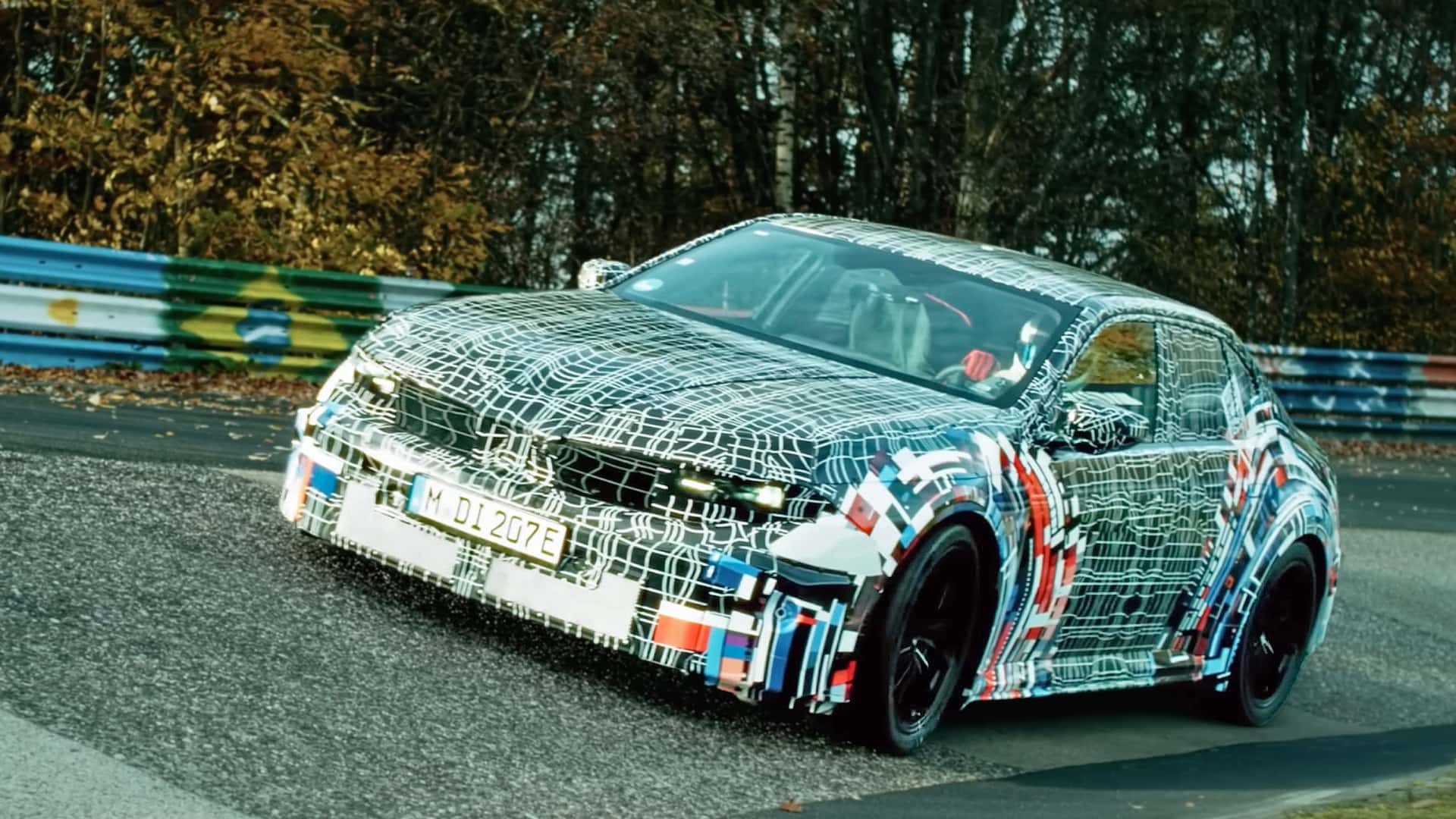
BMW is currently testing the M3 EV around the Nürburgring, where having audible reference points is crucial for understanding speed and performance. In a combustion engine car, drivers rely on the sound of gears shifting and engine revving to gauge their speed. For the electric M3, these cues are even more important due to the car’s rapid power delivery.
Whether or not drivers will have control over the simulated gears remains to be seen. However, BMW’s efforts to make the M3 EV as exciting as possible are clear. The company is not following the common recipe for electric vehicle sound design, instead focusing on creating a unique and emotionally resonant experience.
Post a Comment for "BMW's electric M3 defies V8 legacy with something better"