
Hydrogen Planes and AI: Piccard's Green Tech Vision
A New Era of Sustainable Aviation
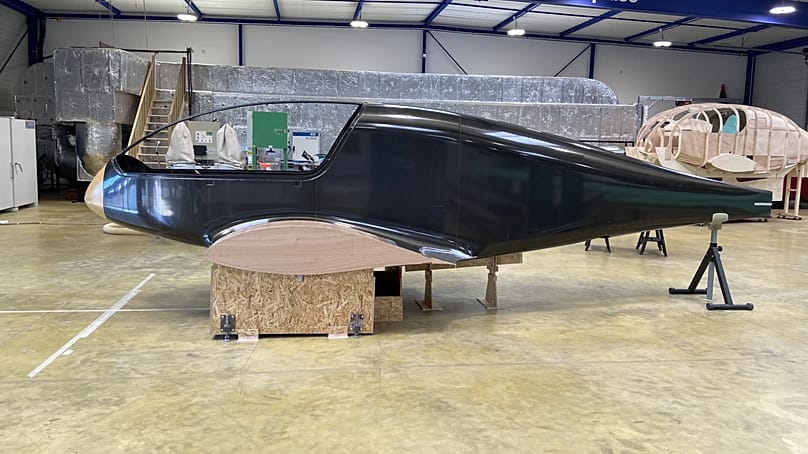
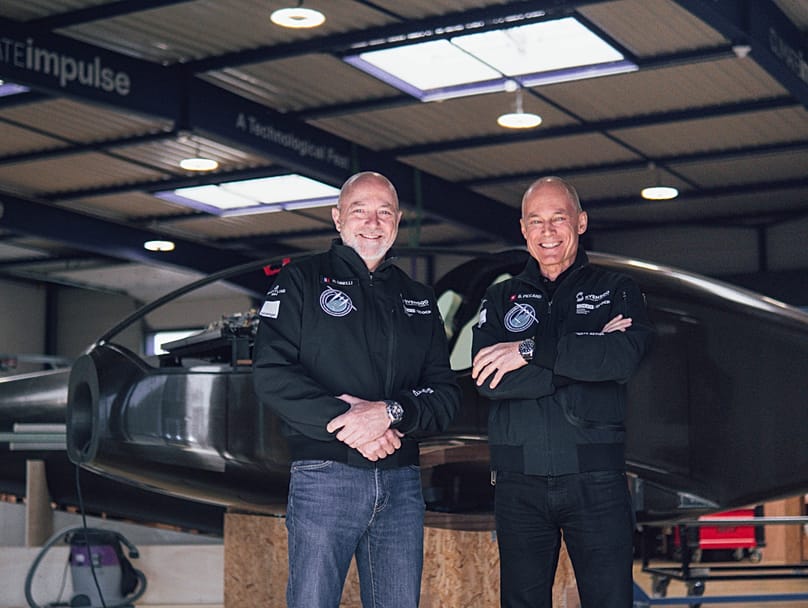
A hydrogen-powered plane is set to embark on a groundbreaking mission: to circle the globe non-stop with zero emissions, carrying not just hope but also a powerful message about sustainability. This ambitious project is led by Swiss explorer Bertrand Piccard, who has already made history with the first round-the-world solar-powered flight and the first non-stop balloon flight around the globe.
Piccard recently announced that his latest hydrogen venture is nearing completion, with the first test flights scheduled for early 2027. The project, developed through the Solar Impulse Foundation, has two main goals. The first is to demonstrate that hydrogen can power a full circumnavigation of the Earth without any stops or carbon emissions. The second is to inspire young people with a vision of a future where air travel does not harm the planet.
"We want to show young people that there are solutions, that there is a future — but we must now develop the pioneer spirit," Piccard said in an interview with Euronews Next.
Rethinking Environmentalism
Piccard believes that environmentalism has suffered from its own messaging over the years. He pointed out that decades of framing ecological action as costly, restrictive, and sacrificial have led to a backlash, allowing economic and political forces to sideline climate concerns.
"Many people have presented ecology as something off-putting, expensive, sacrificial — something that causes the economy to shrink, mobility to shrink,” he said. “And nobody wants that. With such an uninspiring narrative, it's clear there has been a backlash."
He emphasized that the solution is not to abandon ecological ambition but to reframe it as a key driver of innovation and prosperity. The Solar Impulse Foundation has already certified 1,650 clean and profitable solutions, proving that sustainability and economic growth can coexist.
AI and Sustainability: A Double-Edged Sword
The conversation around artificial intelligence (AI) and sustainability is another critical area for Piccard. He noted that AI could either help or harm the environment depending on how it is used. On one hand, AI can optimize energy grids and eliminate waste, but on the other, it can power unnecessary applications such as faster video streaming and higher-resolution gaming.
"All the positive impact we could have on the environment may be completely short-circuited by unnecessary uses, poorly implemented, with polluting technologies," Piccard warned.
He highlighted that data centers, which power AI, are a test case for its environmental footprint. Cooling servers with air conditioning or river water wastes enormous energy, but using that heat waste to warm nearby cities would double the energy use and cut costs and emissions at once.
However, the decision on how AI is used ultimately rests with humanity.
"It's not AI that is good or bad — it's the user who will be wise or dangerous. What will humanity do with it?" he said.
The Role of Governments in Shaping AI
Piccard stressed that the direction of AI should be guided by governments rather than tech companies. He argued that tech enthusiasts often push too far, driven by a goal of technology itself rather than the quality of life for humanity.
"Those who are responsible for that are governments, institutions, NGOs. They must make their voices heard louder than the tech enthusiasts," he said.
Engaging the Next Generation
Getting the green message across to younger generations is a priority for Piccard. He is working on a partnership with the Mohammed VI Polytechnic University in Morocco, positioning the country as a gateway to students across Africa. Once airborne, he plans to speak to schoolchildren live from the cockpit as the plane circles the Earth.
"If one morning we say we want to speak to all the schools, nobody will answer,” he explained. “If we say we're going to speak to students from the cockpit of a plane circling the world on hydrogen — all the doors will open."
A Call to Action
Ultimately, the project aims to put the issues of sustainability and innovation into the hands of the next generation. Piccard challenges young people to consider whether they want to be pioneers or dinosaurs.
"Do you want to be a pioneer — someone who hopes they can achieve something different? Or do you want to be a dinosaur, trying to live off the past, and disappearing?" he asked.
Post a Comment for "Hydrogen Planes and AI: Piccard's Green Tech Vision"